
Kinesiologist vs Physiotherapist in BC: Scope, Salary, and When to Use Each
Kinesiologists and physiotherapists both work in rehab and active recovery in BC, but they are not the same profession. The scope difference matters, especially for ICBC and WorkSafeBC claims where each plays a distinct role in the recovery arc.
BY THE LAUNCH REHAB TEAM
What is the difference between a kinesiologist and a physiotherapist?
A physiotherapist is a regulated health professional who assesses, diagnoses, and treats musculoskeletal and movement conditions. A kinesiologist designs and delivers structured exercise programs, usually within a treatment plan set by a physiotherapist or physician. In BC, both are funded by ICBC and WorkSafeBC at different points in a recovery arc. Physiotherapy typically leads the acute and assessment phase. Kinesiology typically leads the active rehabilitation and return-to-work phase.
Kinesiologist vs physiotherapist at a glance: A physiotherapist is a regulated health professional who assesses, diagnoses, and treats musculoskeletal and movement conditions. A kinesiologist designs and delivers structured exercise programs, usually within a treatment plan set by a physiotherapist or physician. In BC, both are funded by ICBC and WorkSafeBC, but at different points in a recovery arc. Physiotherapy typically leads the acute and assessment phase. Kinesiology typically leads the active rehabilitation and return-to-work phase.
| Physiotherapist | Kinesiologist | |
|---|---|---|
| Regulatory body | College of Health and Care Professionals of BC (CHCPBC) | BC Association of Kinesiologists (BCAK), a professional association, not a college |
| Training | Undergrad + 2-year Master's in Physiotherapy | 4-year undergraduate degree in Kinesiology |
| Scope | Assess, diagnose, manual therapy, exercise, modalities | Exercise program design and delivery, movement coaching |
| Diagnoses? | Yes | No |
| Manual therapy? | Yes | No |
| Typical salary in BC | Higher (longer training, broader scope) | Lower |
| ICBC funding | Yes (own visit allotment) | Yes (own visit allotment) |
| Extended health | Usually covered (physio pool) | Often not covered; check your plan |
| When to use | New injury, unclear diagnosis, assessment needed | Active rehab phase after diagnosis is established |
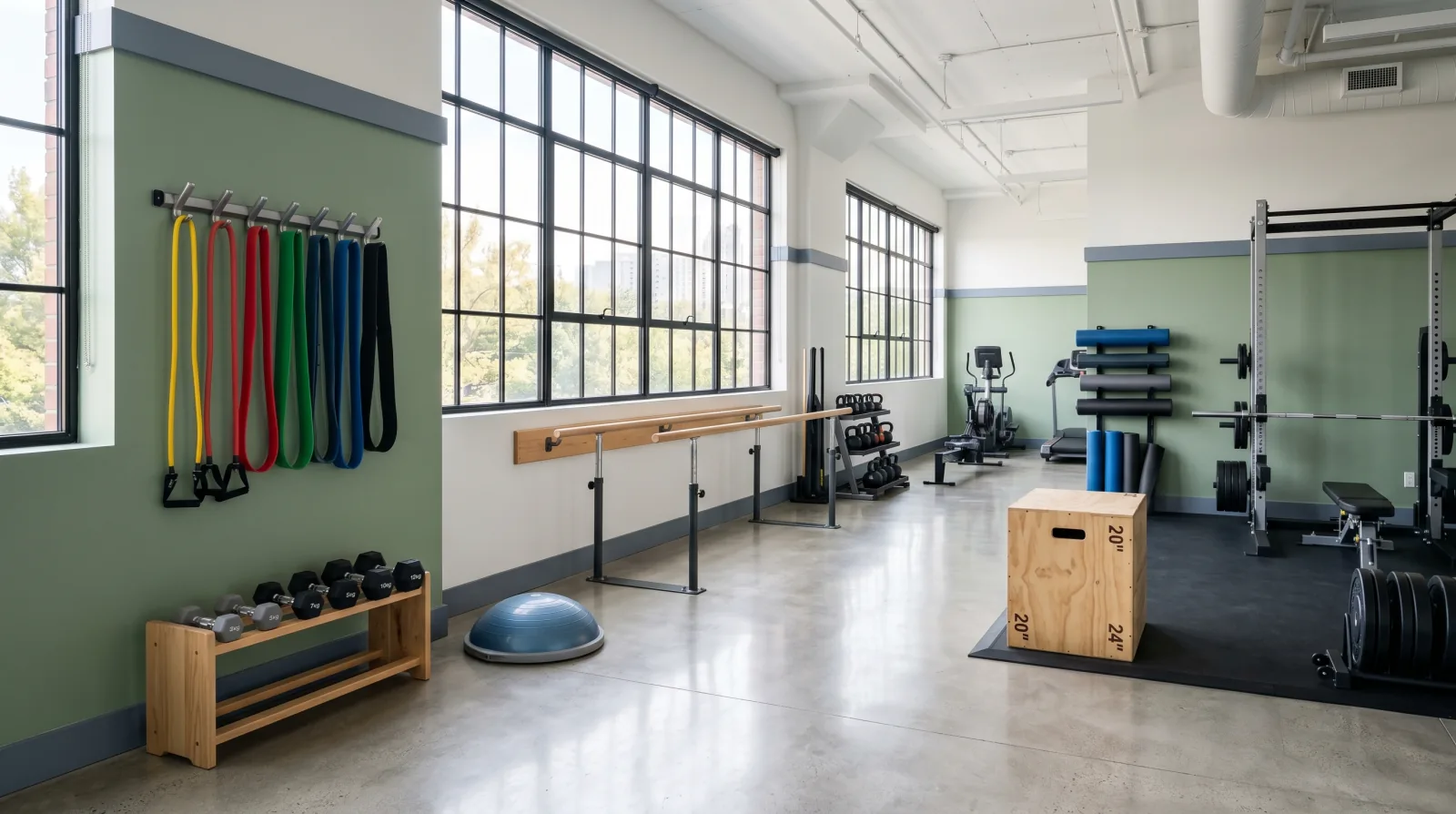
Walk into a busy rehab clinic in BC and you'll often see kinesiologists and physiotherapists working in adjacent spaces, sometimes with overlapping equipment, often with patients doing similar-looking exercises. The visual similarity is real. The professional, regulatory, and clinical differences are also real and clinically meaningful, especially in the context of an ICBC or WorkSafeBC claim where the two professions are funded separately and play distinct roles in a typical recovery.
This post explains what each profession actually does in BC, who regulates them, what they share, where they diverge, and how to use each at the appropriate point in a recovery arc. It is the cousin of our physio vs RMT vs chiro piece, but the scope question for kinesiology is different enough to warrant its own treatment.
What a physiotherapist is in BC
A physiotherapist in BC is a regulated health professional who assesses, diagnoses, and treats movement and musculoskeletal conditions. They hold a Master's degree, pass a national competency exam, and are accountable to a regulatory college. At Launch Rehab, the physiotherapist runs the first assessment that sets your treatment plan.
Physiotherapists in British Columbia are a regulated health profession under the College of Health and Care Professionals of BC (CHCPBC), the multi-profession college that absorbed the former College of Physical Therapists of BC in June 2024. Registration as a physiotherapist requires a Master's degree in Physiotherapy (or equivalent recognized credential), successful completion of the Physiotherapy Competency Examination, and ongoing continuing competency. The college maintains a public registry, investigates complaints, and sets professional standards.
The physiotherapy scope of practice includes:
- Assessment and diagnosis of musculoskeletal, neurological, cardiopulmonary, and movement-related conditions.
- Manual therapy including joint mobilization (and, with additional certification, spinal manipulation for the upper cervical and other regions where it's within scope).
- Exercise prescription tailored to the diagnosis and recovery stage.
- Modalities such as ultrasound, TENS, dry needling/IMS (with additional training), and acupuncture-style techniques.
- Patient education on condition management, return-to-activity, and self-management.
The defining characteristic: physiotherapy is a clinical decision-making profession. The physiotherapist assesses, classifies, formulates a working diagnosis, and prescribes treatment, including their own hands-on treatment and exercise prescription, that is reviewed and adjusted across the recovery course.
What a kinesiologist is in BC
A kinesiologist in BC is a movement and exercise professional who designs and delivers active rehabilitation programs, usually within a plan set by a physiotherapist or physician. They hold a Bachelor's degree in Kinesiology and belong to a professional association rather than a regulatory college. At Launch Rehab, the kinesiologist coaches and progresses your exercise program through the active rehab phase.
Kinesiologists in British Columbia operate under a different regulatory structure. They are members of the BC Association of Kinesiologists (BCAK), which sets practice standards, maintains a registry of Registered Kinesiologists (R.Kin.), and requires a Bachelor's degree (or equivalent) in Kinesiology or a closely related field plus association membership.
A few specifics about this regulatory model worth understanding:
- BCAK is a professional association, not a college. Kinesiology is not currently a regulated health profession under the Health Professions Act of BC in the same way physiotherapy is. There have been ongoing discussions about regulation; the current status is association-based self-regulation.
- Practical effect on patients: many of the protections that come with college regulation (formal complaint mechanisms, discipline tribunals, regulatory inspection) are not in place for kinesiology in the same way. The BCAK does have a code of ethics and disciplinary process within the association.
- Practical effect on third-party payers: ICBC and WorkSafeBC recognize Registered Kinesiologists for funded services. Most private extended health plans do not cover kinesiology directly the way they cover physiotherapy. (Some plans do; check yours.)
The kinesiology scope, simplified, is structured movement and exercise intervention. A kinesiologist:
- Designs and delivers exercise programs to support rehabilitation, conditioning, ergonomic adjustment, return-to-work, or chronic disease management.
- Coaches movement quality and progression.
- Tracks objective measures (range, strength, function) over time.
- Communicates with the referring physiotherapist, physician, or claims adjuster about progress.
The defining characteristic: kinesiology is an exercise-delivery and movement-coaching profession. Kinesiologists do not diagnose musculoskeletal conditions, do not perform manual therapy, and typically work within a treatment plan that has been initiated by a physiotherapist, physician, or other regulated provider.
What they share
In practice, kinesiologists and physiotherapists share substantial common ground:
- Both deliver exercise interventions.
- Both work with a similar patient population: orthopaedic recovery, post-surgical rehab, return-to-work conditioning, return-to-sport.
- Both use structured progression principles.
- Both communicate with each other regularly within the same care team.
This is why the visual similarity in clinic is real. A patient doing a structured strength program with a physiotherapist looks similar to the same patient doing a similar program with a kinesiologist. The work product on the floor can look the same.
Where they diverge
The clinical decision-making layer is where they diverge most clearly.
Diagnosis. A physiotherapist assesses and diagnoses (within their scope). A kinesiologist does not diagnose. When a presentation changes (a new symptom emerges, the original problem isn't responding as expected, or a different injury appears), that triggers a physiotherapy re-assessment, not a kinesiology adjustment.
Manual therapy. Within physiotherapy scope. Outside kinesiology scope.
Modalities and needling techniques. Within physiotherapy scope (with additional training for dry needling). Outside kinesiology scope.
Prescription decisions. Physiotherapists make initial prescription decisions about exercise type, dose, intensity, and progression based on their diagnosis. Kinesiologists typically implement and progress within a plan, communicating back to the prescribing physiotherapist or physician when adjustments are needed.
Independence. Physiotherapy is autonomous practice. Kinesiology in clinical contexts is more typically collaborative, within a multidisciplinary care plan with a referring provider.
How a typical recovery arc uses both
The most common pattern in our clinics, particularly for ICBC and WorkSafeBC claims:
Weeks 1 to 4: Physiotherapy-led. The physiotherapist assesses, establishes the working diagnosis, prescribes initial treatment, performs manual therapy and modality work as appropriate, and starts the exercise program. Visit frequency is typically 2 to 3 times per week.
Weeks 4 to 8: Mixed. As the patient stabilizes, physiotherapy visits often decrease (to 1 to 2 per week or less), and kinesiology sessions are added for the active rehab component. The kinesiologist progresses the exercise program with the patient under the agreed plan. The physiotherapist re-assesses periodically to confirm the program is appropriate and to make adjustments.
Weeks 8 to 12+: Kinesiology-led active rehab. As the patient moves into the return-to-work and return-to-activity phase, kinesiology often becomes the primary contact. Sessions focus on building work-specific or sport-specific capacity. The physiotherapist remains involved for periodic re-assessments, manual therapy if needed, and discharge.
This isn't a rule. It's a common pattern. Some recoveries are physiotherapy-only. Some are kinesiology-heavy throughout (typically more straightforward strength and conditioning needs). The point is that the two professions are complementary, not interchangeable, and the recovery is often better when both are used at the right time.
ICBC and WorkSafeBC coverage specifics
This is where the practical distinction matters most for BC patients.
ICBC. Under Enhanced Care, kinesiology has its own pre-approved visit allotment for crash injuries in BC, separate from the physiotherapy allotment. A typical injured patient has access to both pools without one drawing down the other. Kinesiology direct-bills ICBC the same way physiotherapy does.
WorkSafeBC. Kinesiology is funded by WorkSafeBC for work-related injuries, typically as part of an active rehabilitation program or a graduated return-to-work plan. The kinesiologist communicates with the WorkSafeBC case manager and the prescribing provider.
Extended health. Most private extended health plans cover physiotherapy. Many do not cover kinesiology directly. Some do. The patient should check their plan for "Registered Kinesiologist" or "Kinesiology" as a covered service.
MSP. Does not cover kinesiology services. Limited physiotherapy visits per year are covered for Supplementary Benefits enrolees.
The implication: for ICBC and WorkSafeBC claims, both services are accessible and complementary. For private-pay or extended-health-funded recovery, physiotherapy is the more reliably covered choice.
When to start with which
The decision matrix, simplified:
- A new injury, an unclear diagnosis, or a symptom that's not responding to home management: physiotherapy first.
- An ICBC or WorkSafeBC claim with an established diagnosis and treatment plan, ready for active rehab progression: kinesiology supplements the physiotherapy.
- Return-to-work or return-to-sport conditioning after the acute phase has resolved: kinesiology is often the right primary provider.
- A post-surgical recovery with a prescribed exercise program: kinesiology often delivers the program; the surgeon and physiotherapist supervise milestones.
- A chronic condition with a stable management plan that includes exercise: kinesiology can be the primary movement-coaching contact.
How the two professions compare on salary and training path in BC
People researching the scope difference often also want to understand the career comparison: how the professions differ in training requirements and what that means for compensation.
Training path. Physiotherapy requires a four-year undergraduate degree (typically in a science) followed by a professional Master's in Physiotherapy (two years in most Canadian programs). Kinesiology typically requires a four-year undergraduate degree. The physiotherapy route is approximately two years longer and includes a clinical practice exam administered by the Canadian Alliance of Physiotherapy Regulators.
Salary. Because salary data for BC practitioners is not published by a single authoritative source, figures vary across surveys and employment platforms. The general pattern from employment data and professional association benchmarks is that registered physiotherapists in BC earn more than registered kinesiologists, reflecting the longer training path, the regulatory standing of the profession, and the broader scope that includes assessment and diagnosis. Both professions earn more in private practice than in publicly funded settings, and both earn more with additional certification (e.g., dry needling, sport physio, or ergonomics credentials for kinesiology).
This distinction is most relevant when choosing a career path, not when choosing a clinician. From the patient's point of view, the more useful question is which scope fits the problem, not which person earns more.
Where this connects
If you're early in an ICBC claim and trying to understand which clinician to see first, the physio vs RMT vs chiro piece covers the broader scope picture. The ICBC physio guide covers the coverage end. And the WorkSafeBC vs ICBC piece covers the difference between the two BC funding systems.
At Launch Rehab, the physiotherapist and kinesiologist share a chart so the handoff from clinical care to active rehab is a coordinated step rather than a fresh start. The kinesiologist picks up the program the physio set, rather than building a new one from scratch.
The shortest version: kinesiologists and physiotherapists are not the same profession. They're complementary. For most BC recovery arcs, especially ICBC and WorkSafeBC claims, using both at the right time produces better outcomes than using either alone. The starting role usually goes to physiotherapy. The graduated active rehab role often goes to kinesiology. The team handoff between the two is where competent BC clinics earn their value.
Frequently asked questions
Can a kinesiologist diagnose an injury?
No. Diagnosis is within physiotherapy scope under the College of Health and Care Professionals of BC (CHCPBC), not kinesiology scope. When a new symptom emerges or the original problem is not responding as expected, that triggers a physiotherapy reassessment rather than a change made by the kinesiologist alone.
Does a kinesiologist perform manual therapy?
No. Manual therapy, including joint mobilization, is within physiotherapy scope. Kinesiologists in BC are members of the BC Association of Kinesiologists (BCAK) and focus on designing and delivering structured exercise programs, not hands-on treatment techniques, so a kinesiologist coaches and progresses movement rather than putting hands on the joint or soft tissue directly.
Is kinesiology a regulated profession in BC like physiotherapy?
Not in the same way. Physiotherapists are a regulated health profession under CHCPBC, with a public registry, complaint mechanisms, and discipline tribunals. Kinesiologists belong to the BC Association of Kinesiologists, a professional association with its own code of ethics and disciplinary process, but kinesiology is not currently regulated under BC's Health Professions Act.
Does ICBC cover kinesiology separately from physiotherapy?
Yes. Under ICBC's Enhanced Care model, kinesiology has its own pre-approved visit allotment for crash injuries, separate from the physiotherapy allotment, so a typical injured patient can access both pools without one drawing down the other. Kinesiology direct-bills ICBC the same way physiotherapy does, which is one reason the two professions are often used together after a crash.
Does extended health insurance cover kinesiology?
Usually not directly, though it depends on the plan. Most private extended health plans reliably cover physiotherapy, while many do not cover kinesiology as a separate benefit. Check your plan for "Registered Kinesiologist" or "Kinesiology" listed as a covered service before assuming it is included.
Should I start with a physiotherapist or a kinesiologist for a new injury?
Start with a physiotherapist. A new injury, an unclear diagnosis, or a symptom that is not responding to home management calls for an assessment, which is within physiotherapy scope. Kinesiology typically supplements the plan once a diagnosis and treatment plan are established, particularly for the active rehab phase.
What does WorkSafeBC fund kinesiology for?
WorkSafeBC funds kinesiology for work-related injuries, typically as part of an active rehabilitation program or a graduated return-to-work plan. The kinesiologist communicates progress with the WorkSafeBC case manager and the prescribing provider, such as the treating physiotherapist, so the exercise program stays aligned with the medical plan as the claim moves toward return to work.
Why do a kinesiologist and a physiotherapist sometimes look like they are doing the same thing in clinic?
Both professions deliver exercise interventions and work with overlapping patient populations such as orthopaedic recovery and return-to-work conditioning, so the exercises on the clinic floor can look similar. The difference is in the clinical decision-making behind them: a physiotherapist assesses, diagnoses, and prescribes the plan, while a kinesiologist implements and progresses it.
This article is general information, not personal medical advice. A regulated practitioner can confirm whether the patterns described apply to your specific situation.
WRITTEN BY
The Launch Rehab Team
Practical recovery and training notes from the clinicians at our five Metro Vancouver studios.
FOUND THIS USEFUL?
Share it with your network on LinkedIn. We wrote a ready-to-post version for you.
FILED UNDER
- kinesiology
- physiotherapy
- scope-of-practice
- icbc
- worksafebc
- active-rehab
- bc