Vestibular vs Cervicogenic Dizziness: How Physiotherapists Tell Them Apart
Dizziness after a neck injury or inner ear problem looks similar from the outside. Physiotherapists use specific assessment tools to distinguish vestibular from cervicogenic dizziness, because the treatment is completely different.
BY KELVIN YEUNG
Dizziness is a common symptom in physiotherapy, particularly after whiplash, concussion, or prolonged neck pain. The problem is that "dizziness" covers several distinct presentations that require different treatment. Getting the wrong treatment not only fails to help; it can temporarily make symptoms worse.
Two of the most commonly confused types are vestibular dizziness and cervicogenic dizziness. A physiotherapist trained in vestibular assessment can distinguish them in a single clinical session. Here is what that distinction involves and why it matters.
What vestibular dizziness is
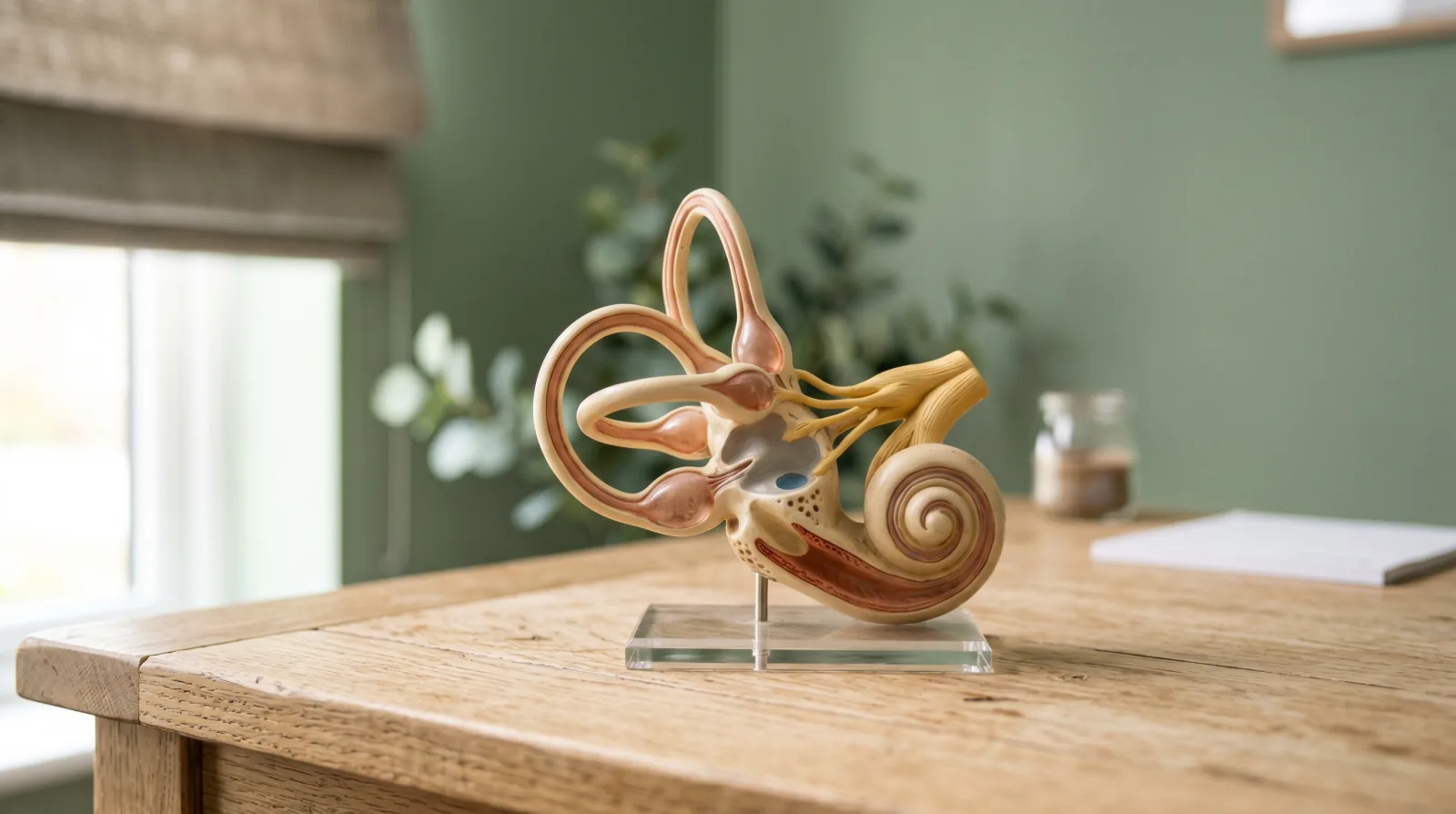
The vestibular system includes the inner ear structures (semicircular canals, utricle, saccule) and the vestibular nerve that transmits position and motion signals to the brainstem. Vestibular dizziness arises when something disrupts this system, either a peripheral problem (inner ear) or, less commonly, a central problem (brainstem or cerebellum).
The most common peripheral vestibular disorder in physiotherapy practice is BPPV (benign paroxysmal positional vertigo). BPPV occurs when calcium carbonate crystals (otoconia) detach from the utricle and migrate into one of the semicircular canals, creating false motion signals when the head changes position. The hallmark is brief, intense spinning vertigo triggered by specific head positions: lying down, rolling over in bed, looking up, or bending forward. The vertigo lasts seconds to a minute, not hours.
Other vestibular presentations that physiotherapists assess and manage include:
- Vestibular neuritis (sustained dizziness following a viral illness affecting the vestibular nerve)
- Post-concussion vestibular dysfunction (vestibular processing disruption following a traumatic brain injury)
- Unilateral vestibular hypofunction (reduced function on one side, often from neuritis or other inner ear pathology)
What cervicogenic dizziness is
Cervicogenic dizziness (also called cervicogenic vertigo or cervical dizziness) arises from the neck, specifically from disrupted proprioceptive signaling in the upper cervical joints and muscles. The cervical spine has a high density of mechanoreceptors, particularly in the facet joints and deep cervical muscles (semispinalis cervicis, multifidus). These receptors contribute to the body's spatial orientation system alongside the vestibular system and vision.
When the upper cervical structures are injured, as in whiplash, or when deep cervical muscle function is disrupted by chronic pain or guarding, the proprioceptive signals from the neck can conflict with the vestibular and visual inputs. The brain interprets this mismatch as dizziness, unsteadiness, or light-headedness.
Cervicogenic dizziness tends to be:
- Accompanied by neck pain or stiffness (though not always)
- Aggravated by sustained neck postures (driving, desk work, looking over a shoulder)
- Associated with impaired smooth pursuit eye movements or joint position sense errors in the neck
- Less likely to involve the brief intense spinning characteristic of BPPV
The term "cervicogenic dizziness" is sometimes met with skepticism in medicine, partly because it was historically over-diagnosed, and partly because objective tests are harder to standardize than the nystagmus tests used in vestibular assessment. Current clinical evidence supports its existence as a distinct entity, particularly in the context of whiplash-associated disorders. A 2021 consensus statement in the Journal of Orthopaedic and Sports Physical Therapy (Reid et al.) addressed cervicogenic dizziness as a recognized clinical diagnosis requiring specific assessment criteria.
How physiotherapists assess each
The assessment is where the distinction is made. A physiotherapist with vestibular training will use a combination of tests in the first session.
Tests that point to vestibular causes
Dix-Hallpike test: The client moves rapidly from sitting to lying with the head rotated 45 degrees. A positive test for BPPV produces observable nystagmus (involuntary rhythmic eye movement) and vertigo lasting less than a minute. The direction and delay of the nystagmus identifies which semicircular canal is affected.
Roll test (supine head roll): Used to assess the horizontal semicircular canal, a less common but distinct BPPV variant with different nystagmus characteristics and a different repositioning manoeuvre.
Head Impulse Test (HIT): A rapid head rotation test that assesses whether the vestibulo-ocular reflex is intact. A positive HIT (the eye cannot maintain fixation during the rapid head movement) suggests unilateral vestibular hypofunction.
Video head impulse test (vHIT) and caloric testing: More detailed vestibular function tests typically performed in a hospital vestibular lab or by specialized audiologists. Not done at physiotherapy clinics but relevant when the physiotherapy assessment is inconclusive.
Tests that point to cervicogenic causes
Cervical joint position error (JPE) test: The client wears a laser pointer on their head, moves to a target position on the wall, returns to neutral, and then tries to return to the original position with eyes closed. Larger-than-expected positioning errors suggest disrupted cervical proprioception.
Smooth pursuit neck torsion test: Eye tracking is assessed with the head in neutral, then with the upper body rotated to rotate the neck while the head stays fixed relative to the examiner. A significant change in smooth pursuit quality during neck rotation suggests cervicogenic contributions.
Manual assessment of the upper cervical spine: Palpation and passive movement testing of C1-C3. If reproduction of the client's dizziness symptoms occurs with cervical manual assessment and not with vestibular provocation tests, the cervical spine is the likely source.
Oculomotor assessment: Saccades, smooth pursuit, and gaze stability are assessed for both vestibular and cervicogenic presentations. Abnormalities can appear in both, but the pattern and associated findings help differentiate.
Why the treatment is completely different
This is the clinical reason the distinction matters: treating BPPV with cervicogenic exercises does nothing for the crystals; treating cervicogenic dizziness with a canalith repositioning manoeuvre does nothing for the cervical proprioception.
BPPV treatment: canalith repositioning
For BPPV, the treatment is a specific repositioning manoeuvre that moves the displaced crystals back into the utricle. The most widely used is the Epley manoeuvre for posterior canal BPPV: a sequence of head positions held for about 30 seconds each. A single session resolves most posterior canal BPPV cases; some require two or three sessions. There is a Cochrane review (Hilton & Pinder, 2014) supporting the Epley manoeuvre for BPPV, finding it safe and effective.
No neck exercises will move displaced crystals. No manual therapy to the cervical spine will resolve BPPV.
Cervicogenic dizziness treatment: cervical rehab and sensorimotor retraining
For cervicogenic dizziness, the treatment targets the cervical spine and the sensorimotor system that has been disrupted. This typically includes:
- Deep cervical flexor strengthening (e.g., cranio-cervical flexion training) to restore cervical neuromuscular control
- Gaze stabilization exercises to recalibrate the vestibular-ocular interaction in the context of cervical dysfunction
- Proprioceptive retraining: head-on-body movement exercises with visual and positional feedback
- Manual therapy to the upper cervical joints when restricted movement is contributing to aberrant signaling
- Postural correction and ergonomic assessment, particularly for desk workers whose cervicogenic dizziness is sustained by hours in a forward-head position
No repositioning manoeuvre will improve cervical proprioception. Performing Epley on someone with cervicogenic dizziness will produce discomfort during the manoeuvre and no durable improvement.
The mixed presentation
A complication worth naming: BPPV and cervicogenic dizziness can coexist. This is particularly common after whiplash, where the head acceleration-deceleration event can both displace otoconia (causing BPPV) and injure the upper cervical structures (causing cervicogenic dysfunction). In these cases, the BPPV is treated first with repositioning, because the false vestibular signal makes it harder to assess and treat the cervicogenic component. Once BPPV resolves, the cervicogenic picture becomes clearer.
Post-concussion dizziness is another complex presentation that may involve vestibular processing disruption, oculomotor problems, cervical dysfunction, and autonomic dysregulation, all simultaneously. That presentation warrants a clinician trained in both vestibular and concussion assessment.
What to expect at the first visit
If you come in reporting dizziness, unsteadiness, or vertigo (especially after a neck injury, concussion, or inner-ear illness) the first session will be primarily assessment. Your physiotherapist will ask about the character of the dizziness (spinning vs. light-headedness vs. unsteadiness), what triggers it, how long it lasts, and what other symptoms accompany it.
The Dix-Hallpike and roll test will typically be performed early in the session. If the result is positive for BPPV, treatment can begin in the same visit. If the assessment points toward cervicogenic dizziness, the plan will shift to cervical assessment and the start of a cervical retraining program.
We offer vestibular physiotherapy at all five of our studios (Lougheed, Coquitlam, Richmond, New Westminster, and North Burnaby). Not all physiotherapists are trained in vestibular assessment, so if you are booking specifically for dizziness, mention it when booking so we can match you with a vestibular-trained clinician. At Launch Rehab, dizziness assessments include both the Dix-Hallpike and cervical joint position error testing in the same session, so the clinician can identify whether the problem is in the inner ear, the neck, or both, and treat whichever is present without adding a second booking.
A third pattern is worth screening for alongside these two: vestibular migraine, where episodic dizziness comes with a migraine history and features like headache, light sensitivity, or visual aura. It behaves differently from both BPPV and cervicogenic dizziness, and it is usually managed jointly with a physician rather than by physiotherapy alone.
If you're in a neighbourhood near one of our studios and want to know which location is closest, we have area guides for Capitol Hill, Hastings-Sunrise, Westridge, Steveston, Seafair, and Ironwood.
Frequently asked questions
What is the difference between vestibular and cervicogenic dizziness?
Vestibular dizziness comes from the inner ear or the vestibular nerve, most often BPPV, and produces brief intense spinning tied to specific head positions. Cervicogenic dizziness comes from disrupted proprioceptive signalling in the upper cervical joints and muscles, usually after whiplash, and feels more like unsteadiness or light-headedness tied to neck posture. A physiotherapist trained in vestibular assessment can tell them apart in a single session.
How long does BPPV take to resolve with physiotherapy?
Most posterior canal BPPV resolves in one session using the Epley manoeuvre, with some cases needing two or three sessions. A Cochrane review by Hilton and Pinder (2014) supports the Epley manoeuvre for BPPV, finding it safe and effective. If dizziness continues after repositioning, the therapist rechecks for a different canal variant or a coexisting cervicogenic component.
Can dizziness be caused by the neck instead of the inner ear?
Yes. Cervicogenic dizziness arises when upper cervical joint and muscle mechanoreceptors send disrupted signals that conflict with vestibular and visual input, which the brain interprets as dizziness or unsteadiness. It is aggravated by sustained neck postures like driving or desk work and is not accompanied by the brief intense spinning typical of BPPV.
What tests do physiotherapists use to tell vestibular and cervicogenic dizziness apart?
The Dix-Hallpike test and roll test identify BPPV by reproducing positional vertigo with observable nystagmus. The cervical joint position error test and smooth pursuit neck torsion test identify cervicogenic dizziness by measuring disrupted cervical proprioception and eye tracking during neck rotation. Both sets of tests can be performed in the same physiotherapy session.
Can BPPV and cervicogenic dizziness happen at the same time?
Yes, this is common after whiplash, since the same head acceleration-deceleration event can both displace inner-ear crystals and injure the upper cervical structures. When both are present, the BPPV is treated first with repositioning, because the false vestibular signal makes the cervical component harder to assess until it clears.
Will neck exercises fix BPPV, or will the Epley manoeuvre fix cervicogenic dizziness?
No, neither crosses over. No neck exercise moves displaced inner-ear crystals, and no repositioning manoeuvre improves cervical proprioception. Performing the Epley manoeuvre on someone with cervicogenic dizziness produces discomfort during the manoeuvre with no durable improvement, which is why an accurate assessment has to come before treatment starts.
Do I need a doctor's referral to see a physiotherapist for dizziness?
No. Physiotherapy is direct-access in BC, so you can book a vestibular assessment without a referral. Mention that you are booking for dizziness so the studio can match you with a physiotherapist trained in vestibular assessment, since not all physiotherapists carry that training. If a doctor has already flagged a neurological concern, bring that context to the first visit.
When should dizziness be treated as a medical emergency instead of a physiotherapy case?
Seek emergency care if dizziness comes with sudden severe headache, double vision, slurred speech, or difficulty walking. These are not features of BPPV or cervicogenic dizziness and need medical assessment before any physiotherapy treatment is appropriate. Once those causes are ruled out, a vestibular assessment with the Dix-Hallpike and cervical joint position error tests is a safe next step.
This article is not a substitute for assessment by a regulated practitioner. If your dizziness is associated with sudden severe headache, double vision, slurred speech, or difficulty walking, seek emergency care.
WRITTEN BY
Kelvin YeungMPT, BSc.Kin, CAFCI, CGIMS, Dip.AIM, FCAMPT (HE/HIM/HIS)
Physiotherapist
Last reviewed:
Practical recovery and training notes from the clinicians at our five Metro Vancouver studios.
READ FULL PROFILEFOUND THIS USEFUL?
Share it with your network on LinkedIn. We wrote a ready-to-post version for you.
FILED UNDER
- vestibular
- dizziness
- bppv
- cervicogenic
- neck
- whiplash
- physio