
BPPV and Vertigo: When a Repositioning Maneuver Fixes Dizziness
If the room spins for a few seconds every time you roll over in bed or tip your head back, there is a specific, common cause with a treatment that often works in one or two sessions. Here is how to tell what it is and who treats it in BC.
BY KELVIN YEUNG
If the room spins for a few seconds every time you roll over in bed, sit up, or tip your head back to a top shelf, one common cause sits at the top of the list. It is called BPPV, and it usually responds to a repositioning maneuver done in the clinic rather than to medication or waiting it out.
What BPPV actually is
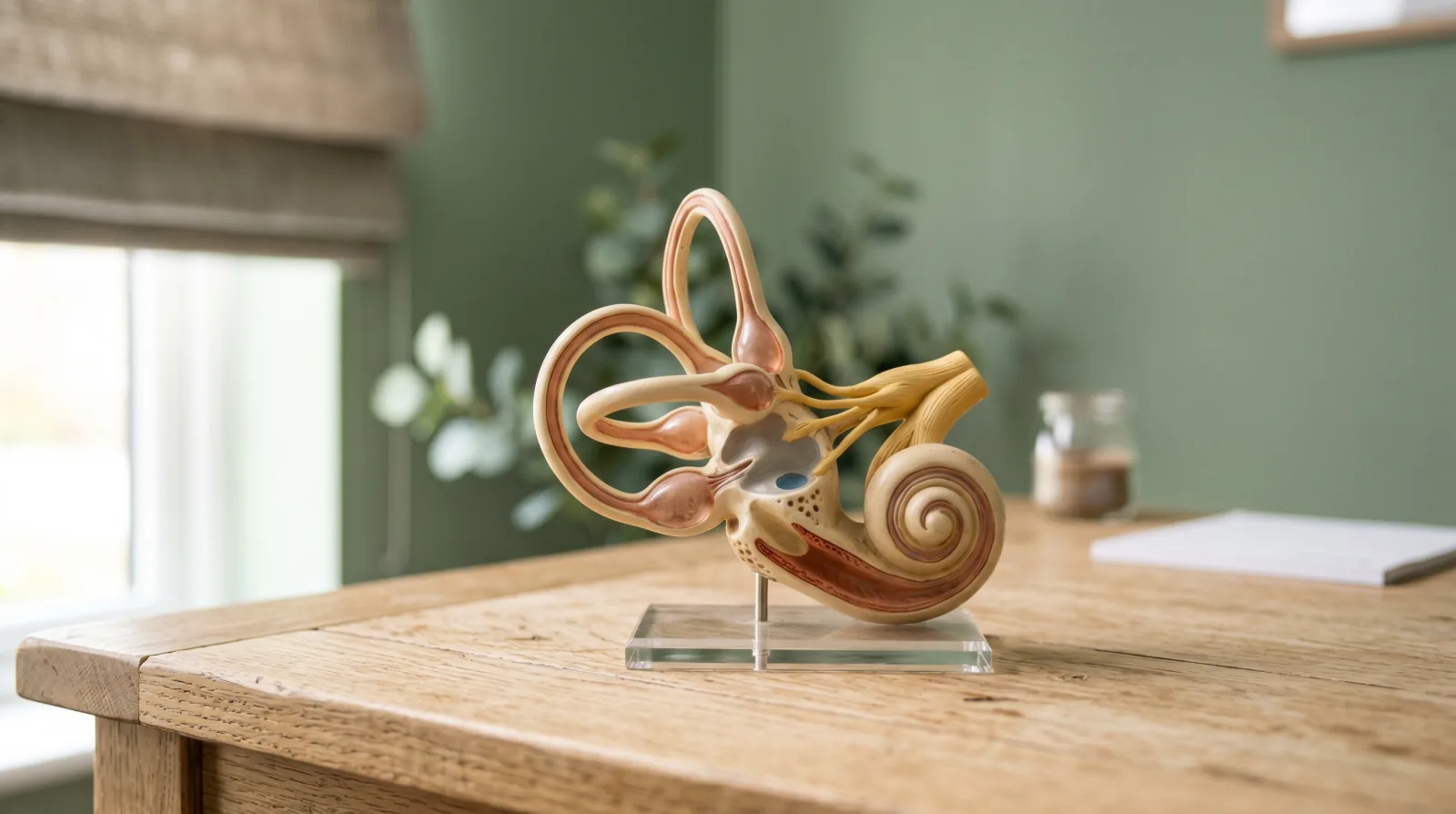
BPPV stands for benign paroxysmal positional vertigo. The plain-English version: short bursts of spinning, set off by a change in head position, that are not dangerous in themselves. Inside the inner ear are tiny calcium crystals called otoconia. They normally sit in a part of the balance organ where they belong. In BPPV they break loose and drift into one of the fluid-filled semicircular canals, where they do not belong.
When you move your head, those displaced crystals shift inside the canal and send a false motion signal to the brain. The result is a brief, intense spinning sensation. A clinical review in the Journal of Family Medicine and Primary Care describes the typical episode as vertigo started by changes in head position such as getting in or out of bed or turning over, lasting roughly 20 to 30 seconds and usually under two minutes. The trigger is position. The episode is short. Between episodes, most people feel steady.
Why dizziness hits when you lie down
The positions that set off BPPV are the ones that move the affected canal through gravity. Lying down, rolling over in bed, sitting up quickly, tipping the head back to look up, or bending forward are the classic offenders. People often first notice it in bed because rolling onto one side reliably brings the spin on.
The spinning can be strong enough to feel alarming, and nausea is common. What it is not is constant. If your dizziness is there all the time, sitting still, with no clear positional trigger, BPPV becomes less likely and other causes move up the list. That distinction is one of the first things a physiotherapy assessment sorts out.
How a repositioning maneuver treats it
Because BPPV is a mechanical problem, loose crystals sitting in the wrong canal, the treatment is mechanical too. A canalith repositioning maneuver guides those crystals back out of the canal and into the part of the inner ear where they no longer cause symptoms. The best known is the Epley maneuver, a sequence of slow, deliberate head and body movements from sitting to lying, rolling to one side, and back to sitting.
The evidence here is good for a treatment this simple. A Cochrane review of 11 randomized trials in 745 patients found the Epley maneuver resolved vertigo significantly more often than sham treatment or no treatment, with no serious adverse effects. The 2017 American Academy of Otolaryngology clinical practice guideline on BPPV makes the same point from the other direction: it recommends increasing the use of appropriate repositioning maneuvers and reducing the routine use of vestibular suppressant medications and imaging for typical positional vertigo.
That guidance matters for what you should expect. Anti-dizziness medication can blunt the symptom for a day or two, but it does not move the crystals. For most straightforward cases, the maneuver is the part that actually fixes the problem. Many people improve within one or two sessions, though some need a repeat and a minority need a few.
Not all dizziness is BPPV
This is the part worth slowing down on, because the right treatment depends entirely on the right cause. BPPV is brief and positional. Other common causes of dizziness behave differently.
Vestibular neuritis, an inflammation of the balance nerve usually after a viral illness, tends to cause constant spinning that lasts hours to days, often with nausea and trouble walking, rather than short positional bursts. The same clinical diagnosis review describes that continuous pattern, which is quite different from the on-off positional trigger of BPPV. Cervicogenic dizziness, linked to the neck rather than the inner ear, is another pattern again. We compared those two in detail in vestibular versus cervicogenic dizziness, and the sorting between them is exactly the kind of question an assessment exists to answer. Episodic dizziness that comes with headache, light sensitivity, or visual disturbance points to a fourth pattern, vestibular migraine, where episodes run much longer than BPPV and the underlying condition is usually co-managed with a physician.
A repositioning maneuver only helps when the cause is actually BPPV. Done for the wrong problem, it does nothing useful. That is why we test before we treat rather than reaching for the maneuver on every dizzy patient.
The red flags that mean call a doctor, not a physio
A small number of dizziness presentations point to a central cause, something in the brain or brainstem rather than the inner ear, and those need a physician or emergency care, not a physiotherapy booking. The signals to take seriously include a sudden severe headache, double vision, slurred speech, trouble swallowing, numbness or weakness in the face or limbs, or an inability to walk or stand unassisted.
Dizziness that is constant rather than positional, especially with any of those neurological signs, sits in the same urgent category. If you are seeing these, that is a same-day call to your physician or 911, not a physio appointment. When you book vestibular care with us, screening for these red flags is the first step, and we refer on rather than treat if the pattern does not fit a peripheral, inner-ear cause.
What a vestibular physiotherapy assessment involves
Vestibular physiotherapy is care for dizziness and balance problems that come from the inner ear and balance system. In BC, physiotherapists are regulated through the College of Health and Care Professionals of BC, the body that now holds the former College of Physical Therapists of BC, and assessing and treating BPPV sits within that scope. At Launch Rehab, vestibular physiotherapy is available at all five Metro Vancouver studios, with assessment and canalith repositioning maneuvers performed by physiotherapists trained in vestibular care.
A vestibular therapy assessment usually starts with history, then a positional test. The standard one for BPPV is the Dix-Hallpike test, where the therapist moves your head and trunk into the position that provokes symptoms and watches your eyes for the characteristic brief flicker called nystagmus. The clinical diagnosis review calls Dix-Hallpike the gold standard for confirming the most common form of BPPV. That test also identifies which ear and which canal is involved, which decides which way the repositioning maneuver runs.
If the test confirms BPPV, the maneuver often happens in the same visit. Where dizziness lingers after the crystals are cleared, or where the cause is a different vestibular problem, the plan shifts to vestibular rehabilitation exercises that retrain balance and gaze stability. A Cochrane review of vestibular rehabilitation found it a safe and effective approach for inner-ear dizziness, while noting that for BPPV specifically, repositioning maneuvers work better in the short term than exercises alone, with a combination helping longer-term recovery.
When to book and what it costs
If your dizziness is short, spinning, and clearly set off by head position, with no neurological red flags, an assessment for BPPV is a reasonable first move. The crystals can recur, the Cochrane review reports recurrence in roughly a third of treated patients over time, so knowing the maneuver worked once and what to watch for is useful information to carry forward.
Vestibular assessment and treatment are billed as physiotherapy visits, and current figures live on our rates and FAQ page, where they stay accurate. Extended health plans generally reimburse this under the physiotherapy pool. If your dizziness fits the positional pattern described here, book a vestibular assessment and we will test before we treat. If it does not fit, the assessment is also how we recognise that and point you to the right care instead.
This article is general information, not personal medical advice. A regulated practitioner can confirm whether the patterns described apply to you.
Frequently asked questions
What is the fastest way to treat BPPV?
For most typical cases, a canalith repositioning maneuver like the Epley is the most direct treatment, and a Cochrane review found it resolves vertigo significantly more often than no treatment. Many people improve within one or two sessions, though some need a repeat visit before the crystals fully clear the canal.
Can BPPV go away on its own?
Sometimes, yes. Crystals can settle without treatment, but it may take weeks, and a repositioning maneuver usually clears symptoms faster, which is why guidelines favour it over waiting. Anti-dizziness medication can blunt the symptom in the meantime, but it does not move the displaced crystals back out of the canal.
Why do I get dizzy only when I lie down or roll over?
Position-triggered spinning that lasts seconds is the hallmark of BPPV, because those movements shift the displaced inner-ear crystals inside the canal. Dizziness that is constant and present even sitting still points to a different cause, such as vestibular neuritis or a central issue that needs its own assessment.
Should an RMT or chiropractor do the Epley maneuver?
Vestibular assessment and repositioning maneuvers for BPPV fall within physiotherapy scope in BC under the College of Health and Care Professionals of BC. Start with a physiotherapist trained in vestibular care rather than an RMT or chiropractor, since diagnosing the affected canal and performing the maneuver correctly needs that specific assessment first.
When is dizziness an emergency?
When it comes with a sudden severe headache, double vision, slurred speech, facial or limb weakness, or an inability to walk, or when severe vertigo is constant rather than positional. Those signs can point to a central cause in the brain or brainstem, and they are a same-day call to your physician or 911, not a physio booking.
Does BPPV come back?
It can. The Cochrane review reports recurrence in around a third of treated patients over time. A recurrence is usually treatable with the same maneuver, and knowing your pattern, which side and which canal, makes the next episode faster to sort out and treat rather than starting the assessment from scratch each time.
What is the Dix-Hallpike test and does it hurt?
The Dix-Hallpike test is the standard way a physiotherapist confirms BPPV. The therapist moves your head and trunk into the position that provokes symptoms and watches your eyes for a brief, characteristic flicker called nystagmus. It can briefly bring on the same spinning sensation you already experience at home, but it is not painful, and that reaction is exactly what confirms the diagnosis and identifies which ear is affected.
Can BPPV happen in both ears at once?
It is possible but less common than a single affected ear. The Dix-Hallpike test on each side identifies which canal is involved, and if both sides show a positive result, the repositioning maneuver is performed separately for each ear rather than assuming one treatment clears both.
Do I need to avoid certain positions after the Epley maneuver?
Some clinicians advise avoiding lying flat or tipping the head back for the rest of the day after a repositioning maneuver, though the evidence on how strictly this matters is mixed. Your physiotherapist will give you specific guidance for your case based on how the maneuver went and how confirmed your response was.
Which studios at Launch Rehab treat BPPV and vertigo?
Vestibular physiotherapy, including BPPV assessment and repositioning maneuvers, is available at all five Launch Rehab studios in Metro Vancouver: Lougheed, Coquitlam, Richmond, New Westminster, and North Burnaby. Assessment and treatment are performed by physiotherapists trained in vestibular care, and current pricing is listed on our rates and FAQ page.
Sources
- Cochrane review: The Epley manoeuvre for benign paroxysmal positional vertigo (BPPV)
- AAO-HNS: Clinical Practice Guideline: Benign Paroxysmal Positional Vertigo (2017 update)
- Clinical diagnosis of benign paroxysmal positional vertigo and vestibular neuritis (J Family Med Prim Care)
- Cochrane review: Vestibular rehabilitation for unilateral peripheral vestibular dysfunction
- College of Health and Care Professionals of BC: Physical Therapists
WRITTEN BY
Kelvin YeungMPT, BSc.Kin, CAFCI, CGIMS, Dip.AIM, FCAMPT (HE/HIM/HIS)
Physiotherapist
Practical recovery and training notes from the clinicians at our five Metro Vancouver studios.
READ FULL PROFILEFOUND THIS USEFUL?
Share it with your network on LinkedIn. We wrote a ready-to-post version for you.
FILED UNDER
- bppv
- vertigo
- dizziness
- vestibular-therapy
- epley-maneuver
- physiotherapy
- bc