Custom Orthotics: When They Help and When They Don't
Someone told you that you need custom orthotics, and the quote was not small. Before you pay, here is the honest version: where foot orthotics actually help, where custom and off-the-shelf perform about the same, and why the assessment matters more than the device.
BY THE LAUNCH REHAB TEAM
If someone has told you that you "need" custom orthotics for foot, heel, or knee pain, you are likely staring at a quote that is not small and wondering whether it is worth it. The honest answer is that foot orthotics help some conditions, do little for others, and rarely fix anything on their own. The assessment that decides which case you are matters more than the device itself.
What a foot orthotic actually is
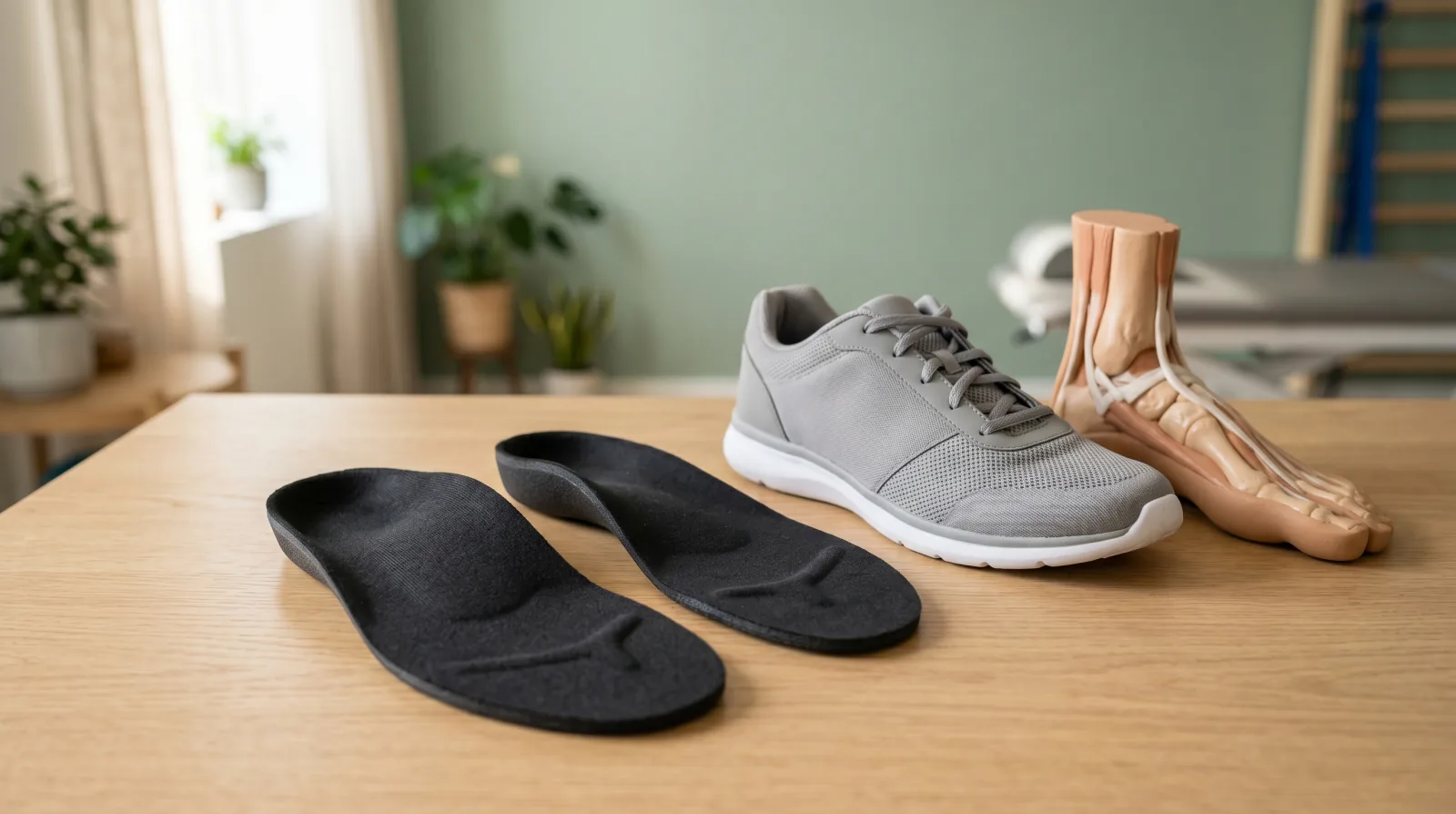
A foot orthotic is an insole that sits inside your shoe and changes how load passes through your foot. Custom orthotics are moulded or milled to a scan or cast of your foot. Prefabricated orthotics, often called off-the-shelf, come in standard shapes and sizes and sometimes get minor heat-moulding or padding adjustments.
The pitch for custom is that a device built to your foot must outperform a generic one. That sounds obvious. It is also where the evidence gets more interesting than the sales conversation, because for several common conditions the two perform about the same.
When foot orthotics genuinely help
Foot orthotics earn their place for specific problems, used as part of a plan rather than as a standalone fix. The clearest examples are plantar heel pain and patellofemoral pain, the knee pain that sits at the front of the kneecap.
For plantar heel pain, the 2023 JOSPT Heel Pain, Plantar Fasciitis clinical practice guideline is direct about how to use them. It advises against orthoses, prefabricated or custom, as an isolated treatment for short-term pain relief. It supports using them when combined with other treatment to reduce pain and improve function. The same guideline puts loading exercise, calf and plantar fascia stretching, and manual therapy at the centre of care. The orthotic is a passenger in that plan, not the driver. We walked through the loading-first approach in our piece on the first six weeks of plantar fasciitis.
For patellofemoral pain, the 2019 JOSPT Patellofemoral Pain clinical practice guideline supports prefabricated foot orthoses to reduce pain in the short term, again combined with an exercise program rather than used alone. Notice the word prefabricated. The guideline picked it deliberately, and the research behind that choice is worth a closer look.
Custom and off-the-shelf often perform the same
This is the part the device quote tends to skip. For plantar heel pain, a 2018 systematic review and meta-analysis in the British Journal of Sports Medicine found no significant difference between custom and prefabricated foot orthoses for pain. The 2019 patellofemoral guideline reflects the same theme, recommending prefabricated orthoses because there is not enough evidence to say custom devices do better for that condition.
So custom is not automatically the stronger choice. For some feet, a prefabricated insole that fits well does the job a custom device would do, at a fraction of the cost. Custom can still make sense when a foot is hard to fit off the shelf, when there is a significant structural difference between feet, or when previous off-the-shelf attempts have failed for a clear reason. That is a judgment call, and it is exactly the call a proper assessment is meant to make. None of this is medical advice for your foot. It is the general pattern the research describes.
The assessment matters more than the device
A foot orthotic changes load. Whether changing load helps depends on what is actually driving your pain, and that is not something you can read off a foot scan in a shoe shop. The same heel pain can come from a fascia that lost its loading capacity, a calf that is too weak to absorb impact, a sudden jump in running volume, or footwear that stopped supporting the activity it is being asked to do. An insole addresses some of those and ignores others.
A physiotherapy assessment looks at the whole chain. It screens for red flags, tests calf and foot strength, watches how you load the foot through a step, and asks what changed before the pain started. From there the orthotic question becomes specific: is load distribution part of your problem, and if so, would an off-the-shelf insole settle it while you rebuild strength, or is your foot a genuine candidate for a custom device. If you are a runner, a running assessment adds gait and training-load detail that a static foot scan cannot capture.
Orthotics work best alongside strengthening, not instead of it
Both guidelines above land on the same idea. The orthotic supports while the active work does the rebuilding. An insole can offload an irritated tissue enough to let you train it, but it does not make a weak calf strong or teach a foot to tolerate more load. Those come from a graded loading program.
In our clinic, the pattern that comes back is the foot that was handed an orthotic and nothing else. The pain often settles for a while, then returns when activity ramps up, because the underlying capacity never changed. The orthotic was treated as the cure rather than the support. The feet that hold their gains are the ones where the insole bought time for strengthening, and the strengthening actually happened.
How coverage and prescriptions work in BC
Many extended health plans reimburse custom orthotics, usually with a prescription and a biomechanical assessment, but the rules vary a lot between plans. Some require a physician's prescription, some accept other practitioners, some cap the amount or the frequency. We do not publish dollar figures that drift out of date. Current rate and coverage information lives on our rates and FAQ page, and the reliable move before you commit is to call your insurer and confirm what your specific plan needs.
On who can assess and provide custom orthotics in BC, the honest answer is several professions can. The BC government's own orthoses policy lists a certified orthotist, certified pedorthist, occupational therapist, physical therapist, or podiatrist among those who may fit a custom-made orthosis. Physiotherapists in BC are regulated by the College of Health and Care Professionals of BC (CHCPBC), the body that now houses the former College of Physical Therapists of BC. Scope and what counts toward reimbursement differ by profession and by insurer, so the practical first step is an assessment that decides whether an orthotic is even the right tool, not a race to whoever sells the device.
What to do before you pay for custom
If you have been told you need custom orthotics, slow the decision down by one step. Ask what your pain is actually being driven by, whether load distribution is part of it, and whether a prefabricated insole plus a strengthening program would test the idea at lower cost first. For plantar heel pain and patellofemoral pain, the guidelines support orthotics as part of a plan, not as the plan, and they do not clearly favour custom over off-the-shelf.
At Launch Rehab, the foot assessment looks at the whole kinetic chain (calf strength, loading mechanics, and training history) before any orthotic decision is made, because the device question only makes sense once the driver is clear. If foot, heel, or knee pain has not settled with sensible self-management, book a physiotherapy assessment and we will work out whether an orthotic belongs in your plan, and if so, which kind. The assessment, not the device, decides.
Frequently asked questions
Do custom orthotics work?
For some conditions, yes, as part of a plan. The 2023 heel pain and 2019 patellofemoral guidelines support foot orthotics combined with exercise, but advise against using them as a standalone fix. Whether they help your case depends on what is driving your pain, which is why a proper foot assessment matters more than the device itself.
Are custom orthotics better than off-the-shelf ones?
Not reliably. A 2018 systematic review found no significant difference between custom and prefabricated orthotics for plantar heel pain, and the patellofemoral guideline recommends prefabricated devices. Custom can still suit a foot that is hard to fit off the shelf, or one with a significant structural difference between sides.
Do I need orthotics for plantar fasciitis?
No, not necessarily. The 2023 clinical practice guideline puts loading exercise, stretching, and manual therapy first, with orthotics as an optional add-on rather than a requirement. Many heels settle without any insole once the calf and plantar fascia rebuild the loading capacity they lost, though an orthotic can still help while that strengthening work is underway.
Will my extended health plan cover custom orthotics in BC?
Many plans do, usually with a prescription and a biomechanical assessment, but the rules vary widely between insurers. Some require a physician's prescription and some accept other practitioners, so check your specific plan before committing, and see our rates and FAQ page for current details.
Who can assess and prescribe orthotics in BC?
Several professions can be involved, including pedorthists, podiatrists, physiotherapists, occupational therapists, and orthotists, with prescription rules that depend on your insurer. The useful first step is an assessment that confirms whether an orthotic is the right tool at all, rather than a race to whoever sells the device.
How long does it take to get custom orthotics made?
The process starts with a scan or cast of your foot at the assessment, which then goes to a lab for milling or moulding. Turnaround time depends on the lab and the clinic, so ask about the expected wait when you book the fitting appointment rather than assuming a fixed number of weeks.
Do orthotics help with knee pain, not just foot pain?
They can, specifically for patellofemoral pain, the pain that sits at the front of the kneecap. The 2019 JOSPT patellofemoral pain clinical practice guideline supports prefabricated foot orthoses to reduce pain in the short term when combined with an exercise program, not as a standalone fix. Orthotics are not a general treatment for every kind of knee pain, so an assessment should confirm the pain pattern first.
Can I just buy orthotics without an assessment?
You can buy off-the-shelf insoles without one, and for some feet that is a reasonable low-cost first step. Custom orthotics, and any orthotic prescribed toward extended health reimbursement, typically require an assessment from a physiotherapist, podiatrist, pedorthist, or another qualified professional first, both to confirm the orthotic is the right tool and to meet most insurers' documentation requirements.
How often do custom orthotics need to be replaced?
There is no fixed replacement schedule. Wear pattern, activity level, and changes in your foot or symptoms all affect how long a device stays effective, and your foot or the device itself will usually signal when it is time to reassess, such as returning pain or visible wear. Ask your fitting clinician what to watch for with your specific device.
Are custom orthotics different for running shoes versus everyday shoes?
They can be, since running and daily wear load the foot differently. A device built around running mechanics may not fit or perform the same in a dress shoe or work boot, which is one reason a proper assessment asks about your specific activities and footwear before recommending a device design.
This article is general information, not personal medical advice. A regulated practitioner can confirm whether the patterns described apply to you.
Sources
- Koc et al. Heel Pain: Plantar Fasciitis, Revision 2023, JOSPT clinical practice guideline (PubMed)
- Willy et al. Patellofemoral Pain, 2019 JOSPT clinical practice guideline (PubMed)
- Whittaker et al. Foot orthoses for plantar heel pain: a systematic review and meta-analysis, British Journal of Sports Medicine 2018 (PubMed)
- Province of BC, Medical Equipment: Orthoses policy (assessment and fitting professions)
- College of Health and Care Professionals of BC (CHCPBC): Physical Therapists
WRITTEN BY
The Launch Rehab Team
Practical recovery and training notes from the clinicians at our five Metro Vancouver studios.
FOUND THIS USEFUL?
Share it with your network on LinkedIn. We wrote a ready-to-post version for you.
FILED UNDER
- custom-orthotics
- foot-orthotics
- plantar-heel-pain
- patellofemoral-pain
- physiotherapy
- bc