
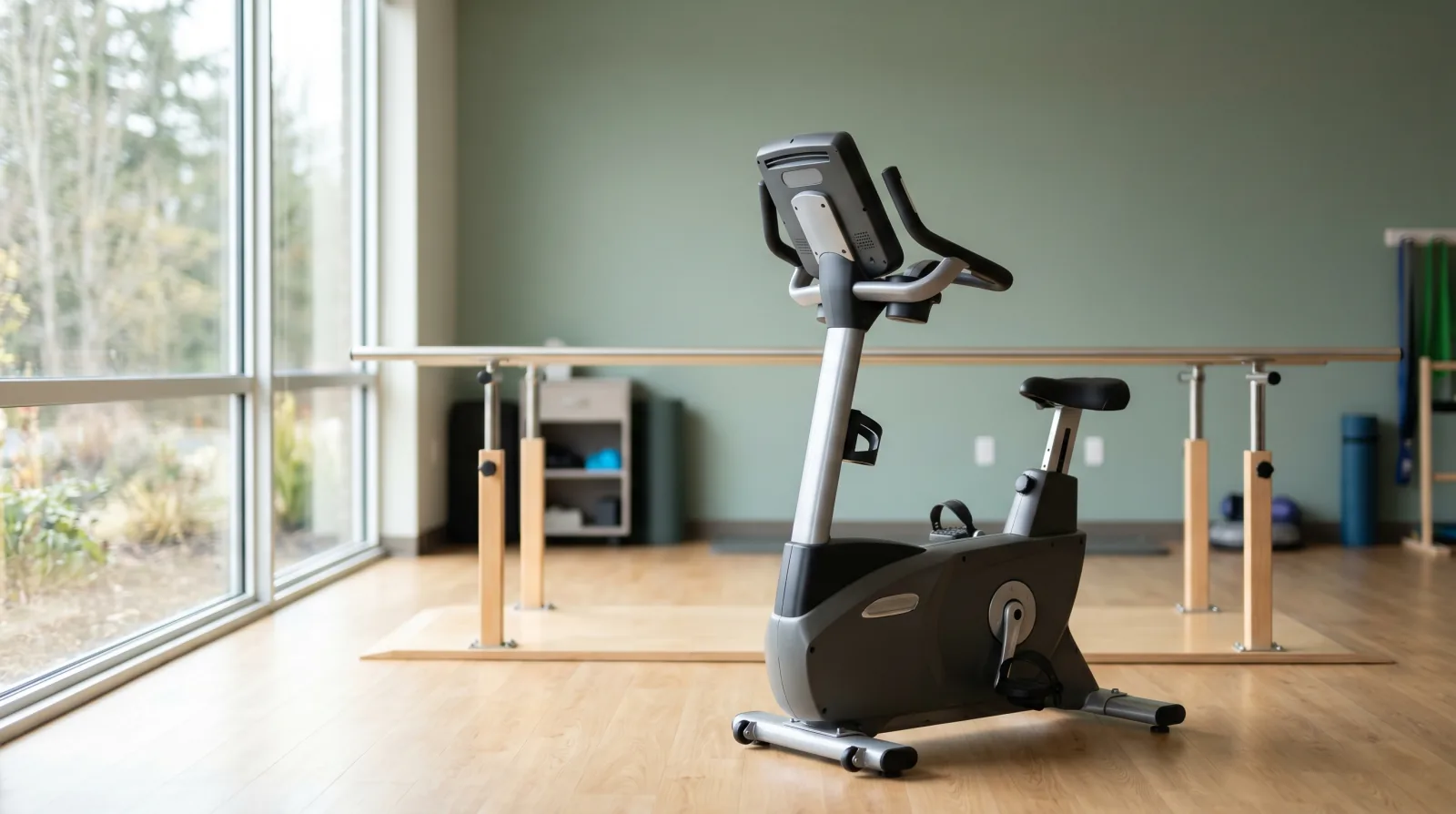
Knee Replacement: Why Prehab Shapes Your Recovery
The work you do before total knee replacement quietly sets the tone for the months after it. Here is what the evidence actually supports, what the first weeks of rehab look like, and how a physio and kinesiologist split the job.
BY THE LAUNCH REHAB TEAM
If you have a total knee replacement booked, the weeks before surgery are not idle time. How strong and mobile the knee is going in shapes how the first phase of recovery feels coming out. The evidence here is honest rather than dramatic, and worth understanding before you decide how much to invest in preparation.
What prehab is, and what it is not
Prehabilitation is the structured work done before surgery: strengthening the muscles around the knee, keeping range of motion as good as the joint allows, and learning what the recovery will ask of you. For a total knee replacement, sometimes called total knee arthroplasty, the targets are usually the quadriceps and hamstrings, hip and calf strength that supports walking, and the basic movements you will repeat in early rehab.
Prehab is not a way to avoid surgery. If you and your surgeon have decided the joint needs replacing, exercise will not reverse that. The case for conservative care before that decision is a separate conversation, and we cover it in knee osteoarthritis: physio before surgery. This post assumes the decision to operate is made, and asks a narrower question: what does preparing well actually buy you?
What the evidence on prehab actually says
The evidence is mixed, and we will not pretend otherwise. A 2024 systematic review and meta-analysis in Disability and Rehabilitation found that pre-surgery exercise improved function, pain, quality of life, strength, and range of motion after knee replacement. The same authors were direct about the limits: most of the trials they pooled carried a high risk of bias, and they concluded that more high-quality research is needed before prehab can be recommended as routine.
A 2025 meta-analysis in Frontiers in Medicine, pooling 21 randomized trials, sharpened the picture. It found prehab reduced pain after surgery at one, three, and six months, but had little effect on hospital length of stay and only a modest effect on early knee function. So the realistic read is this: preparing the knee may help with pain and early strength, the effect tends to sit in the first months rather than the long run, and the size of the benefit varies between people. That is still a reasonable case for doing the work, as long as expectations are set honestly.
How we run prehab before knee replacement
In our clinic, prehab is built around what the knee can tolerate, not a fixed template. A physiotherapy assessment comes first: we screen the knee, check current range of motion and strength, and ask what your home and stairs and work will demand after surgery. From there the program leans on quadriceps and hip strengthening, keeping the knee moving through its available range, and walking tolerance.
The education half matters as much as the exercises. People who arrive on surgery day knowing how to use a walker, what the first physio session will ask, and roughly what pain to expect tend to engage with rehab faster. We also flag the practical things: who will help at home, how stairs will work, and when to start booking the outpatient visits that follow discharge. None of that requires heroics. A few weeks of consistent, well-targeted work is more useful than a frantic month.
What post-op rehab usually looks like
After a knee replacement, the early focus is movement, not rest. Hospital teams generally have people up and walking soon after surgery, because early mobilization helps prevent the complications that come with lying still and starts rebuilding the patterns the new joint needs. The early goals are familiar across rehab settings: settle swelling, regain full straightening of the knee, restore bend, and get walking looking normal again.
Outpatient physiotherapy usually picks up after discharge, and this is where the strength and range of motion work is progressed week by week. A 2015 systematic review and meta-analysis in BMC Musculoskeletal Disorders found that physiotherapy exercise after knee replacement produced short-term improvements in function and pain at three to four months, with small to medium effects, but did not show clear long-term benefit over the comparison groups. We read that as a reason to take the early phase seriously rather than to skip rehab. The first months are when guided exercise does its clearest work, and they set up the self-managed strengthening that carries on after.
How a physio and kinesiologist split the work
The two roles overlap and they are not the same. A physiotherapist in BC is regulated by the College of Health and Care Professionals of BC, and leads the assessment, the early post-op progression, and the clinical decisions about when to advance load and range of motion. That is the role that screens for problems and adjusts the plan when the knee behaves differently than expected.
A kinesiologist, supported by the BC Association of Kinesiologists, is a human-movement specialist who is well suited to the longer strengthening and conditioning phase, once the physiotherapist has set the direction. In practice we often hand the later, higher-volume kinesiology work to a kinesiologist while the physio reassesses at intervals. The split keeps the clinical oversight where it belongs and the strengthening volume affordable, which matters once you are weeks into a program. Both roles bill under the physiotherapy or kinesiology pools that most extended health plans carry, and current figures live on our rates and FAQ page.
Setting honest expectations on pain and timeline
Recovery from a knee replacement is not a straight line, and we will not hand you a week-by-week countdown. The trajectory depends on the knee before surgery, your age and general health, how the surgery went, and how consistently the rehab gets done. Some weeks feel like clear progress and some feel flat. A flat week is information your therapist uses to adjust load, not a sign the recovery has failed.
What we can say plainly is that pain and stiffness are expected early and ease as range of motion and strength return, and that the people who do best are usually the ones who keep showing up for the unglamorous strengthening long after the dramatic early gains slow down. If your knee is going backwards, if swelling and heat are climbing rather than settling, or if you have calf pain or fever, that is a call to your surgeon or physician, not a question for your next physio visit.
Where to start if surgery is on the calendar
If you have a date booked, the useful move is to book a physiotherapy assessment a few weeks out, get a prehab program matched to your knee, and arrive on surgery day stronger and clearer about what comes next. If you are still weighing whether to operate at all, start with the conservative-care question first.
The strongest recoveries we see are not the ones with the most aggressive prehab. They are the ones where the preparation was sensible, the early outpatient rehab was taken seriously, and the strengthening continued past the point where it stopped feeling exciting. If you are unsure how to prepare, book an assessment and we will build the plan around your knee and your surgery date.
Frequently asked questions
Does prehab before a knee replacement actually work?
The evidence is mixed but leans positive for pain and early strength. A 2024 meta-analysis found improvements in function, pain, and strength, while flagging that most trials had a high risk of bias, so the benefit varies between people. A separate 2025 meta-analysis of 21 trials found prehab eased pain at one, three, and six months after surgery, though it had little effect on hospital length of stay.
Will exercises before surgery let me avoid the knee replacement?
No. Prehab prepares the knee for surgery and recovery. It does not reverse the joint damage that led to the decision to operate. The case for trying conservative care first is a separate decision made before surgery is booked, and we cover that question in our piece on physiotherapy before knee replacement surgery.
When should I start prehab?
There is no single correct window, and it depends on your knee and your surgery date. In our clinic we usually start with an assessment a few weeks before surgery, which leaves time to build strength without rushing. The typical prehab window runs about 6 to 8 weeks, though a shorter runway is still worth using since some preparation tends to help more than none.
How long does recovery from a knee replacement take?
It depends on the knee before surgery, your health, the surgery itself, and how consistently rehab gets done. Guided physiotherapy shows its clearest benefit in the first few months, so we set expectations after the first assessment rather than promising a fixed timeline. Some weeks bring clear progress and others feel flat, and a flat week is not on its own a sign the recovery has gone wrong.
Do I see a physiotherapist or a kinesiologist for rehab?
Usually both, at different stages. A physiotherapist leads the assessment and early progression, and a kinesiologist often takes the longer strengthening phase once the direction is set. They are regulated by different bodies and have distinct roles, and in our clinic the physiotherapist keeps reassessing at intervals while the kinesiologist runs the higher-volume strengthening work.
Is post-surgery physiotherapy covered in BC?
Most extended health plans reimburse physiotherapy and kinesiology under their respective pools, and coverage amounts differ by plan. Current Launch Rehab figures are on our rates and FAQ page, and it is worth confirming your limits with your insurer. If you have an ICBC or WorkSafeBC claim connected to the knee, coverage rules differ from a standard extended health plan, so ask at booking.
What does a typical prehab program before knee replacement include?
It is built around what your specific knee can tolerate rather than a fixed template. After an assessment that checks current range of motion, strength, and how your home and stairs will demand movement after surgery, the program usually leans on quadriceps and hip strengthening, keeping the knee moving through its available range, and building walking tolerance. Education on what the first physio session and early recovery will involve runs through the whole process.
Why does early movement matter so much right after a knee replacement?
Hospital teams generally have people up and walking soon after surgery because early mobilization helps prevent the complications that come with lying still and starts rebuilding the movement patterns the new joint needs. The early goals are settling swelling, regaining full straightening of the knee, restoring bend, and getting walking looking normal again. Outpatient physiotherapy then progresses that strength and range of motion work week by week after discharge.
Should I worry if my knee replacement recovery has a bad week?
Not necessarily. Recovery from a knee replacement is not a straight line, and some weeks feel like clear progress while others feel flat. A flat week is information your therapist uses to adjust load rather than a sign the recovery has failed, though a knee that is going backwards, climbing swelling or heat, or calf pain and fever are reasons to call your surgeon or physician rather than wait for your next physio visit.
This article is general information, not personal medical advice. A regulated practitioner can confirm whether the patterns described apply to you.
Sources
- Effectiveness of prehabilitation on outcomes following total knee and hip arthroplasty for osteoarthritis: a systematic review and meta-analysis of randomized controlled trials, Disability and Rehabilitation, 2024
- Prehabilitation is effective in relieving pain after knee arthroplasty, but has little effect on length of stay and knee function: a meta-analysis of randomized controlled trials, Frontiers in Medicine, 2025
- Effectiveness of physiotherapy exercise following total knee replacement: systematic review and meta-analysis, BMC Musculoskeletal Disorders, 2015
- College of Health and Care Professionals of BC, Physical Therapists
- BC Association of Kinesiologists
WRITTEN BY
The Launch Rehab Team
Practical recovery and training notes from the clinicians at our five Metro Vancouver studios.
FOUND THIS USEFUL?
Share it with your network on LinkedIn. We wrote a ready-to-post version for you.
FILED UNDER
- knee-replacement
- prehab
- total-knee-arthroplasty
- physiotherapy
- kinesiology
- bc