
Tech Neck: What Actually Helps Persistent Neck Pain
If your neck aches by mid-afternoon at a desk, you have probably been told your posture is to blame. The evidence is messier than that, and the fix is less about sitting straighter than you would think.
BY THE LAUNCH REHAB TEAM
If your neck and upper back ache by mid-afternoon at a screen, you have probably been told to sit up straight and that your posture is the problem. The honest version is more useful: posture matters far less than most people are told, and the things that reliably help are movement, loading, and not catastrophizing a sore neck.
What "tech neck" actually means
"Tech neck" and "text neck" are popular labels, not diagnoses. They describe the everyday picture of a desk or phone worker with nagging pain across the back of the neck and the tops of the shoulders, usually worse late in the day and better on weekends. There is nothing wrong with the shorthand, as long as it does not box you into one story about the cause.
Most of this is what clinicians call non-specific neck pain. That means the pain is real, but it is not traced to a single damaged structure on a scan, and it is not dangerous. Non-specific neck pain is the common kind, and it usually responds to active management rather than imaging or a search for the one bad posture that broke you.
The posture story is weaker than you have been told
The idea that a forward-leaning head and rounded shoulders cause neck pain feels obvious. The evidence does not back a strong, consistent version of it. A 2019 JOSPT viewpoint by Slater and colleagues reviewed the common belief that spinal pain comes from sitting, standing, or bending "incorrectly" and concluded there is an absence of strong evidence for it, despite a large industry built on "correcting" posture.
When researchers pool the data on the specific posture everyone worries about, the link is partial and confounded. A 2019 systematic review and meta-analysis in Current Reviews in Musculoskeletal Medicine found that adults with neck pain did show more forward head posture than pain-free adults, but found no consistent association in adolescents, and flagged age as a major confounding factor. A measured difference between groups is not the same as a cause you can fix by sitting differently.
The picture is similar one level down the spine. A 2020 systematic review of systematic reviews in the Journal of Biomechanics found no consensus that spine postures or physical loading cause low back pain. Associations show up in some studies, but association is not causation, and the prospective evidence was inconsistent. None of this says posture is irrelevant. It says "perfect posture" is the wrong target, and that movement variation and how much load your neck can tolerate matter more than holding any single position.
What actually helps desk-work neck pain
The interventions with the best support are unglamorous: exercise, graded activity, movement breaks, and clear reassurance that the pain is common and not a sign of damage. The JOSPT Neck Pain clinical practice guideline, Revision 2017 recommends neck range-of-motion exercise plus scapulothoracic and upper-limb strengthening for ongoing neck pain, often combined with education and, where appropriate, manual therapy. The common thread is doing something active, not finding a position to freeze into.
In our clinic the pattern we see most often is a neck that has lost tolerance, not a neck that is sitting wrong. The fix is building capacity. That usually means strengthening the neck and the muscles around the shoulder blades, restoring comfortable range of motion, and adding regular movement breaks through a long screen day so no tissue is loaded in one spot for hours. A short walk or a few shoulder rolls every half hour is not magic, but it changes the load pattern, and changing the load pattern is the part that helps.
Reassurance is a real treatment here, not a throwaway. People who believe their neck is fragile tend to move it less, brace it more, and hurt longer. Knowing that an aching neck at a desk is usually a load-tolerance problem rather than a structural injury makes it far easier to keep moving, which is what settles it.
Where ergonomics fits, and where it does not
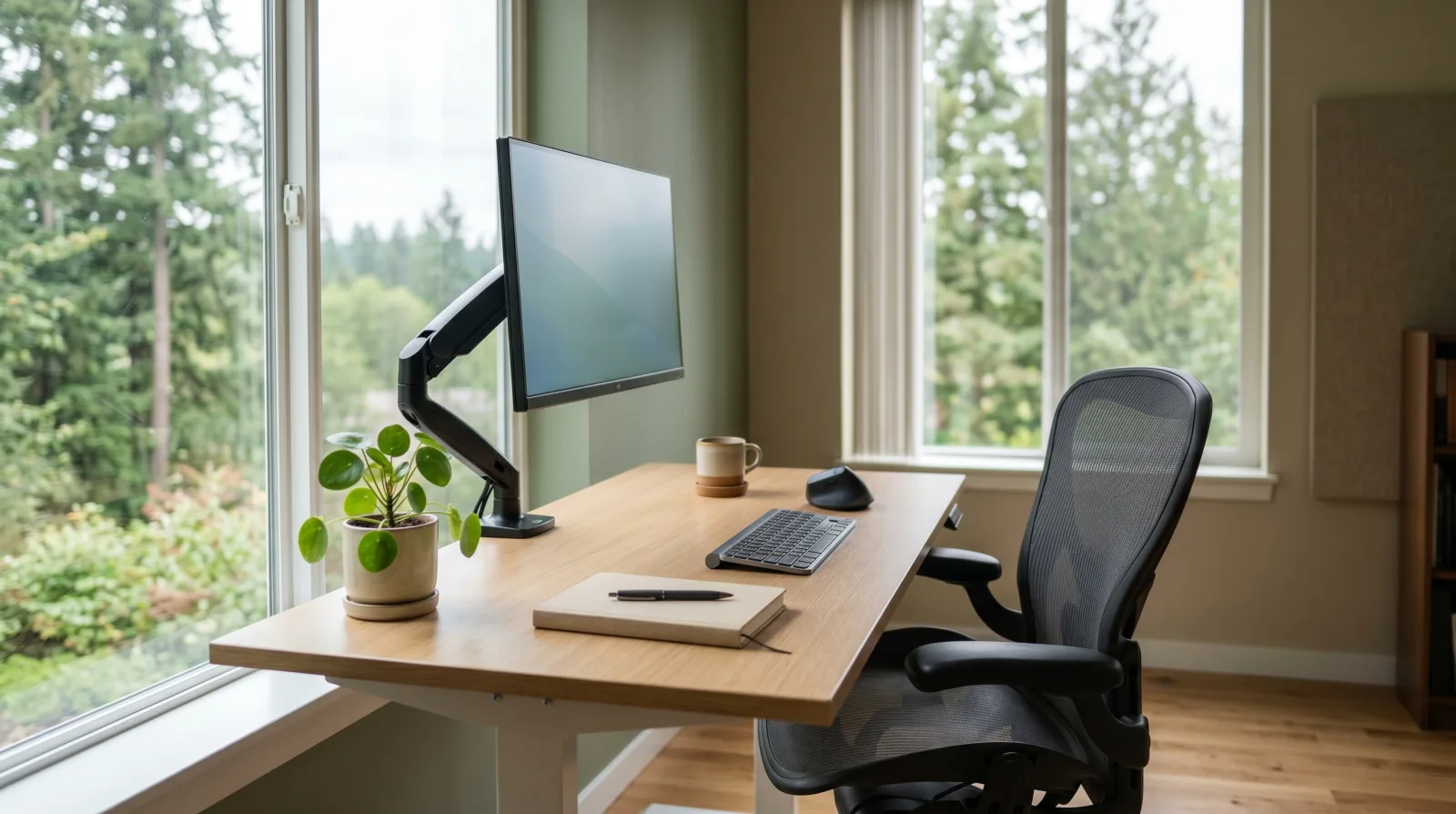
Setting up a screen at eye level and keeping a phone higher is reasonable, and it can reduce the static load that makes a desk day feel worse. The trap is treating the chair, the standing desk, or the lumbar cushion as the cure. Equipment changes the load, but the body adapts to load by getting stronger, and no chair builds that for you.
The most useful ergonomic change is usually the one nobody sells: move more often. A workstation that lets you shift between sitting and standing, or simply a habit of getting up regularly, beats an expensive chair that holds you in one "ideal" pose all day. Variation is the goal, not stillness in the perfect position.
Most neck pain is not dangerous, but watch for these
The reassuring part is that most neck pain in desk workers is non-specific and self-limiting. A small number of presentations are not, and these need a physician rather than a physiotherapy booking. See a doctor promptly if neck pain follows significant trauma such as a fall or a crash, if you have numbness, weakness, or pins and needles spreading into an arm or hand, or if there are problems with balance, walking, or hand coordination.
Other warning signs include neck pain with fever, unexplained weight loss, a known history of cancer, or pain that is constant, getting steadily worse, and not eased by any position or movement. These are uncommon, but they are the reason a physiotherapist screens for red flags before treating anything. If symptoms point that way, the right next step is medical review, not a heat pack. For a neck problem that also drives headaches, our companion guide on cervicogenic and tension-type headaches may fit your pattern better.
When neck pain physiotherapy is the right call
For persistent, nagging neck and upper-back pain with no red flags, an assessment by a physiotherapist is a sensible starting point. In BC, physiotherapists are regulated by the College of Health and Care Professionals of BC (CHCPBC), and their training is built around exactly this work: screening to rule out the serious causes, identifying the movement pattern or capacity gap driving the symptoms, and building a graded loading plan you can actually keep up.
A first physiotherapy visit is one part screening and one part planning. The therapist checks for red flags, looks at how your neck moves and how it tolerates load, asks about your workday and what makes the pain better or worse, and agrees a starting program with you. That is a different thing from a passive treatment you receive while doing nothing yourself. The active part is what carries the result. If your hands are also involved with tingling or grip changes, our guide to conservative care for carpal tunnel covers when that points somewhere other than the neck. For neck pain that has settled into a long-term pattern across months rather than weeks, the chronic pain management hub covers how a graded exposure and pacing plan is built.
Coverage and fees for an assessment and subsequent visits are listed on our rates and FAQ page, where they stay current. Most extended health plans reimburse physiotherapy under their own pool, and the page covers how billing works for ICBC and WorkSafeBC claims if your neck pain followed a crash or a workplace incident.
A more honest takeaway than "sit up straight"
If you have been chasing the perfect posture and the pain has not budged, the evidence suggests you have been aiming at the wrong target. The neck that aches at a desk usually needs more movement and more capacity, not a stricter position. Try regular movement breaks and some neck and shoulder-blade strengthening first, and give it an honest few weeks.
If it has plateaued after a genuine effort, or you are not sure where to start, book a physiotherapy assessment and we will screen it, rule out the red flags, and build a plan around how your neck actually behaves. At Launch Rehab, persistent desk-related neck pain is assessed for joint restrictions at the specific cervical segments that refer into the upper back and shoulder blade, since treating a generalized program at a neck that has one stubborn C4-C5 segment tends not to move the needle.
Frequently asked questions
Is bad posture causing my neck pain?
Probably not in the way you have been told. A 2019 JOSPT viewpoint found no strong evidence that "incorrect" posture causes spinal pain, and posture studies are confounded by age. Movement variation and load tolerance matter more than any single position. Neck pain shows up plenty in people with excellent posture, which is part of why chasing a perfect sitting position rarely settles it on its own.
Will sitting up straight fix tech neck?
No. Holding any one "correct" position all day is not the goal, because stillness in any posture loads the same tissue for hours. Shifting position often and building neck and shoulder strength is what tends to help. A body that adapts to load by getting stronger benefits more from movement variety through the day than from finding one ideal posture and holding it.
What actually helps neck pain from desk work?
Exercise and strengthening, regular movement breaks, graded activity, and reassurance that the pain is common and not dangerous. The JOSPT 2017 neck pain guideline recommends range-of-motion and strengthening exercise for ongoing neck pain, often alongside education and, where appropriate, manual therapy. A short walk or a few shoulder rolls roughly every half hour changes the load pattern enough to matter.
Do I need an X-ray or MRI for tech neck?
Usually no. Most desk-related neck pain is non-specific and does not show a clear cause on imaging. Imaging is reserved for red flags such as significant trauma, nerve symptoms, or signs of a systemic problem, which a clinician screens for first. A physiotherapist can usually tell within the initial assessment whether your presentation fits that non-specific pattern or needs a referral for further workup.
When should I see a doctor instead of a physiotherapist?
See a physician promptly for neck pain after a fall or crash, numbness or weakness spreading into an arm or hand, balance or coordination changes, or neck pain with fever, unexplained weight loss, or a cancer history. These are uncommon but need medical review. Outside of those signs, ordinary desk-related neck pain is a reasonable starting point for a physiotherapy assessment.
Can a physiotherapist help with persistent neck pain?
Yes. A physiotherapist can screen for serious causes, identify what is driving the symptoms, and build a graded exercise plan. In BC, physiotherapists are regulated by CHCPBC and trained to manage non-specific neck pain. The first visit typically covers your workday and what makes symptoms better or worse before agreeing on a starting program together.
Does a standing desk fix tech neck?
Not by itself. A standing desk can reduce how long the neck holds one static load, but the body adapts to load by getting stronger, and a piece of furniture does not build that strength. The most useful ergonomic habit is switching positions and moving regularly, whether that means alternating sitting and standing or simply getting up on a schedule, rather than expecting any single setup to be the fix.
How often should I take a break from my screen to prevent neck pain?
There is no single validated interval for everyone, since load tolerance varies by person and by how the day is structured. The practical guidance that has evidence behind it is regular movement breaks through a long screen day so no tissue stays loaded in one spot for hours, commonly framed as a short walk or a few shoulder rolls roughly every half hour. Position variety matters more than the exact number of minutes between breaks.
What is a deep neck flexor and why does it matter for tech neck?
The deep neck flexors are a group of muscles at the front of the neck that support the head and help control its position during everyday movement. Weakness in these muscles is one of the patterns consistently associated with persistent neck pain, alongside sustained static postures and low load tolerance in the neck overall. Strengthening this muscle group, along with the scapulothoracic and upper-limb muscles, is part of the exercise program a physiotherapist builds for ongoing neck pain.
Can massage therapy help with tech neck?
A registered massage therapist can address soft-tissue tension and discomfort within their scope, and some people find it helps in the short term. On its own it does not build the load tolerance that clinical guidelines identify as the more durable fix, so massage is often most useful alongside, rather than instead of, an active strengthening and movement program from a physiotherapist.
This article is general information, not personal medical advice. A regulated practitioner can confirm whether the patterns described apply to you.
Sources
- Slater D, et al. "Sit Up Straight": Time to Re-evaluate. JOSPT, 2019 (PubMed)
- Mahmoud NF, et al. The Relationship Between Forward Head Posture and Neck Pain: a Systematic Review and Meta-Analysis. Current Reviews in Musculoskeletal Medicine, 2019 (PMC)
- Swain CTV, et al. No consensus on causality of spine postures or physical exposure and low back pain: a systematic review of systematic reviews. Journal of Biomechanics, 2020 (PubMed)
- Blanpied PR, et al. Neck Pain: Revision 2017. JOSPT clinical practice guideline (PubMed)
- College of Health and Care Professionals of BC (CHCPBC): Physical Therapists
WRITTEN BY
The Launch Rehab Team
Practical recovery and training notes from the clinicians at our five Metro Vancouver studios.
FOUND THIS USEFUL?
Share it with your network on LinkedIn. We wrote a ready-to-post version for you.
FILED UNDER
- tech-neck
- neck-pain
- desk-work
- physiotherapy
- posture
- bc