The Pickleball Warm-Up That Actually Lowers Your Injury Risk
Most pickleball players either skip the warm-up or spend it holding static stretches. Neither prepares the body for a fast lateral sport. Here is what the injury-prevention research actually supports, and how to apply it in the ten minutes before you play.
BY THE LAUNCH REHAB TEAM
Most recreational pickleball players do one of two things before a game: nothing, or a few held stretches at the net. Neither prepares the body for a sport built on quick sideways pushes, overhead serves, and sudden stops. The warm-up that lowers injury risk is a short bout of movement, and the research on how to do it is clear.
A warm-up targets the specific injuries pickleball causes
Pickleball injuries fall into predictable groups, and a good warm-up is aimed at the ones a warm-up can influence. As covered in our overview of pickleball injuries after 50, the overuse injuries seen most often are rotator cuff shoulder problems and calf strains, and the sudden injuries are dominated by falls.
A cold calf asked to sprint sideways for a drop shot is how the classic "pickleball leg" strain happens. A shoulder taken straight into hard overhead serves without a build-up is how the rotator cuff gets irritated. And many players feel least steady in the first few minutes of play, before the nervous system has tuned into the movements. A warm-up addresses the exact moment each one tends to strike: the first hard effort on tissue and reflexes that have not yet been switched on.
Dynamic warm-up beats static stretching before play
The old habit of holding a long hamstring or calf stretch before sport works against you. A 2023 systematic review and network meta-analysis in BMC Sports Science, Medicine and Rehabilitation found that static stretching reduced lower-limb explosive strength, while dynamic stretching improved it. Explosive strength is exactly what you draw on to push off for a wide ball or stop before the kitchen line, so blunting it right before you play is the opposite of useful.
Timing is what matters. Held, static stretches are better saved for after play, when the muscles are warm and you are trying to maintain range rather than generate power. Before play, the goal is to move: raise tissue temperature, take the joints through the ranges the game uses, and rehearse the patterns you are about to perform at speed.
Neuromuscular warm-ups are the ones with the best injury evidence
The strongest evidence for preventing injury comes from structured neuromuscular warm-ups, the kind popularised by programs like FIFA 11+ in field sport. A systematic review in BMC Medicine found that neuromuscular warm-up strategies requiring no special equipment reduced lower-limb injuries during sport, and that the most effective versions combined a few ingredients: light strengthening, balance work, sport-specific agility, and controlled landing practice.
Two details from that review matter for pickleball players. First, the benefit showed up when the warm-up was done consistently, at essentially every session over months, not occasionally. Second, balance and agility were part of the recipe. That maps well onto pickleball, where the injuries you most want to avoid, calf strains and falls, are problems of tissue readiness and balance rather than flexibility.
What a practical pickleball warm-up looks like
The routine that fits this evidence is short and unglamorous. In our clinic, we suggest players build a warm-up of five to ten minutes with four kinds of movement, adjusted to what your body needs.
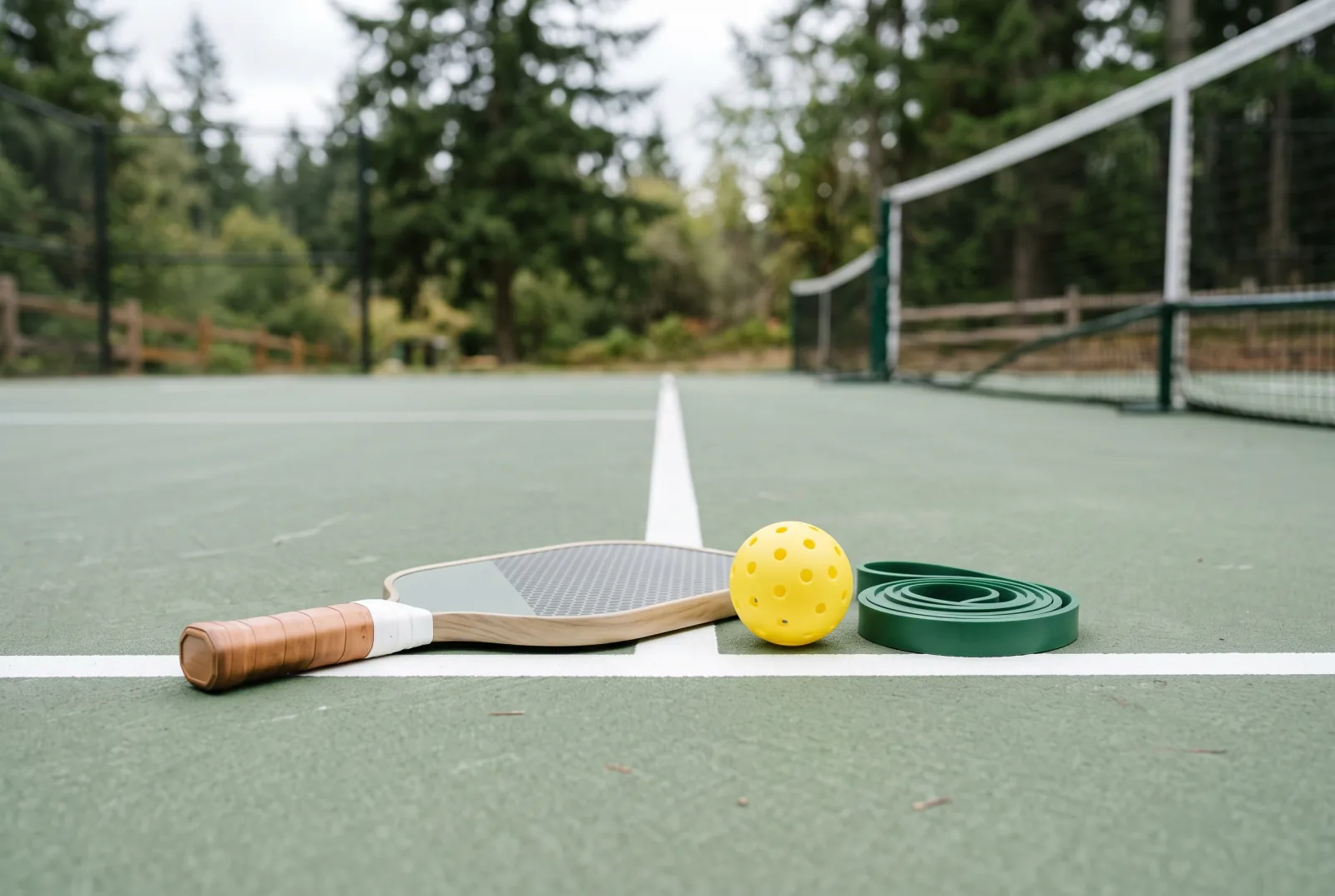
Start with a few minutes of easy general movement to raise your heart rate and warm the tissue: a brisk walk around the court, light jogging, or gentle skipping. Add movement through range next: leg swings front to back and side to side, walking lunges, gentle trunk rotations, and arm circles and cross-body swings to open the shoulders before any serving. Then rehearse the game's directions: side-to-side shuffles, a few short forward-and-back movements, and gentle change-of-direction steps that mimic chasing a ball. Finish with the sport's actual patterns at low intensity: slow practice serves building toward game pace, some soft dinks, and a few controlled push-offs. Adding a short bout of lateral band walking, if you have a resistance band, primes the hip and ankle muscles that stabilise you on quick sideways movements.
The principle underneath the list is simple. By the time you play the first competitive point, your muscles should be warm, your shoulders should have already done a few easy serves, and your feet should have already moved in every direction the game demands.
Consistency matters more than any single exercise
The injury-prevention benefit in the research came from doing the warm-up nearly every time, sustained over months. A perfect routine done occasionally does little. A decent routine done every session is what shifts the odds. That is worth remembering on the days the court is free and the temptation is to walk straight on and play.
The same logic applies to the off-court work that supports it. A warm-up prepares tissue for a session. The underlying strength and balance that protect an older player over a season come from regular strengthening and balance training done away from the court, which is a longer conversation than a pre-game routine. If falls or a wobble on quick stops are your concern, that capacity is trainable at any age and worth building deliberately.
When a warm-up reveals a problem worth assessing
A useful side effect of a consistent warm-up is that it surfaces problems early. If the same shoulder aches every time you start serving, if a calf tightens and will not loosen with movement, or if a knee protests on the first few push-offs and keeps doing so, that is information. A warm-up should leave you feeling readier. One that reproduces the same pain every time is telling you something.
Pain that shows up in the same spot with the same movement, session after session, is usually a loading problem that a routine alone will not fix. That is the point to book a physiotherapy assessment, where the movement can be tested directly and a plan built around it, rather than waiting until you cannot play. Coverage and booking details are on our rates and FAQ page, and any of our five studios can screen a nagging pickleball injury.
This article is general information, not personal medical advice. A regulated practitioner can confirm whether the patterns described apply to you.
Frequently asked questions
Should I stretch before playing pickleball?
Not with held, static stretches. A 2023 network meta-analysis found static stretching reduces lower-limb explosive strength, which you need for quick push-offs. Warm up with movement instead, and save static stretching for after play when the muscles are warm. Dynamic movement, footwork, lunges, and arm swings raises tissue temperature and rehearses the patterns the game demands without blunting the power you need at the first competitive point.
How long should a pickleball warm-up take?
In our clinic we suggest five to ten minutes, and the order matters more than the clock: general movement first so the tissue is warm, then range, then footwork, then serves, so the shoulder has already served a few times before the first competitive point. If you arrive late and have three minutes, spend them on shuffles and slow serves rather than skipping straight to play.
What is the best warm-up to prevent pickleball injuries?
The best-evidenced approach is a neuromuscular warm-up that combines light strengthening, balance, agility, and controlled movement, done consistently. A BMC Medicine review found these reduced lower-limb injuries when performed at nearly every session over months. The routine needs no special equipment, just five to ten minutes of movement before you pick up the paddle for the first competitive point.
Does a warm-up prevent falls in pickleball?
It helps in the first minutes of play, when many players feel least steady. Regular balance and strength training off the court does the larger share of the work, and the two together lower fall risk more than either alone. A physiotherapist can assess where your balance currently sits and build the off-court strengthening that a pre-game routine alone cannot provide.
Why does my calf or shoulder hurt at the start of every game?
A warm-up should leave you readier. Pain that reliably returns with the same movement is usually a loading issue worth assessing rather than warming through. A cold calf asked to sprint sideways, or a shoulder taken straight into hard serves without a build-up, is exactly how these overuse injuries start, so a physiotherapy assessment is the next step rather than a longer warm-up.
What four movements should a pickleball warm-up include?
General movement first to raise your heart rate and warm the tissue, such as a brisk walk or light jogging. Then movement through range, leg swings, walking lunges, trunk rotations, and arm circles. Then footwork that rehearses the game's directions, side-to-side shuffles and change-of-direction steps. Finish with the sport's own patterns at low intensity, slow practice serves building to game pace and a few controlled push-offs.
Does doing the warm-up once in a while still help?
Not much. The injury-prevention benefit in the research came from doing the warm-up nearly every session, sustained over months. A decent warm-up done consistently shifts the odds more than a great one done only on the days you remember. The routine itself is dynamic movement, because a 2023 network meta-analysis found static stretching reduces lower-limb explosive strength.
Is a warm-up enough on its own to prevent pickleball injuries?
No. A warm-up prepares your tissue for that specific session, but it does not build the underlying strength and balance that protect an older player over a season. That deeper protection comes from regular strengthening and balance training done away from the court, which a pre-game routine cannot substitute for.
Sources
- A systematic review and network meta-analysis of the effects of different warm-up methods on the acute effects of lower limb explosive strength, BMC Sports Science, Medicine and Rehabilitation (2023)
- The effectiveness of neuromuscular warm-up strategies, that require no additional equipment, for preventing lower limb injuries during sports participation: a systematic review, BMC Medicine (2012)
WRITTEN BY
The Launch Rehab Team
Practical recovery and training notes from the clinicians at our five Metro Vancouver studios.
FOUND THIS USEFUL?
Share it with your network on LinkedIn. We wrote a ready-to-post version for you.
FILED UNDER
- pickleball
- injury-prevention
- warm-up
- physiotherapy
- return-to-sport
- bc