
Sciatica: Is It a Disc, the Piriformis, or Something Else?
Leg pain that shoots from your back or buttock gets blamed on the piriformis far more often than it should. Here is what sciatica usually points to, what the names actually mean, and which symptoms are a reason to skip physio and call a doctor today.
BY KEANE LEUNG
If pain or numbness runs from your lower back or buttock down the leg, you have probably already searched the word sciatica and landed on the piriformis muscle. The cause is usually further up than that, and the distinction changes what helps.
Sciatica is a symptom, not a diagnosis
Sciatica describes a pattern: pain, and sometimes numbness, tingling, or weakness, that travels from the lower back or buttock into the leg along the path of the sciatic nerve. It is a description of where the symptom goes, not an explanation of why. Clinicians often call this radicular pain, meaning pain referred along a specific nerve root.
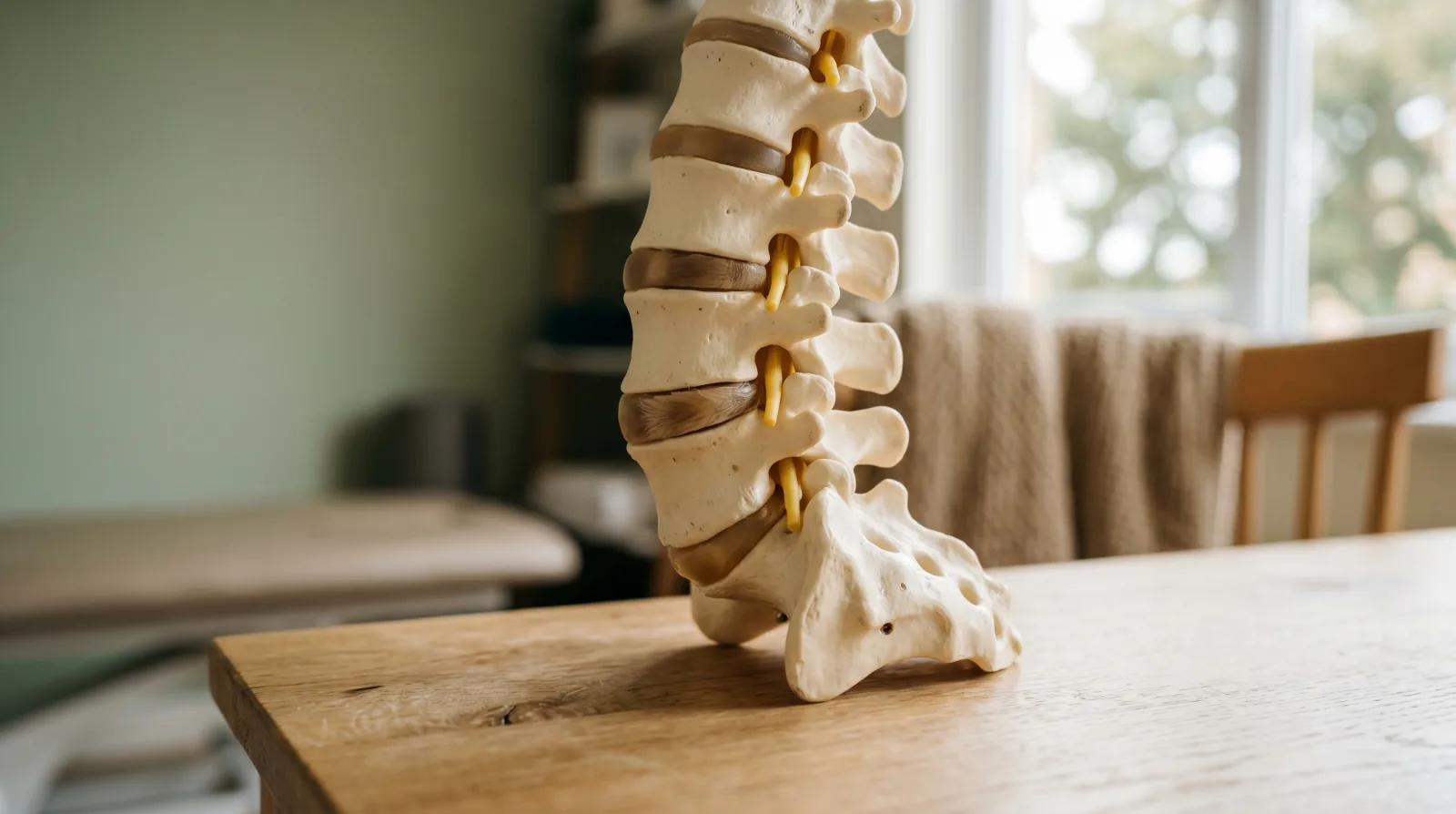
Most of the time, the source is in the lower spine. A lumbar disc that has bulged or herniated can press on or irritate a nerve root as it exits the spine, and that irritated root refers symptoms down the leg. The NICE guideline on low back pain and sciatica in over-16s (NG59) treats sciatica primarily as nerve-root pain of spinal origin, which is why assessment starts at the back rather than the buttock. We unpack the back side of this picture in our guide to disc, facet, and muscular low back pain.
Why the piriformis gets blamed more than it deserves
The piriformis is a small muscle deep in the buttock, and the sciatic nerve runs close to it. The theory of piriformis syndrome is that a tight or irritated piriformis compresses the nerve and produces sciatica-like symptoms. It is a real entity, but it is uncommon, and it is named far more often than it occurs.
A 2023 narrative review in Hip and Pelvis put it plainly, concluding that piriformis syndrome is an over-diagnosed condition and that several other structures around the pelvis and deep buttock can produce the same leg symptoms. The review notes there is still no agreed set of diagnostic criteria for it, which is part of why the label gets attached loosely. In practice, that means a buttock-and-leg symptom should not be pinned on the piriformis until a spinal source has been ruled out and the other deep-gluteal possibilities considered.
This matters because the treatment differs. Chasing a piriformis that was never the problem, with months of glute stretching, tends to leave a disc-related nerve root no better. Getting the source right is the first job of the assessment.
The red flags that mean stop and call a doctor
A small number of symptoms turn leg pain from a physio problem into an emergency. Cauda equina syndrome is compression of the bundle of nerves at the base of the spine, and the American Association of Neurological Surgeons describes it as a surgical emergency. The warning signs are saddle numbness, meaning loss of sensation around the groin, genitals, or buttocks where you would sit on a saddle, new bladder or bowel changes such as not being able to feel the urge to go or losing control, and weakness that is getting worse, especially in both legs.
If any of those are present, that is a same-day trip to a hospital emergency department, not a physiotherapy booking. Time matters with cauda equina, and waiting to see whether it settles is the wrong move. Severe or rapidly progressing weakness in one leg, a high fever with back pain, or back pain after a significant fall or crash also warrant medical assessment first. Physiotherapy is appropriate once those serious causes have been excluded.
What an assessment actually sorts out
A first physiotherapy visit for leg pain is mostly detective work. The physiotherapist screens for the red flags above, then maps where the symptoms travel, what makes them worse and better, and how the leg responds to specific movements and nerve-tension tests. The aim is to work out whether the symptoms behave like an irritated nerve root from the spine, a deep-buttock source, or something referred from elsewhere such as the hip.
Two findings shape the plan. The first is irritability, meaning how easily the leg flares and how long it takes to settle, which sets how much loading the tissue will tolerate early on. The second is directional preference, meaning whether certain positions or movements reliably ease the leg symptoms or pull them back toward the spine. When a clear directional preference exists, it gives the early program a direction. Where it does not, the plan leans more on graded activity and load management. None of this is a diagnosis you can self-apply from an article, which is the point of the screening assessment.
What physiotherapy does, and what it does not promise
For sciatica of spinal origin, the realistic role of physiotherapy is to settle the irritated nerve, keep you moving, and rebuild tolerance so the leg can carry normal load again. That usually means symptom-easing movement, graded activity rather than rest, advice on positions and daily loading, and a progression that respects how the leg is responding week to week. NICE NG59 frames management around staying active, self-management advice, and exercise rather than passive treatment alone, and it discourages long courses of treatment that do not change anything.
It is worth being honest about the evidence for any single technique. A 2025 network meta-analysis of non-surgical care for chronic sciatica in the Journal of Pain reviewed 50 trials and found the overall certainty low, with no single non-surgical option clearly superior to the rest, though exercise combined with nerve-mobilization work showed a short-term benefit for leg pain. The useful read is that active, graded care is a reasonable first-line path for most people, and that no honest clinician can promise you a fixed timeline or a guaranteed technique. Recovery depends on the source, how irritable the nerve is, how long it has been going on, and how early you start moving again. Your physiotherapist sets expectations after the first assessment, not before.
Where the deep-buttock cases fit
Some leg pain genuinely is coming from the buttock rather than the spine, including the small share of true piriformis or wider deep-gluteal involvement. The assessment is what separates these from a nerve root, and the early management often overlaps: settle the irritable tissue, restore movement, then load progressively. The difference is in where the work is targeted once the source is clear.
If the picture points to a deep-buttock source, treatment may add specific loading for the hip and gluteal muscles. A registered massage therapist (RMT) can also help with soft-tissue symptoms within their scope, and we sometimes coordinate care that way, but soft-tissue work alone rarely settles a nerve-root problem. One related pattern worth ruling out is leg symptoms that come on with walking and ease when you sit or bend forward, which can point to narrowing in the spinal canal rather than a disc. We cover that in our piece on spinal stenosis and neurogenic claudication.
If your leg pain has not budged, get it assessed
Most radiating leg pain is treatable with active care, and most of it is spinal rather than a piriformis problem. The first step is sorting out which it is, and ruling out the serious causes that do not belong in a physio clinic at all.
If you have any of the red flags, the saddle numbness, the bladder or bowel changes, the worsening weakness, that is a hospital visit today. If you do not, and the leg pain is not settling on its own or is limiting your days, book a physiotherapy assessment and we will screen, map the source, and build a plan around it. At Launch Rehab, the first sciatica session maps directional preference early (whether extension or flexion eases the leg symptoms) because that finding shapes the entire home program before any hands-on treatment begins. Coverage and what a visit costs are on our rates and FAQ page, and we direct-bill most extended health plans.
Frequently asked questions
Is my leg pain definitely sciatica?
Not necessarily. Sciatica describes pain that travels along the sciatic nerve into the leg, but the same pattern can come from a nerve root in the spine, a deep-buttock source, or referred hip pain. An assessment is what tells them apart, since the treatment differs depending on which of those is actually driving the symptom.
Is it the piriformis muscle causing my sciatica?
Usually not. A 2023 review found piriformis syndrome is over-diagnosed, and most radiating leg pain traces to an irritated nerve root in the lower spine instead. The piriformis should only be blamed after a spinal source has been ruled out, because treating the wrong source with glute stretching tends to leave the actual problem no better.
When is sciatica an emergency?
When you have saddle numbness around the groin or buttocks, new bladder or bowel changes, or weakness that is getting worse, especially in both legs. Those can signal cauda equina syndrome, which the AANS describes as a surgical emergency. Go to a hospital emergency department, not a physio clinic.
Does sciatica need surgery?
Often no. Most sciatica is managed with active, non-surgical care, and surgery is considered for specific situations such as persistent severe symptoms or progressive weakness. The right path depends on the source and how the leg responds, which the assessment establishes, and a physiotherapist can flag early when a case looks like it belongs on the surgical track instead.
How long does sciatica take to settle?
It depends on the source, how irritable the nerve is, how long it has been present, and how early you start moving. There is no honest single number, and a physiotherapist sets expectations after assessing your specific presentation rather than from a chart. A clear directional preference in the assessment often points to a faster, more predictable path.
Should I rest until the pain goes away?
Generally no. NICE guidance frames management around staying active and graded movement rather than bed rest, with the level of activity guided by how the leg responds. Your physiotherapist will set how much loading is appropriate early on, since the right amount depends on how irritable the nerve is at that first visit.
What is the difference between a disc problem and piriformis syndrome?
A disc problem starts in the spine, where a bulged or herniated lumbar disc presses on a nerve root as it exits the spine. Piriformis syndrome, when it genuinely occurs, involves a small muscle deep in the buttock compressing the sciatic nerve lower down. The two need different treatment, disc-related sciatica often responds to directional exercise and nerve mobilization, while a deep-buttock source responds more to soft-tissue work and hip strengthening, which is why an assessment identifies the source before treatment starts.
Can a chiropractor or massage therapist treat sciatica?
It depends on the source and the finding. A registered massage therapist can address soft-tissue symptoms within their scope, and chiropractors are regulated by the College of Complementary Health Professionals of BC (CCHPBC) for manual therapy. Soft-tissue work alone rarely settles a true nerve-root problem from a disc, so most sciatica cases benefit from a physiotherapy assessment first to identify whether the source is spinal, muscular, or something else.
What does a nerve-tension test check for during a sciatica assessment?
A nerve-tension test moves the leg or spine into positions that put gentle tensile load on the sciatic nerve, and the physiotherapist watches whether that position reproduces your typical leg symptoms. A positive response, along with dermatomal numbness, muscle weakness in a specific pattern, or a reduced reflex, points toward a nerve root affected by a disc. These findings, taken together with your history, are part of what shapes the loading plan.
Is sciatica more common as you get older?
Radiating leg pain from a lumbar disc can occur at any adult age, though the underlying cause shifts somewhat with age, with degenerative changes such as spinal stenosis becoming more common in older adults alongside disc-related sciatica. An assessment is what tells these patterns apart rather than age alone, since a stenosis-related pattern responds differently than a disc-related one. Our companion piece on spinal stenosis and neurogenic claudication covers that presentation in more depth.
This article is general information, not personal medical advice. A regulated practitioner can confirm whether the patterns described apply to you.
Sources
- NICE NG59: Low back pain and sciatica in over 16s: assessment and management
- NICE NG59: Recommendations (self-management, staying active, exercise)
- Looking beyond Piriformis Syndrome: Is It Really the Piriformis? Hip & Pelvis, 2023
- Effectiveness of non-surgical interventions for patients with chronic sciatica: a systematic review with network meta-analysis, Journal of Pain, 2025
- American Association of Neurological Surgeons: Cauda Equina Syndrome
WRITTEN BY
Keane LeungBSCPT, CAFCI, Vestibular and Concussion Therapy (HE/HIM/HIS)
Physiotherapist
Practical recovery and training notes from the clinicians at our five Metro Vancouver studios.
READ FULL PROFILEFOUND THIS USEFUL?
Share it with your network on LinkedIn. We wrote a ready-to-post version for you.
FILED UNDER
- sciatica
- low-back-pain
- nerve-pain
- piriformis
- physiotherapy
- bc