Bike Fit in Metro Vancouver: What a Physio-Led Fit Includes
A shop fits the bike. A physiotherapist fits the rider, injury history and all. Here is what happens inside a two-hour physio-led bike fit, who actually needs one, and why the difference matters once something hurts.
BY THE LAUNCH REHAB TEAM
Vancouver cycling season does not really end, it just gets wetter, and by June the roads, the seawall, and the climbs up Seymour are full again. So are our assessment rooms, because the same season that fills the roads fills clinics with cyclists whose knees, backs, and hands have opinions about their position. A bike fit is often part of the answer, and the physio-led version is a different product from the one at the shop.
A shop fits the bike, a physio fits the rider
A good bike shop fit is genuinely useful, and this article is not a shot at local shops. The difference is the starting point. A shop fit starts from the bicycle: frame size, saddle height, bar reach, adjusted toward standard position ranges. A physiotherapist-led fit starts from your body: the hip that lost rotation after an old injury, the hamstrings that will not give you the saddle height the formula says you should have, the history of low back pain that defines how much you can fold forward for the next four hours.
That matters because position targets are body-dependent. The best-known example is saddle height: the Bini, Hume and Croft review in Sports Medicine recommends setting it by measured knee angle rather than by limb-length formulas, because the knee's actual position under load is what relates to overuse injury risk and pedalling economy. Measuring that knee angle, and knowing what to do when your body cannot comfortably achieve it, is assessment work. It is what a physiotherapy license is for.
What the two-hour session includes
A bike fit at Launch Rehab runs about two hours with our certified bike fitter, a registered physiotherapist who races and rides ultra distances himself. The structure, in order:
History first. Your riding goals, weekly volume, the discomfort or injury that brought you in, and anything older that still shapes how you move. A fit that ignores your left knee surgery is a fit to someone else's body.
Then an off-bike functional assessment. Joint range, flexibility, and strength in the places cycling cares about: hips, hamstrings, ankles, trunk. This is the part no shop offers, and it is what turns the on-bike adjustments from guesses into decisions.
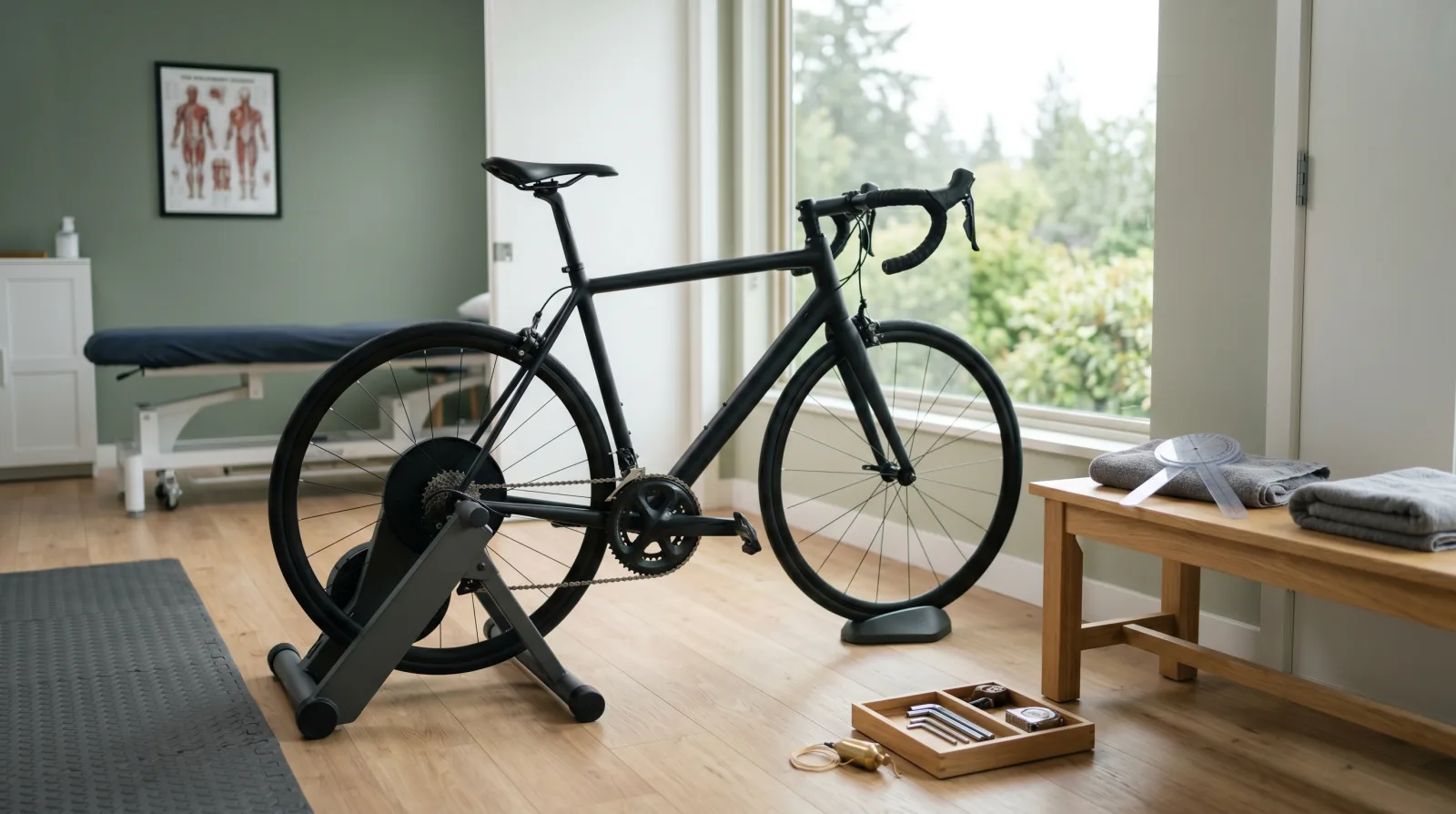
Then the on-bike assessment, with your bike mounted on a trainer, looking at how you actually sit, reach, and pedal under load. Adjustments follow: shoes and cleats, saddle height and fore-aft, and the cockpit, meaning bars, stem, and levers.
The session ends with an exercise program targeting whatever the functional assessment found, because some problems are position problems and some are capacity problems wearing a position costume. Tight hip flexors and a weak trunk will recreate the same back pain in any geometry. If component changes would genuinely improve your position, we say so and point you to nearby bike shops we work with rather than selling parts ourselves.
Who actually needs one
The honest answer is not every cyclist. The clearest cases we see:
- Pain that shows up on the bike: knee pain that builds with distance, numb hands, a back that quits at hour two, saddle discomfort that shorts or chamois cream have not fixed. Pain on the bike is a fit-or-capacity question, and the session sorts out which.
- A new bike, especially a different geometry than the last one. The first month on a new position is when niggles take root.
- A jump in distance or goals: first gran fondo, first triathlon, bike touring plans, or returning to riding after an injury or surgery.
- Riders who have been adjusting things themselves in a slow spiral. If your saddle has moved four times in two months, stop iterating and get measured.
If you ride a few comfortable hours a week with no complaints, you do not need this, and we would rather tell you that here than after billing you.
The knee deserves its own paragraph
Knee pain is the classic cycling overuse complaint, and it is exquisitely sensitive to position. A saddle that is too low loads the front of the knee harder every revolution, and at cycling cadences a small position error repeats thousands of times per ride. The review above found that even modest saddle height changes meaningfully alter knee joint motion and loading, which is why millimetre-level adjustments are not fussiness.
The bike is only half the knee story, though. The other half is what the leg can absorb, which is why a fit session that finds a weak hip ends with strengthening homework, and why cyclists with stubborn patellofemoral pain often run a fit and a rehab plan together. Our piece on rebuilding runner's knee covers the same joint under a different sport, and the loading logic transfers directly. Riders chasing performance rather than pain may also want the pedalling efficiency conversation, which borders on our running assessment and kinesiology services.
What it costs and how billing works
The bike fit is a physiotherapy service, so most extended health plans reimburse it under the physiotherapy pool, subject to your plan's per-visit and annual limits. Current pricing is on our rates page. Bring the bike, your riding shoes, and the shorts you actually ride in. If you ride two bikes seriously, mention it when booking and we will plan the time accordingly.
No referral is needed. If your main problem is an injury rather than position, you can also start with a standard physiotherapy assessment and add the fit once the acute stage settles. The front desk can advise which order fits your situation.
June is the right time, and so is the week after the niggle starts
The pattern we see every year: small on-bike discomfort in June becomes an entrenched overuse problem by August, exactly when the riding is best. Position problems do not improve with mileage, they compound with it. If your bike has been whispering at you for a few hundred kilometres, a two-hour session now is cheaper than a six-week rehab block in peak season. Book the fit, bring the bike, and let the assessment decide whether the answer is millimetres, muscles, or both.
Frequently asked questions
How is a physio bike fit different from a shop bike fit? A physio fit includes an off-bike assessment of your joints, strength, and injury history, and ends with an exercise program alongside the bike adjustments. A shop fit adjusts the bike to standard ranges without the clinical assessment.
How long does a bike fit take? About two hours at our clinics: history, off-bike functional assessment, on-bike assessment under load, adjustments to cleats, saddle, and cockpit, and an exercise program.
Will a bike fit fix my knee pain? Often it helps, since knee loading is highly sensitive to position, but some knee pain is a strength and capacity problem rather than a position problem. The session is designed to tell those apart and treat both.
Is a bike fit covered by extended health insurance? It is billed as physiotherapy, so most extended plans reimburse it under their physiotherapy coverage. Check your plan's per-visit limits, since a two-hour fit bills accordingly.
Should I get fitted before or after buying a new bike? Both have value, but if you can only do one, after, on the bike you will actually ride. If you are between sizes or buying expensive, a pre-purchase conversation about geometry is worth it. Mention it when booking.
This article is general information, not personal medical advice. A regulated practitioner can confirm whether the patterns described apply to you.
Sources
- Bini, Hume & Croft, Sports Medicine, 2011 — Effects of bicycle saddle height on knee injury risk and cycling performance
- Launch Rehab — Bike Fitting service
WRITTEN BY
The Launch Rehab Team
Practical recovery and training notes from the clinicians at our five Metro Vancouver studios.
FILED UNDER
- bike-fit
- cycling
- knee-pain
- physiotherapy
- metro-vancouver