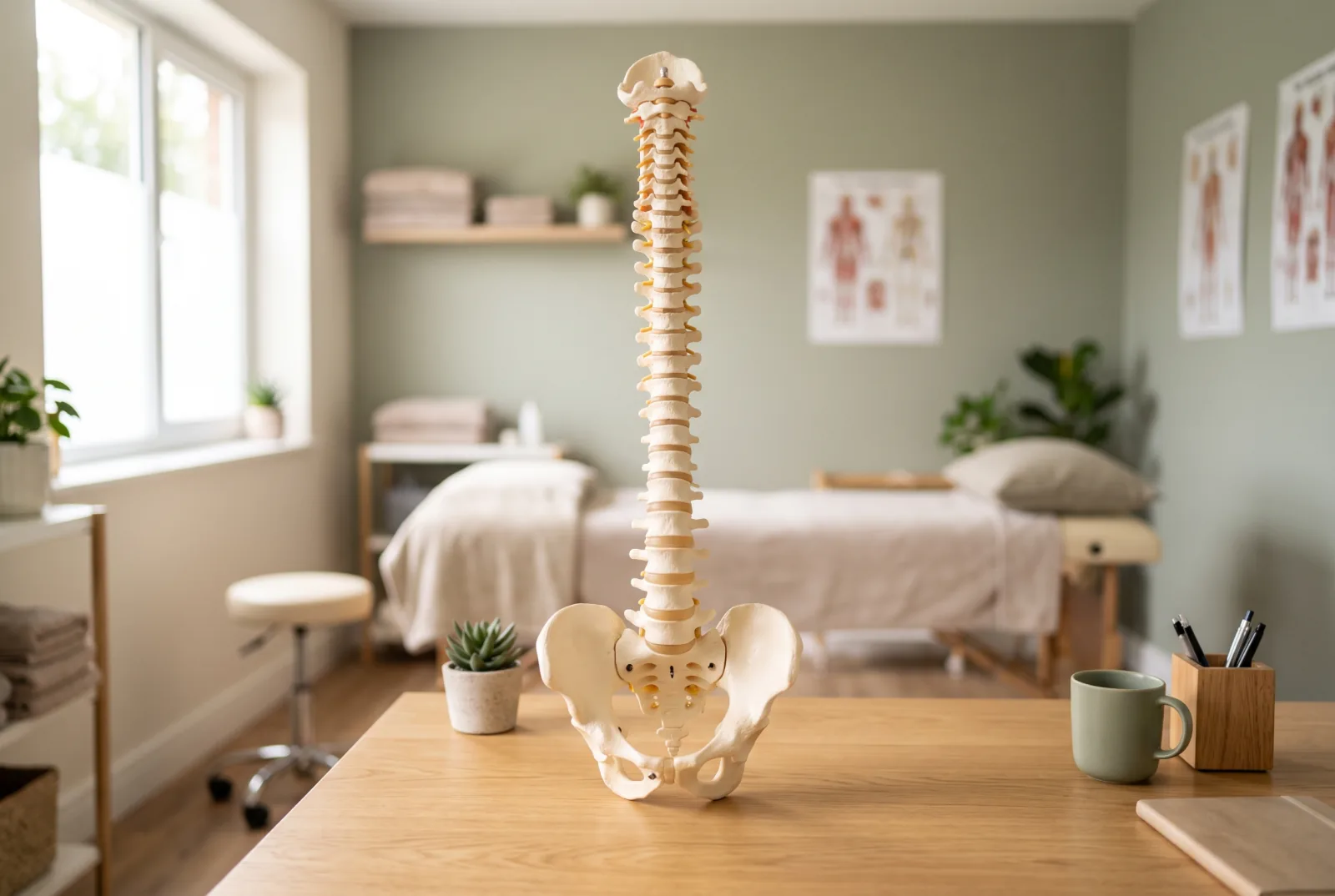

The Desk-Job Body: Neck, Back, and Wrist Strain, and How WorkSafeBC Fits In
Office and work-from-home computer work drives a familiar set of aches: a stiff neck, a tight mid-back, and a wrist or forearm that flares by mid-afternoon. Here is what the evidence actually supports, what is oversold, and how a work-related strain is handled through WorkSafeBC in BC.
BY THE LAUNCH REHAB TEAM
If you spend your day at a keyboard, you probably know the pattern. The neck stiffens by early afternoon. The mid-back aches between the shoulder blades. A wrist or forearm starts to complain by the last hour of work. None of it is dramatic, and none of it stops you working, so it gets ignored until it does not. This is the desk-job body, and it responds to a few things well and to a lot of marketed gadgets poorly.
Why sitting and computer work drive these symptoms
The problem is rarely a single bad posture. It is the same posture held for hours with little variation. When you sit for long stretches, the muscles that hold your head and shoulders in place work at a low, steady load without a break, and that sustained low-level effort is what tends to ache.
A large workplace study of nearly 45,000 employees found that people who sat "almost all the time" at work reported worse general health and more back and neck pain than those who broke up their sitting, and that taking breaks was linked to lower odds of pain even among people who still sat a lot (BMC Public Health, 2021). This is an association, not proof of cause, but it lines up with what we see in our clinic: the desk worker who moves every hour tends to complain less than the one who does not move until they stand up at the end of the day.
The wrist and forearm side is a loading problem too. Repeated small movements at the keyboard and mouse, held near the end of a joint's range, can irritate the tendons and nerves that run through the forearm and wrist. That is a different mechanism from the neck and back, and it is worth telling apart. We cover one common version of this in our post on conservative care for carpal tunnel symptoms.
What movement breaks actually do
Of everything in this list, breaking up sitting has the most consistent support, and it is also the cheapest. The 45,000-employee study above found breaks were linked to lower back and neck pain risk even for people who sat for at least half their day (BMC Public Health, 2021).
The practical version is unglamorous. Every 30 to 60 minutes, stand up, change position, and move for a minute or two. Walk to fill a water glass. Roll the shoulders. Take the neck gently through its range. The point is interrupting the sustained hold before it accumulates. A standing desk helps here only if it gets you moving and changing position, not if it swaps one static hold for another.
It needs a reminder and a habit, which is the part most people find hardest.
Where ergonomics helps, and where it is oversold
Workstation setup matters, but the evidence is more modest than the marketing suggests. A Cochrane review of ergonomic interventions for preventing upper-limb and neck disorders in office workers found that most changes, including sit-stand desks, workstation adjustments, and training on their own, showed little clear preventive effect, and that the certainty of the evidence was generally low (Cochrane, 2019). One option, an arm support used with an alternative mouse, "may or may not" help, which is an honest summary of how thin this evidence tends to be.
Setup still helps. A screen at eye level, a chair that supports your forearms, and a keyboard and mouse positioned so your wrists are not bent hard all reduce the strain on tissue that is already working near its limit. Getting these right is worth doing. Just do not expect a new chair or a standing desk to fix a persistent problem on its own. In our clinic, the setup is one part of the plan, not the whole plan.
The exercise most likely to help
If movement breaks are the cheapest intervention, targeted exercise is the one with the best evidence for treating pain that has already set in. A Cochrane review of workplace interventions for neck pain found moderate-quality evidence that neck and shoulder strengthening exercise reduced pain in symptomatic office workers, with a larger effect from strengthening than from general fitness alone, and greater benefit for people who did more of it (Cochrane, plain-language summary).
For the low back, a systematic review of workplace exercise programs found they reduced low back pain symptoms in office workers and improved strength and flexibility, and that short sessions of 10 to 15 minutes done a few days a week could produce meaningful results (Journal of Functional Morphology and Kinesiology, 2019). It is worth being honest that many of these workplace-exercise studies carry a real risk of bias, so the direction of the evidence is clear while the exact size of the benefit is not.
The theme across all of it is the same. Loading the tissue that has to hold your posture, done regularly, tends to help more than any stretch, gadget, or one-off adjustment. The specific exercises depend on what a screening assessment finds, which is why we test the movement before prescribing it rather than handing everyone the same sheet.
What you can do on your own first
Before booking anything, a few weeks of self-management is reasonable for a nagging, non-alarming ache. Build in a movement break every 30 to 60 minutes. Set your screen, chair, and keyboard so you are not held at the end of any joint's range. Add a short, regular bout of strengthening for the neck, shoulders, and mid-back rather than only stretching. And notice whether the wrist or forearm symptom is easing with rest and setup changes or getting steadily worse.
Some symptoms are not for waiting out. Numbness or pins-and-needles that keeps coming back, weakness or clumsiness in the hand, pain that wakes you at night, or symptoms spreading down an arm are reasons to get assessed rather than push through. Those patterns point to a nerve or a load problem that self-management alone may not settle, and they are worth ruling out early. If you are seeing red flags such as progressive weakness, that is a call to your physician, not a delay.
How physiotherapy works under a WorkSafeBC claim
If the strain is genuinely work-related, it may be covered through WorkSafeBC, the provincial body that handles workplace injuries and illnesses. The first step is reporting the injury. WorkSafeBC advises telling your employer as soon as it is safe to do so, letting anyone treating you know the injury happened at work, and reporting to WorkSafeBC to start a claim, with up to one year from the date of injury to report it (WorkSafeBC: how workers report an injury).
Physiotherapy is a covered treatment under an accepted WorkSafeBC claim. A physiotherapist can perform an initial assessment within a set window after the injury for a worker with an accepted or pending claim, but treatment beyond that assessment depends on the claim being accepted, and continued care runs through a structured request process handled between the clinic and WorkSafeBC (WorkSafeBC: musculoskeletal physiotherapy services). We deliberately do not quote a fixed number of visits here, because the number and duration are set by WorkSafeBC on a claim-by-claim basis, not by a rule of thumb. Your physiotherapist submits progress and any extension requests on your behalf.
There is one point worth clearing up. WorkSafeBC covers physiotherapy, which is regulated by the College of Health and Care Professionals of BC. It also covers registered massage therapy in general, but at Launch Rehab our registered massage therapists do not treat under WorkSafeBC claims, so for a work injury the route with us is physiotherapy. If your injury came from a car crash rather than work, the coverage body and rules are different, and we compare the two in WorkSafeBC versus ICBC for physiotherapy.
The strongest outcomes we see are in people who report the injury early, get assessed before the pattern is entrenched, and treat the desk-job body as a loading problem to train rather than a posture to fix. If you are not sure whether your symptoms are worth assessing or whether they qualify as work-related, book a physiotherapy assessment and we will screen it and point you to the right coverage. Rates and coverage details are on our rates and FAQ page.
This article is general information, not personal medical advice. A regulated practitioner can confirm whether the patterns described apply to you.
Frequently asked questions
Does a standing desk fix neck and back pain?
Not on its own. A Cochrane review found sit-stand desks and similar workstation changes showed little clear preventive effect for upper-limb and neck disorders. A standing desk helps mainly if it gets you moving and changing position, rather than swapping one static hold for another.
How often should I take a break from sitting at work?
A practical target is standing and moving for a minute or two every 30 to 60 minutes. In a study of nearly 45,000 employees, breaking up sitting was linked to lower back and neck pain even among people who still sat for much of the day.
What actually helps desk-job neck pain?
The best-supported treatment for pain that has already set in is regular neck and shoulder strengthening. A Cochrane review found moderate-quality evidence that strengthening exercise reduced neck pain in symptomatic office workers, with more benefit for people who did more of it, and a larger effect than general fitness training alone.
Is my wrist or forearm pain the same problem as my neck pain?
Usually not. Neck and mid-back strain comes from holding a posture for hours at a low, steady load, while wrist and forearm strain comes from repeated keyboard and mouse movements irritating tendons and nerves near the end of their range. They are worth telling apart because they respond to different care.
Does WorkSafeBC cover physiotherapy for a desk-job strain?
Physiotherapy is a covered treatment under an accepted WorkSafeBC claim. Report the injury to your employer and to WorkSafeBC first to start the claim, with up to one year from the date of injury to report it. The number and duration of covered visits are set by WorkSafeBC per claim, not by a fixed rule.
Do I need a doctor's referral before starting physiotherapy under WorkSafeBC?
A physiotherapist can assess a worker with an accepted or pending claim, but treatment beyond the assessment depends on the claim being accepted. The steps and any extensions are handled between the clinic and WorkSafeBC, so the practical first move is to report the injury and start a claim.
Can registered massage therapy help with desk-job neck and back pain?
RMT care can help with the soft-tissue tightness that often comes with sustained desk postures, and WorkSafeBC does cover registered massage therapy in general. At Launch Rehab, though, our RMTs do not treat under WorkSafeBC claims, so for a work-related strain the covered route with us is physiotherapy.
How do I know if my desk-job pain is work-related or WorkSafeBC eligible?
The general test is whether the strain arose from your work duties or work environment, including a home office setup, rather than an unrelated cause. If you are unsure, tell your employer what you are experiencing and start the WorkSafeBC reporting process anyway. Reporting does not commit you to a claim, but it preserves the option and starts the clock on the one-year reporting window.
Does a better chair or keyboard fix desk-job wrist pain?
Partly, but not on its own. A Cochrane review found ergonomic changes like sit-stand desks and workstation adjustments showed little clear preventive effect by themselves, and the certainty of that evidence was generally low. Setup changes reduce strain on tissue that is already working near its limit, but movement breaks and targeted strengthening carry more of the evidence for actually reducing symptoms.
Should I see a physiotherapist for a mild ache or wait until it gets worse?
A few weeks of self-management, movement breaks, setup changes, and light strengthening, is reasonable for a mild, non-alarming ache. Numbness, weakness, pain that wakes you at night, or symptoms spreading down an arm are signs to get assessed sooner rather than waiting, since those patterns point to a nerve or load problem that self-management alone may not settle.
Sources
- Workplace sitting is associated with self-reported general health and back/neck pain: a cross-sectional analysis in 44,978 employees, BMC Public Health (2021)
- Ergonomic interventions for preventing work-related musculoskeletal disorders of the upper limb and neck among office workers, Cochrane (plain-language summary)
- Workplace interventions for workers with neck pain, Cochrane (plain-language summary)
- Physical exercise is confirmed to reduce low back pain symptoms in office workers: a systematic review, Journal of Functional Morphology and Kinesiology (2019)
- Workers: how to report an injury and what to expect, WorkSafeBC
- Musculoskeletal physiotherapy services (contracted), WorkSafeBC
WRITTEN BY
The Launch Rehab Team
Practical recovery and training notes from the clinicians at our five Metro Vancouver studios.
FOUND THIS USEFUL?
Share it with your network on LinkedIn. We wrote a ready-to-post version for you.
FILED UNDER
- desk-job
- neck-pain
- back-pain
- repetitive-strain
- worksafebc
- ergonomics
- bc