Torn Meniscus: Do You Need Surgery, or Can Physiotherapy Rebuild the Knee?
A torn meniscus does not automatically mean an operation. For most middle-aged and older knees, exercise-based physiotherapy performs as well as keyhole surgery. Here is how the two kinds of meniscus tear differ, what physiotherapy actually targets, and the mechanical symptoms that make a surgical opinion worth getting.
BY THE LAUNCH REHAB TEAM
A torn meniscus on an MRI report can read like an automatic ticket to the operating room. For most people, it is not. The first question is what kind of tear this is, and in what kind of knee. The answer changes the advice more than almost anything else.
Two kinds of meniscus tear, two different decisions
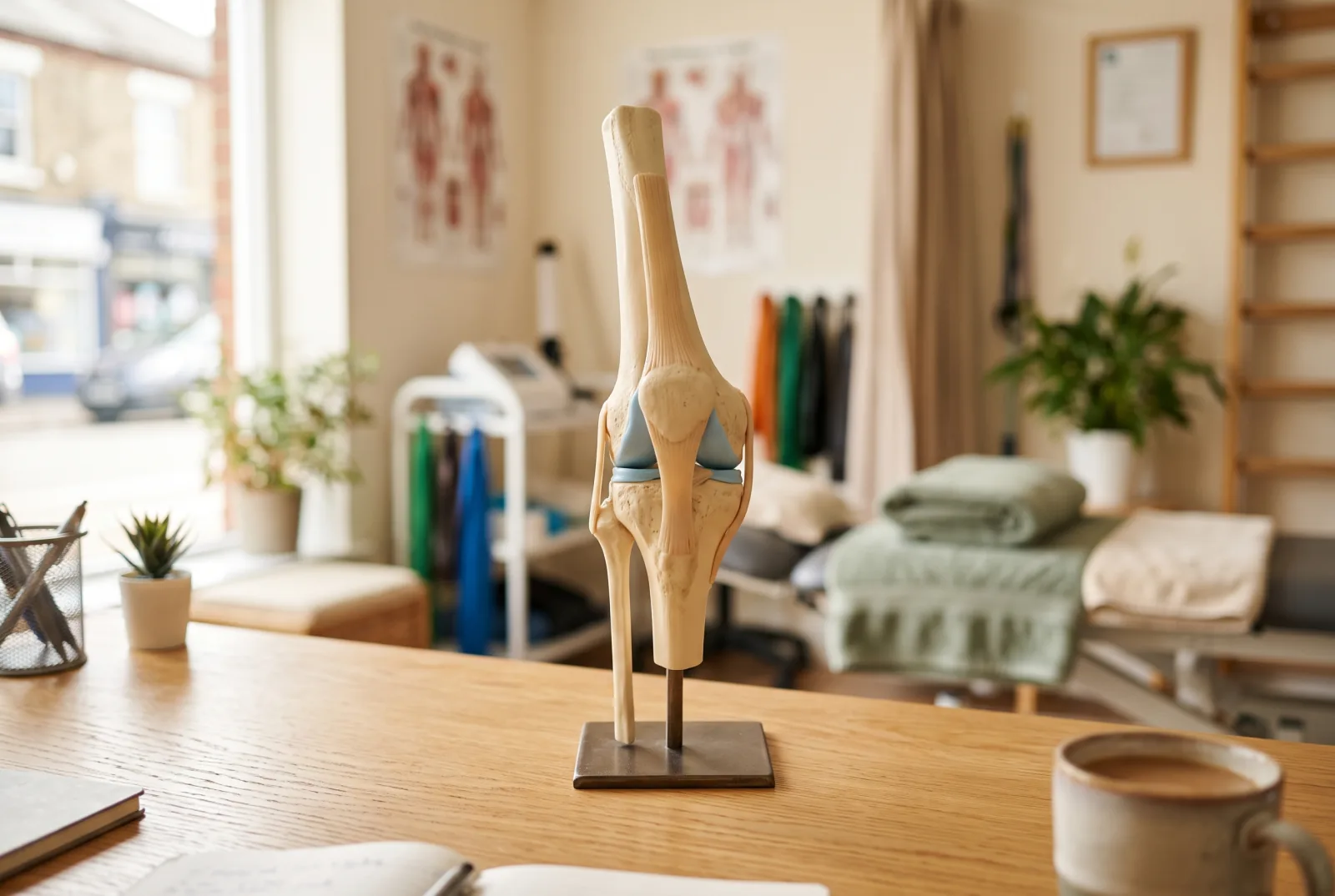
The meniscus is a C-shaped pad of cartilage that sits between the thigh bone and the shin bone and helps spread load across the knee. Tears in it fall into two broad groups, and the group matters more than the word "torn."
A degenerative tear is wear that shows up in a middle-aged or older knee, often alongside early osteoarthritis. It frequently appears without any single injury, and it is common enough that many people over 50 have one on imaging without much pain. A traumatic tear is a fresh tear from a real event, usually a twist or a pivot under load, more common in younger and more active knees. The 2019 ESSKA meniscus consensus defines a traumatic tear as one with an acute onset of symptoms caused by a sufficient trauma, and treats it as a genuinely different problem from age-related wear.
That split drives most of the decision. The strong evidence for skipping surgery applies to the degenerative group. The traumatic group, and knees that lock, are where a surgical opinion carries more weight.
Why physiotherapy is first-line for degenerative tears
For a degenerative meniscus tear, the research comparing exercise to keyhole surgery is unusually consistent. The ESCAPE randomised trial followed 321 people aged 45 to 70 with a degenerative meniscal tear and found that, at five years, exercise-based physiotherapy was no worse than arthroscopic partial meniscectomy for knee function. The authors concluded that physiotherapy should be the preferred treatment over surgery for degenerative meniscal tears. Arthroscopic partial meniscectomy is the keyhole operation that trims the torn part of the meniscus.
When a degenerative tear sits alongside osteoarthritis, the picture is the same. The METEOR trial in the New England Journal of Medicine compared surgery plus physiotherapy against physiotherapy alone in people 45 and older with a meniscal tear and mild-to-moderate osteoarthritis, and found no meaningful advantage to operating first.
Guideline bodies have read this the same way. The 2017 BMJ Rapid Recommendation, an international expert panel, made a strong recommendation against arthroscopic surgery for nearly all patients with degenerative knee disease, a category it defines as knee pain not caused by major trauma in people over 35, with or without osteoarthritis, meniscal tears, or mechanical symptoms on imaging. That is a strong statement, and it applies to a large share of the tears people worry about.
What physiotherapy actually targets in a torn knee
Physiotherapy for a meniscus tear works on everything around the tear that determines whether the knee hurts and how well it functions.
The first job is usually to settle the irritated joint and restore range of motion, so the knee can straighten and bend without guarding. From there the work moves to strength, mostly the quadriceps and glutes, because a weak thigh loads the joint poorly and a strong one shares load better. Balance and control of the knee under load, sometimes called neuromuscular control, get trained so the knee behaves predictably when you turn, step down, or push off. The plan is then graded back toward the specific demands of your life or sport, adding load only as symptoms allow. In our clinic, the point of a first assessment is to work out which of these is the actual limiter for your knee, rather than handing everyone the same sheet of exercises.
It changes how the knee tolerates the tear, which for most degenerative cases is what determines day-to-day function. If you also carry knee osteoarthritis, that overlap is worth understanding on its own terms, which we cover in physiotherapy before knee replacement surgery.
The mechanical symptoms that warrant a surgical opinion
There is one pattern where a surgical consultation moves up the list: true mechanical locking. This is a knee that physically jams and will not fully straighten, or catches and gives way in a way that stops you mid-step, because a torn fragment is getting caught inside the joint. That is different from a knee that is stiff, sore, or clicks without catching, which is common and usually not mechanical in this sense.
Locking matters because it can point to a tear shape, such as a bucket-handle tear, where a displaced fragment is physically blocking the joint. The ESSKA consensus frames genuine mechanical symptoms and a locked knee as reasons to consider surgery rather than to keep pushing conservative care indefinitely. A fresh traumatic tear in a younger, active knee sits in the same category. Where the tissue is repairable, the ESSKA panel favours preserving and repairing the meniscus over trimming it, and repairing sooner rather than later. Whether a tear is repairable, and whether surgery is the right call, is an orthopaedic surgeon's decision made from your imaging and examination, not something physiotherapy decides.
To be clear about what a locked knee is not: an occasional pop, some grinding, or morning stiffness that eases as you move are not mechanical locking and rarely change the plan on their own.
How the decision gets individualized
The evidence points strongly toward physiotherapy first for degenerative tears, and "first" leaves room for surgery later. The decision is still yours to make with your clinicians. A few things push the balance one way or the other.
The kind of tear and how it started matters most, degenerative wear versus a fresh traumatic event. Whether the knee genuinely locks matters next. Beyond that, your age and activity demands, how the knee is responding to a real course of loading, whether osteoarthritis is already present, and your own goals all feed in. A young athlete with a fresh, repairable tear and a locking knee is a different conversation from a 60-year-old with an achy knee and a wear tear on imaging. Physiotherapy stays in the rehabilitation and exercise lane. The surgical question belongs to an orthopaedic surgeon, and the two answer different parts of the same problem.
It is also worth knowing that choosing physiotherapy first does not close the surgical door. In the ESCAPE trial, a share of people who started with physiotherapy chose to have surgery later, and that was treated as a reasonable path rather than a failure. Starting conservatively keeps the option open while giving the knee a real chance to settle without an operation.
What a first physiotherapy visit looks like for a knee like this
A first visit is one part screening and one part planning. The physiotherapist checks for the red flags and the mechanical signs that would change the plan, tests how the knee moves and loads, and identifies which impairment, range, strength, or control, is driving your symptoms. From there you agree on a starting load and a way to measure whether it is helping.
If genuine locking, a recent major trauma with a swollen knee, or a knee that will not straighten shows up, the sensible next step is a referral for a surgical opinion, not more of the same exercises. If the picture looks like a typical degenerative tear, a structured, progressed exercise plan is the evidence-based place to start. Physiotherapists in BC are regulated by the College of Health and Care Professionals of BC (CHCPBC), and screening for those red flags before loading a knee is part of that scope.
If you are weighing a scope against rehab and are not sure which group your tear falls into, book a physiotherapy assessment and we will test the knee, name the likely pattern, and be honest about when a surgical opinion is worth getting. Coverage and booking details are on our rates and FAQ page. If your knee is more of a running or kneecap problem than a meniscus one, rebuilding a knee with patellofemoral pain covers that path, and if this follows a bigger ligament injury, our ACL reconstruction rehab timeline walks through that longer road.
This article is general information, not personal medical advice. A regulated practitioner can confirm whether the patterns described apply to you.
Frequently asked questions
Does a torn meniscus always need surgery?
No. For degenerative tears in middle-aged and older knees, exercise-based physiotherapy performs as well as keyhole surgery for most people, and the 2017 BMJ Rapid Recommendation advises against arthroscopy for nearly all degenerative knee disease. A fresh traumatic tear or a knee that truly locks is where a surgical opinion carries more weight.
Can physiotherapy heal a meniscus tear?
Physiotherapy builds the strength, movement, and control around the knee so it tolerates the tear and functions better, which for most degenerative tears is what determines day-to-day pain and function. The plan usually progresses from settling the joint and restoring range of motion to quadriceps and glute strengthening, then balance and control work under load.
What is the difference between a degenerative and a traumatic meniscus tear?
A degenerative tear is age-related wear, common in older knees and often alongside osteoarthritis, frequently without any injury. A traumatic tear comes from a specific event like a twist under load, is more common in younger active knees, and is more likely to prompt a surgical opinion.
When is meniscus surgery actually recommended?
Genuine mechanical locking, a knee that will not fully straighten because a fragment is caught, and fresh repairable traumatic tears are the situations where surgery is more often considered. That decision belongs to an orthopaedic surgeon working from your imaging and exam. A knee that is simply stiff, sore, or clicks without catching does not usually fall into this category.
How common is a degenerative meniscus tear with no injury?
Common. Degenerative tears often show up on imaging in middle-aged and older knees without any single injury event, frequently alongside early osteoarthritis, and many people over 50 have one with little or no pain. Finding a tear on an MRI does not by itself mean it is the cause of your symptoms or that it needs surgery.
Who decides if my meniscus tear needs surgery?
An orthopaedic surgeon makes that call, based on your imaging and a physical examination, not a physiotherapist. Physiotherapy works in the rehabilitation and exercise lane and can flag mechanical symptoms like locking that warrant a surgical opinion, but the surgical decision itself sits with the surgeon.
If I start with physiotherapy, does that close the door on surgery later?
No. In the ESCAPE trial, a share of people who started with physiotherapy went on to have surgery later, and that was treated as a reasonable path rather than a failure of the conservative approach. Starting with exercise keeps the surgical option open while giving the knee a real chance to settle without an operation first.
What does a locked knee actually feel like, compared to normal stiffness?
A truly locked knee physically jams and will not fully straighten, or catches and gives way mid-step, because a torn fragment is caught inside the joint. An occasional pop, some grinding, or morning stiffness that eases as you move around are not mechanical locking and rarely change the treatment plan on their own.
Does having a meniscus tear mean I also have osteoarthritis?
Not necessarily, but the two often travel together in older knees. When a degenerative tear sits alongside mild-to-moderate osteoarthritis, the research still favours starting with physiotherapy: the METEOR trial found no meaningful advantage to operating first in that group compared with physiotherapy alone as the starting treatment.
Sources
- Effect of Physical Therapy vs Arthroscopic Partial Meniscectomy in People With Degenerative Meniscal Tears: Five-Year Follow-up of the ESCAPE Randomized Clinical Trial (JAMA Network Open, 2022)
- Surgery versus Physical Therapy for a Meniscal Tear and Osteoarthritis, METEOR trial (New England Journal of Medicine, 2013)
- Arthroscopic surgery for degenerative knee arthritis and meniscal tears: a clinical practice guideline, BMJ Rapid Recommendation (BMJ, 2017)
- Management of traumatic meniscus tears: the 2019 ESSKA meniscus consensus (Knee Surgery, Sports Traumatology, Arthroscopy, 2020)
- College of Health and Care Professionals of BC (CHCPBC): physiotherapy regulation and scope
WRITTEN BY
The Launch Rehab Team
Practical recovery and training notes from the clinicians at our five Metro Vancouver studios.
FOUND THIS USEFUL?
Share it with your network on LinkedIn. We wrote a ready-to-post version for you.
FILED UNDER
- meniscus-tear
- knee
- physiotherapy
- surgery-decision
- osteoarthritis
- bc