Shockwave Therapy for Plantar Fasciitis: Sessions, Cost, Evidence
Shockwave gets pitched as either a miracle or a gimmick for heel pain. The evidence sits between those, and the timing of when it enters your plan matters more than the machine. Here is the honest version, including what it costs and how many sessions to expect.
BY KEANE LEUNG
If your heel has hurt for months, someone has probably mentioned shockwave therapy, and probably with strong feelings in one direction or the other. The truth is less dramatic than either camp. Shockwave is a legitimate tool with decent evidence for stubborn plantar fasciitis, and it earns its place at a specific point in the plan rather than on day one.
What shockwave actually is
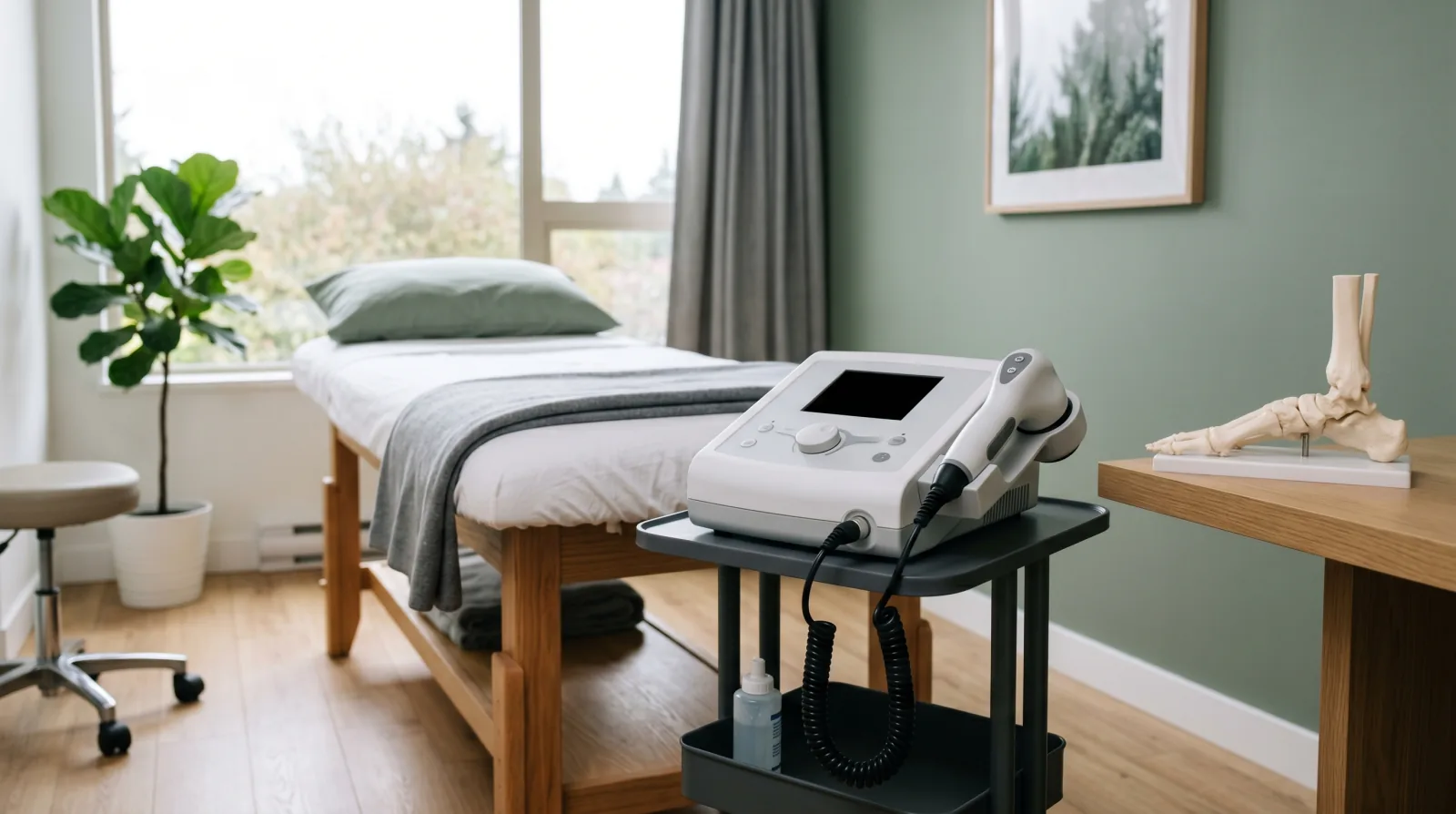
Extracorporeal shockwave therapy (ESWT) delivers high-energy acoustic pulses into tissue through a handheld applicator pressed against the skin. No needles, no incisions, no sedation. The proposed mechanisms are a mix of stimulating blood flow and tissue repair in a structure that has stalled in a degenerative state, and dialing down pain sensitivity in the area.
The "shock" in the name oversells the experience, but only somewhat. Treatment is genuinely uncomfortable on a sore heel, usually described as an intense tapping that borders on sharp at higher settings. The intensity is adjustable, your tolerance is part of the dosing conversation, and each treatment itself takes only a few minutes inside a regular physiotherapy appointment.
What the evidence says, without the sales pitch
The plantar fasciitis evidence for shockwave is real. A 2024 systematic review and meta-analysis of 11 randomized trials found that both focal and radial shockwave produced meaningful pain reductions in plantar fasciopathy, with treatment adherence between 82 and 100 percent, which is high for any intervention that hurts. The same review's caveat matters: results varied with the machine settings used, so the protocol your clinician selects is part of whether it works.
Two honest qualifiers belong beside that. First, shockwave in trials is usually tested on chronic cases, heel pain that has already lasted months, not fresh flare-ups. Second, no reputable review positions shockwave as a replacement for loading work. It is an adjunct that helps a stalled tissue tolerate the rehab that actually rebuilds it. We covered the broader shockwave-versus-injection decision in shockwave vs cortisone, and the loading foundation in the first six weeks of plantar fasciitis treatment.
When shockwave enters the plan, and when it should not
In our clinics, shockwave is usually not a first-visit treatment for heel pain. The first weeks generally belong to the unglamorous fundamentals: calf and foot strengthening, load management, footwear adjustments, and time. Most plantar fasciitis improves on that alone, which means most people never need the machine.
The shockwave conversation starts when a heel has had a genuine run of progressive loading, usually a couple of months or more, and has plateaued. That is the population the trials studied, and it is where we see it help most: the stubborn middle group whose heel is no longer acutely irritable but refuses to finish getting better. Using it earlier mostly adds cost and discomfort to a recovery that was already going to happen.
A few situations rule it out entirely or need physician input first, including pregnancy, blood clotting disorders or blood thinners, and certain local conditions at the treatment site. The screening questions at your assessment cover these.
How many sessions a course takes
Trial protocols and our clinical practice converge on a short course rather than an open-ended subscription. In our clinic a typical course is three to five sessions, spaced roughly a week apart, with each delivered inside a regular physiotherapy visit that also progresses your loading program. Soreness for a day or two after a session is common and expected.
The response pattern is worth knowing in advance: many people notice change within the course, and the full effect tends to build over the weeks after it ends, as the tissue responds. We reassess rather than extend indefinitely. If two courses have done nothing, more shockwave is rarely the answer, and the plan needs rethinking instead.
What it costs in BC
Shockwave at Launch Rehab is billed as an add-on to a physiotherapy visit rather than a separate service, and current figures live on our rates page, where they stay accurate. When you compare clinics, check whether a quoted price is per session or per course, and whether it includes the physiotherapy visit around it. A machine-only session without any loading plan attached is the version of shockwave the evidence does not support.
Extended health plans generally reimburse the visit under the physiotherapy pool, including the add-on, though plans differ on add-on fees specifically. Worth one call to your insurer if the add-on matters to your budget. One scope note for BC readers: shockwave is delivered by physiotherapists and chiropractors here, and the College of Complementary Health Professionals of BC has clarified it sits outside registered massage therapists' scope, so an RMT offering shockwave is a flag worth questioning.
What happens if shockwave doesn't work
Not every heel responds. The trial literature is honest about this: the 2024 meta-analysis found meaningful average pain reduction, but averages hide the cases that didn't move. If two full courses with adequate dosing and proper spacing have produced no detectable change, the plan needs rethinking rather than more of the same.
The honest next steps depend on what the tissue is actually doing. A re-assessment that tests load tolerance and looks at foot mechanics may identify a contributing factor that shockwave doesn't address: a training error still running in the background, a hip or ankle movement pattern that keeps overloading the insertion, or a structural issue that imaging would capture. Cortisone injection, which we covered in shockwave vs cortisone, occasionally becomes relevant when inflammation is the primary driver rather than degenerative change, though it carries its own timeline and repetition limits.
Surgery is rare and late-stage for plantar fasciitis, and most clinicians want to see a minimum of six to twelve months of conservative management, including progressive loading, before that conversation happens. If you are there, a sports medicine physician or orthopaedic surgeon is the right next referral, and a well-documented rehab record from your clinician matters for that assessment.
What your footwear and daily load are doing in the background
Shockwave sessions happen two or three times total over several weeks. Your footwear and daily step count happen several thousand times a day. The mismatch in repetition volume is why heel pain frequently outlasts any single intervention applied at clinic frequency.
Hard, thin-soled shoes on concrete floors are a predictable irritant. The heel's ability to absorb load scales inversely with how much the calf is doing. A stiff calf transfers load to the plantar fascia insertion rather than distributing it through the posterior chain. Assessment of footwear, daily load patterns, and walking surface is part of what we do at the initial appointment, because a good shockwave plan layered on top of an unaddressed mechanical driver produces short-lived results.
This is not a special insight. It is just the part that requires the most follow-through from the client between sessions, and the part that most often accounts for the difference between people who resolve and people who cycle back.
The part nobody selling a machine will tell you
The heel that needs shockwave is usually the heel whose calf never got strong. The machine can quiet a stubborn tissue, and the meta-analysis numbers back that up, but the recurrence question is settled by what your foot and calf can carry afterward. Every shockwave course in our clinics runs alongside a strengthening progression, and clients who skip that half reliably reintroduce themselves to us the following year.
If your heel pain is fresh, start with the fundamentals and give them an honest run. If it has plateaued after months of real rehab, book a physiotherapy assessment and ask whether your presentation fits shockwave. Either way the assessment, not the machine, decides.
Frequently asked questions
Does shockwave therapy hurt?
It is uncomfortable on a sore heel, usually an intense tapping sensation that is strongest over the most tender spots. Intensity is adjustable, sessions are short, and a day or two of post-treatment soreness is normal. Your clinician dials the setting to what you can tolerate rather than applying a fixed intensity to everyone, and each treatment happens inside a regular physiotherapy visit rather than as its own long appointment.
How many shockwave sessions will I need for plantar fasciitis?
A typical course in our clinic is three to five sessions, about a week apart, delivered within physiotherapy visits. Improvement often continues building for weeks after the course ends, as the tissue responds to the stimulus. If two full courses produce no detectable change, we reassess rather than simply extending the course, since more shockwave is rarely the answer at that point.
Does shockwave actually work for plantar fasciitis?
A 2024 meta-analysis of randomized trials found meaningful pain reduction for chronic plantar fasciitis with both focal and radial shockwave, with treatment adherence between 82 and 100 percent across the studies reviewed. It works best as part of a plan that includes strengthening, not as a standalone fix, and results varied with the specific machine settings used in each trial.
Is shockwave covered by insurance in BC?
It usually bills as part of a physiotherapy visit, which extended health plans reimburse under the physiotherapy pool. Plan handling of add-on fees varies, so confirm with your insurer before your first session. Current pricing for the visit itself lives on our rates page, which stays accurate as fees change.
Can I get shockwave at the first appointment?
Usually not. First visits focus on establishing the diagnosis and starting loading fundamentals such as calf and foot strengthening, load management, and footwear adjustment. Shockwave typically enters the conversation when a properly loaded heel has plateaued after a couple of months or more, which matches the population the research actually studied.
Who provides shockwave therapy at Launch Rehab?
At Launch Rehab, shockwave therapy is delivered by physiotherapists and chiropractors, not by registered massage therapists. The College of Complementary Health Professionals of BC has clarified that shockwave sits outside RMT scope of practice, so an RMT offering shockwave therapy is a detail worth questioning before you book with them.
Can shockwave therapy make plantar fasciitis worse?
It can cause temporary soreness for a day or two after a session, which is expected, but a properly dosed course does not typically worsen the underlying condition. A handful of situations, including pregnancy and blood clotting disorders, rule shockwave out entirely or need physician input before starting, which is why the screening questions at assessment matter.
Is shockwave therapy the same as ultrasound therapy?
No. Ultrasound uses sound waves to generate mild heat in tissue and has a different mechanism and evidence base. Shockwave delivers higher-energy acoustic pulses aimed at stimulating tissue repair in a stalled, degenerative structure. The two are not interchangeable treatments, and a clinic that uses the names loosely is worth asking about directly, since the equipment, the sensation, and the evidence behind each one differ.
How soon after starting shockwave will I feel better?
Response varies, but many people notice change within the three to five session course, and the fuller effect tends to build over the weeks after the course ends as the tissue responds. Your clinician reassesses rather than assuming a fixed timeline applies to your heel.
This article is general information, not personal medical advice. A regulated practitioner can confirm whether the patterns described apply to you.
Sources
- Efficacy and tolerability of extracorporeal shock wave therapy in patients with plantar fasciopathy: systematic review with meta-analysis and meta-regression, 2024
- CCHPBC: Notice: shockwave therapy outside RMT scope of practice
WRITTEN BY
Keane LeungBSCPT, CAFCI, Vestibular and Concussion Therapy (HE/HIM/HIS)
Physiotherapist
Practical recovery and training notes from the clinicians at our five Metro Vancouver studios.
READ FULL PROFILEFOUND THIS USEFUL?
Share it with your network on LinkedIn. We wrote a ready-to-post version for you.
FILED UNDER
- shockwave
- plantar-fasciitis
- heel-pain
- physiotherapy
- bc