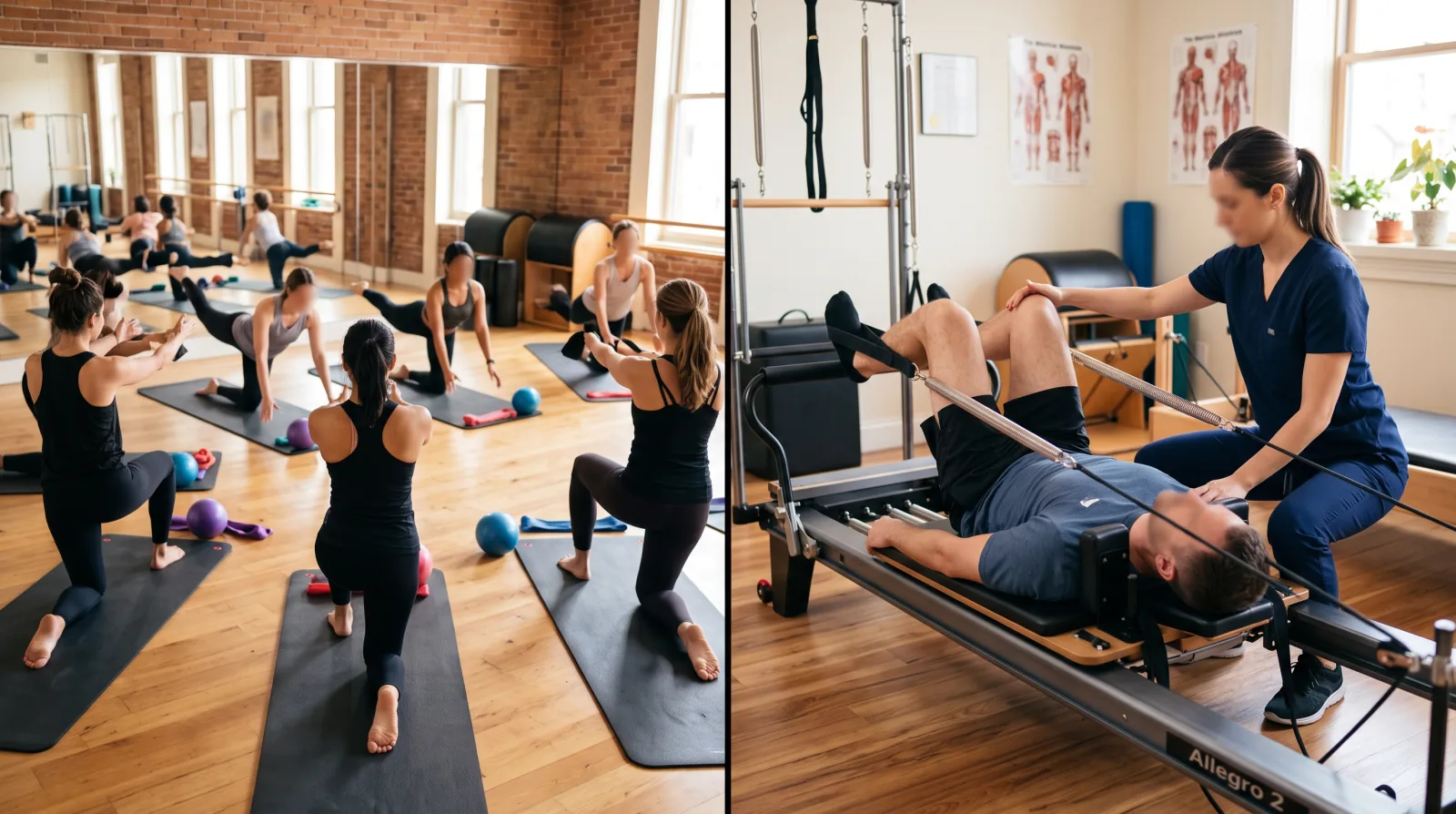

Hypermobility: When Being Flexible Comes With Pain
Joints that move further than most is common and often causes no trouble. When it comes with pain, repeated sprains, and a sense of instability, it has a name and a management approach. Here is what the classification means and what the exercise evidence honestly shows.
BY THE LAUNCH REHAB TEAM
Plenty of people can touch their thumb to their forearm, hyperextend their elbows, or put their palms flat on the floor with straight knees. For most of them that is simply how their joints are built, and it causes no trouble at any point in their life. Some are actively better off for it.
For a smaller group, the same flexibility arrives with a set of problems: joints that hurt after ordinary days, ankles that sprain again and again, shoulders or kneecaps that partly slip, a constant background fatigue, and a sense that a joint might give way without warning. That combination has a name, and it has a management approach.
What hypermobility is, and what it is called now
Generalised joint hypermobility describes joints across the body that move beyond the typical range. The most widely used measure is the Beighton score, which awards up to 9 points across five simple movements: bending the little finger back past 90 degrees, bringing the thumb to the forearm, hyperextending the elbows, hyperextending the knees (each of those four scored on both sides), and placing the palms flat on the floor with the knees straight.
According to a 2023 review in Rheumatology and Immunology Research by Carroll, a score of 4 or above suggests generalised joint hypermobility in adults, with thresholds varying by age, gender, ethnicity, and physical fitness. The same review puts the prevalence at 3 to 4% in the general population, 11 to 26% among college students, and 64.9 to 72% in professional dancers, and notes that it is more likely in younger females and less likely in older males.
The naming changed in 2017, which is why older material uses terms you will no longer hear from a current clinician. The International Consortium on the Ehlers-Danlos Syndromes and Hypermobility Spectrum Disorders replaced labels such as "benign joint hypermobility syndrome" with two current categories:
Hypermobility spectrum disorder (HSD) describes joint hypermobility together with secondary musculoskeletal problems, in someone who does not meet the criteria for hypermobile Ehlers-Danlos syndrome. It is a clinical diagnosis rather than a genetic one.
Hypermobile Ehlers-Danlos syndrome (hEDS) is a heritable connective tissue disorder with a stricter three-part definition: generalised joint hypermobility, a combination of musculoskeletal and systemic features consistent with a connective tissue disorder, and the exclusion of alternative diagnoses.
The distinction is made by a physician, usually a rheumatologist or a geneticist. It matters for family counselling, for monitoring, and for access to some services. For the day-to-day physiotherapy plan, the two are managed along broadly similar lines, which is worth knowing if you are waiting on a diagnostic appointment and wondering whether to start.
Being flexible is not the problem
Most people with hypermobile joints have no symptoms and need nothing done. Hypermobility is not a disease, a diagnosis in itself, or something to be treated because it was found. A gymnast, dancer, or swimmer with a Beighton score of 7 and no pain is not a patient.
The clinical question is whether the hypermobility arrives with symptoms. The features that shift it into that territory include musculoskeletal pain that recurs or persists, joints that sublux or dislocate, repeated sprains and strains, and a sense of instability during ordinary activity. The 2023 review also notes extra-articular features that commonly travel with it, including dysautonomia, gastrointestinal problems, and psychological symptoms. Those are managed by the appropriate physician and are outside a physiotherapist's scope, though a therapist who knows to ask about them will make a better referral.
What the exercise evidence honestly shows
Exercise is the cornerstone of management for symptomatic hypermobility. The trial evidence behind that position is thinner than the confidence with which it is usually stated, and a clinician should say so.
A 2020 systematic review in Clinical Rheumatology by Palmer and colleagues pooled 11 studies, 8 controlled trials and 3 cohort studies, covering recruited samples from 12 to 119 participants with intervention groups from 10 to 59. Every study included exercise as a core component: spinal stabilisation work, proprioception and balance training, closed kinetic chain exercise, inspiratory muscle training, general strengthening and conditioning, plus occupational therapy, advice, and information.
The conclusion was direct: "Controlled trial evidence for the superiority of conservative management over comparators is weak." Three small studies did show superior effects against no treatment, but the authors note each focused on a single body area, recruited only women, and had no long-term follow-up.
The same review records the other half of the picture: "All studies reported improvements in a wide range of outcomes over time."
The stated limitations are extensive. Blinding was inconsistent or absent, baseline group comparability varied, samples were small with only 2 of the 8 controlled trials completing prospective sample size calculations, 8 of the 11 studies had no follow-up beyond the end of treatment, and exclusion criteria that ruled out people with other conditions limit how far the findings apply to a real caseload.
What to do with that: people improve on structured exercise programmes, and the studies are not strong enough to prove any specific programme beats the alternatives. That argues for an individualised plan built around what your joints and your life actually need, and against paying for a proprietary protocol that claims to be the evidence-based answer.
What a physiotherapy plan targets
With hypermobile joints, ligaments provide less passive restraint than usual. Muscle has to do more of the work of controlling a joint through its range. That single fact shapes most of the plan.
Strength around the vulnerable joints is the main tool. The 2023 review lists periarticular muscle strengthening and isometric exercise among the management recommendations, alongside regular exercise generally. The aim is a joint controlled through its range rather than one that relies on reaching end range and resting on the ligaments.
Proprioception and control matter too, because hypermobile joints often give less reliable positional feedback. Balance work, single-leg control, and practising the specific positions where a joint feels unstable all build that.
Pacing is frequently the piece that changes the most. The common pattern is a good day, a burst of activity, then three difficult days. Spreading load more evenly across the week usually achieves more than any individual exercise.
One part of the plan runs counter to the usual advice about flexibility. Most hypermobile people do not need more stretching, and habitually resting at end range (standing with locked knees, hanging off one hip, hyperextending the elbows to carry something) loads passive structures that are already permissive. Learning to work inside range is a skill, and it takes practice.
Starting dose and progression need more care here than in most conditions. Flare-ups after overambitious starts are common, which makes conservative initial loading and slow progression the sensible approach. That is a reason to work with a therapist rather than pull a general programme from the internet.
The 2023 review also notes the pharmacological position for completeness: NSAIDs and SNRIs are preferred, and opioids should be avoided. That is a prescribing decision for your physician, not a physiotherapist.
Several conditions covered elsewhere on this site turn up more often in hypermobile people, and the same principles apply within each: patellofemoral pain in runners, recurrent ankle sprains, and shoulder instability and rotator cuff problems.
What to expect at a first visit
A first physiotherapy assessment takes longer than average when hypermobility is part of the picture, because the useful information is in the history. Your therapist will ask which joints cause trouble and how often, whether anything subluxes or dislocates, how sprains have gone in the past, what a good week and a bad week look like, how fatigue behaves, and what you need to be able to do. They will score the Beighton items, examine the joints that are symptomatic, and check how you control them under load.
Expect the first plan to be small. Two or three exercises done consistently at a tolerable dose beats a long list abandoned after a flare. Expect it to be revised: the useful information arrives in how your body responds over the first few weeks.
Physiotherapy is a direct-access profession in British Columbia, regulated by the College of Health and Care Professionals of BC, so you can book an assessment without a physician's referral and without a confirmed diagnosis. Some extended-health plans require a referral for reimbursement, so check with your insurer first.
A physiotherapist does not diagnose hEDS. If your history suggests it, or if you have systemic features such as significant dysautonomia, gastrointestinal symptoms, or a family history of connective tissue disorder, the right step is assessment by your physician with referral onward to rheumatology or medical genetics. Chest pain, fainting, or a family history of aortic problems need medical assessment promptly rather than a physiotherapy appointment, because some connective tissue disorders carry cardiovascular risk that sits well outside a therapist's scope.
This article is general information, not personal medical advice. A regulated practitioner can confirm whether the patterns described apply to you.
Frequently asked questions
What is joint hypermobility?
Joint hypermobility means joints that move beyond the typical range. It is measured most commonly with the Beighton score, which awards up to 9 points across five movements: little finger extension past 90 degrees, thumb to forearm, elbow hyperextension, knee hyperextension, and palms flat on the floor with straight knees. A 2023 review in Rheumatology and Immunology Research reports that a score of 4 or above suggests generalised joint hypermobility in adults, with thresholds varying by age, gender, ethnicity, and fitness.
How common is hypermobility?
The 2023 review puts generalised joint hypermobility at 3 to 4% in the general population, 11 to 26% among college students, and 64.9 to 72% in professional dancers. It is more likely in younger females and less likely in older males. The wide range across groups reflects both real differences in populations and variation in how it is measured.
Is being hypermobile a problem?
For most people, no. Hypermobility without symptoms is a variation in how joints are built, not a condition needing treatment, and in some activities it is an advantage. It becomes a clinical question when it arrives with recurring or persistent musculoskeletal pain, joints that sublux or dislocate, repeated sprains, or a sense of instability during ordinary activity.
What is the difference between HSD and hEDS?
Hypermobility spectrum disorder describes joint hypermobility with secondary musculoskeletal problems in someone who does not meet the criteria for hypermobile Ehlers-Danlos syndrome. It is diagnosed clinically. hEDS is a heritable connective tissue disorder requiring three things: generalised joint hypermobility, a combination of musculoskeletal and systemic features consistent with a connective tissue disorder, and exclusion of alternative diagnoses. Both sit within the 2017 international classification that replaced older terms such as "benign joint hypermobility syndrome".
Does exercise actually help?
People improve on structured exercise programmes, and the trial evidence supporting any specific programme is weak. A 2020 systematic review in Clinical Rheumatology pooled 11 studies and concluded that controlled trial evidence for the superiority of conservative management over comparators is weak, noting that the three small studies showing superior effects each covered one body area only, recruited only women, and had no long-term follow-up. The same review recorded that all studies reported improvements across a wide range of outcomes over time.
Should I stretch more?
Usually not. Most hypermobile people already have ample range and gain little from adding more. What tends to help is strength and control through the range you have, plus learning not to rest at end range habitually: locked knees when standing, hanging off one hip, hyperextending elbows to carry things. Stretching a specific tight muscle can still be appropriate, which is a judgement for your assessment rather than a blanket rule either way.
Which exercises are recommended?
The 2023 review lists periarticular muscle strengthening, isometric exercise, regular exercise generally, weight management, and a multidisciplinary approach. In practice that means strength around the joints that give trouble, proprioception and balance work, and control practice in the positions where a joint feels unstable. The specific selection depends on which joints are symptomatic and what you need to do, which is why an individualised plan beats a generic protocol.
Why do I flare up after a good day?
Because the load from that good day exceeded what the tissue currently tolerates, and the cost arrives afterward. It is one of the most common patterns in symptomatic hypermobility. Pacing, meaning spreading activity more evenly across the week rather than concentrating it on days you feel well, is frequently the change that produces the largest improvement, more than any single exercise.
Can a physiotherapist diagnose hEDS?
No. A physiotherapist can assess joint hypermobility, score the Beighton items, and build a management plan, but the diagnosis of hypermobile Ehlers-Danlos syndrome is made by a physician, usually a rheumatologist or geneticist, using the full 2017 criteria including exclusion of alternative diagnoses. You do not need a confirmed diagnosis to start physiotherapy, and the plan for symptomatic hypermobility is broadly similar either way.
When should I see a doctor instead?
See your physician for systemic features that sit outside a physiotherapist's scope: significant dysautonomia, gastrointestinal problems, or psychological symptoms, all of which the 2023 review notes commonly accompany hypermobility. Seek prompt medical assessment for chest pain, fainting, or a family history of aortic problems, since some connective tissue disorders carry cardiovascular risk. Medication decisions also belong with your physician; the review notes NSAIDs and SNRIs are preferred and opioids should be avoided.
Do I need a referral to see a physiotherapist in BC?
No. Physiotherapy is a direct-access profession in British Columbia, regulated by the College of Health and Care Professionals of BC, so you can book an assessment without a physician's referral and without a confirmed diagnosis. Some extended-health insurance plans require a referral for reimbursement even though the profession does not, so confirm with your insurer before your first visit.
Sources
- Carroll, "Hypermobility spectrum disorders: A review," Rheumatology and Immunology Research, 2023
- Palmer et al., "The effectiveness of conservative interventions for the management of syndromic hypermobility: a systematic literature review," Clinical Rheumatology, 2020
- College of Health and Care Professionals of BC, physiotherapist scope of practice
WRITTEN BY
The Launch Rehab Team
Practical recovery and training notes from the clinicians at our five Metro Vancouver studios.
FOUND THIS USEFUL?
Share it with your network on LinkedIn. We wrote a ready-to-post version for you.
FILED UNDER
- hypermobility
- hsd
- ehlers-danlos
- joint-pain
- physiotherapy
- bc