Sacroiliac Joint Pain: Low Back Pain That Sits to One Side
Pain low and off to one side of the back, just inside the dimple above the buttock, often points to the sacroiliac joint rather than the lumbar spine. Here is how clinicians tell the difference, what the diagnostic evidence actually supports, and what physiotherapy targets.
BY THE LAUNCH REHAB TEAM
Low back pain is usually treated as a single problem, and for a lot of people that is close enough. But a portion of it is not coming from the lumbar spine at all. It is coming from the sacroiliac joint, where the base of the spine meets the pelvis, and it behaves differently enough that it is worth recognising.
The tell most clinicians listen for is where the person points. Lumbar pain tends to be described with a flat hand across the lower back. Sacroiliac pain is more often indicated with one finger, low and off to one side, just inside the bony dimple above the buttock.
What the joint is and what it does
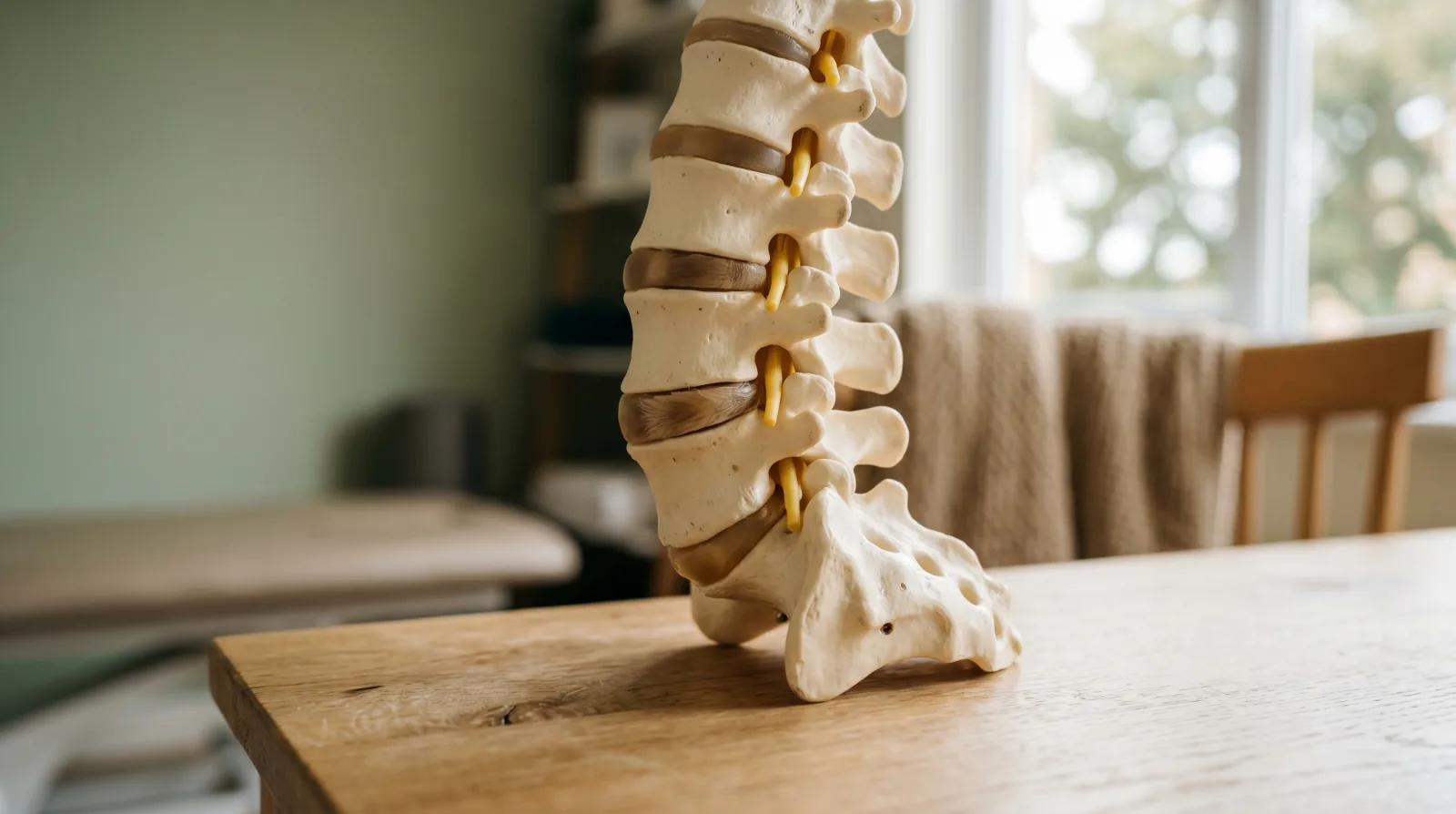
You have two sacroiliac joints, one on each side, where the sacrum (the triangular bone at the base of the spine) meets the ilium (the large flared bone of the pelvis). They are strong, heavily reinforced by ligament, and the movement available at them is measured in a few millimetres and a few degrees. Their job is to transfer load between the spine and the legs, which is why they are loaded every time you take a step, stand up, or shift weight from one foot to the other.
Because the movement available is small, the older idea that a sacroiliac joint goes "out" and needs putting back has not held up well. What clinicians describe now is a joint and its surrounding tissue that has become sensitised and painful under load, which is a different thing from a joint being displaced.
How common is it, really
A 2021 retrospective chart review in the Spartan Medical Research Journal notes that previous research "estimated that 10 to 25% of chronic low back pain has a SIJ pain source". That review's own figures ran higher, finding sacroiliac joint dysfunction in 60.7% of 84 low back pain patients assessed with osteopathic techniques, with 31.0% presenting with it alone. The authors themselves flag that as a substantial discrepancy with the prior literature.
Two things explain a range that wide. The first is setting: a spine clinic, a general practice, and a physiotherapy caseload see different populations. The second is method. How you define sacroiliac pain changes how much of it you find, and the strictest definitions produce the lowest numbers.
The practical takeaway is not a percentage. It is that the sacroiliac joint is a genuine and reasonably common source of one-sided low back pain, and that it gets missed when every low back complaint is treated as a lumbar problem by default. It is one of several possible sources covered in lower back pain: disc, facet, or muscular.
The pattern that raises the question
Sacroiliac pain has a set of features that, taken together, make a clinician look harder at the joint:
- Pain low and to one side, centred around or just below the dimple above the buttock.
- It often spreads into the buttock and sometimes the back of the thigh, but usually stops above the knee.
- Rolling over in bed, getting out of a car, and standing up from a chair are commonly the worst movements.
- Standing on one leg, climbing stairs, or putting on socks and shoes can reproduce it.
- Prolonged sitting, especially on a soft or uneven surface, tends to build it up.
- Many people find it eases with walking, which is a useful contrast with lumbar stenosis.
Pregnancy and the postpartum period are a distinct context. Load through the pelvis changes and ligament laxity increases, and pain around the sacroiliac joints and pubic symphysis is common enough to have its own name. That presentation is covered separately in pelvic girdle pain in the third trimester, and it is managed differently from a non-pregnant sacroiliac presentation.
How it is actually identified
There is no blood test for this and no scan that settles it. That is the state of the evidence, and understanding why changes what you should expect from an assessment.
Imaging is frequently unremarkable in people with genuine sacroiliac pain. Meanwhile degenerative changes at the joint turn up routinely on scans of people with no symptoms whatsoever, which means a finding on a report does not establish that the finding is what hurts. X-ray and MRI earn their place when there is a specific question to answer: suspected inflammatory arthritis, a fracture after a fall, or a red flag from the history.
What clinicians use instead is a set of provocation tests. Each one loads the joint in a different direction to see whether it reproduces the person's familiar pain. The FABER test, which combines flexion, abduction, and external rotation of the hip, is described in the 2021 review as "the most reliable as well as most prevalent in studies examining SIJ pain". No single test is decisive on its own. They are interpreted as a group, alongside the history and an examination of the lumbar spine and hip, because those two regions produce overlapping patterns and a hip problem in particular can masquerade as sacroiliac pain.
The formal reference standard is different again. The 2021 review describes it plainly: "The current 'gold standard' for SIJ diagnosis and treatment is performing injections with a corticosteroid or anesthetic drug under fluoroscopic guidance to obtain between 50 to 75% pain relief." In other words, the joint is numbed under X-ray guidance, and if the pain drops by a defined margin, that supports the joint as the source. That is a procedure performed by a physician, not a physiotherapist, and it is reserved for cases where the answer will change the treatment plan.
Most people never need it. A physiotherapy assessment that takes a careful history, clusters the provocation tests, and rules the hip and lumbar spine in or out is enough to start treatment in the great majority of cases.
What physiotherapy targets, and what the evidence supports
A 2017 systematic review in the Journal of Physical Therapy Science by Al-subahi and colleagues pooled nine studies covering exercise (3 studies), manipulation (4 studies), and kinesio tape (3 studies). It concluded that manipulation, exercise, and kinesio tape are effective for pain and disability in sacroiliac joint dysfunction, describing manipulation as the most effective approach and the one most commonly used in physical therapy clinics. Exercise was found effective for reducing pain and disability.
The limitations deserve equal billing, and the authors list them: only English-language publications, a search window running 2004 to 2014, few available studies, low to medium methodological quality, absent blinding and randomisation in several studies, and small sample sizes. The review also notes that high-quality studies comparing kinesio tape against placebo suggested limited additional benefit beyond the placebo effect.
Read together, that supports physiotherapy as a reasonable first-line approach while being clear that the evidence base is thinner than for many other musculoskeletal conditions. A therapist who tells you the research here is settled is overselling it.
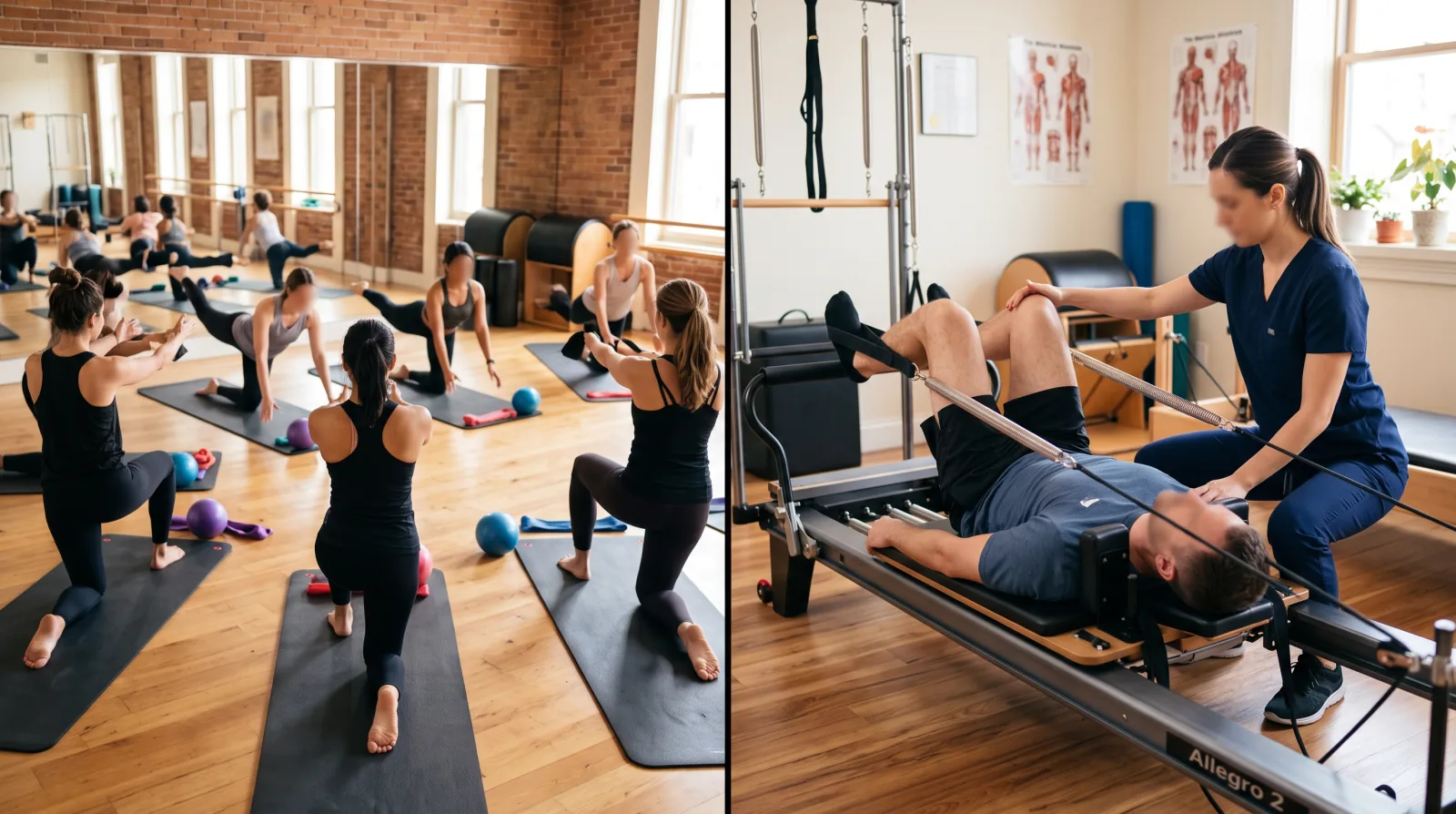
In practice a plan for sacroiliac pain usually works on three fronts. Manual therapy and mobilisation calm the joint and the surrounding tissue enough for movement to become tolerable. Strengthening targets the muscles that control load through the pelvis, principally the glutes and the deep abdominal and pelvic floor group, because a joint that is well controlled through the step cycle is loaded more evenly. And load management adjusts the specific daily movements that keep provoking it, which for most people means how they get in and out of the car, how they sleep, how they stand at work, and how they get up from a chair.
Progress is judged on function rather than on a pain score alone. Being able to roll in bed without bracing, stand on one leg to dress, and walk further before symptoms build are the changes that tell a therapist the plan is working.
What happens at a first visit
A first physiotherapy assessment for one-sided low back pain spends most of its time separating the possible sources. Your therapist will ask where exactly you point, what movements reproduce it, whether it travels below the knee, how you sleep, and what has changed recently in your training, work, or life. Then they will test the lumbar spine, the hip, and the sacroiliac joint, because the three overlap and the treatment differs for each.
Physiotherapy is a direct-access profession in British Columbia, regulated by the College of Health and Care Professionals of BC, so you can book an assessment without a physician's referral. Some extended-health plans still require a referral for reimbursement, which is worth confirming with your insurer before the first visit. If the pain started in a motor vehicle crash, treatment runs under the pathway set out in what to expect in your first 12 weeks of ICBC physiotherapy.
Some findings mean the assessment pauses and a referral goes out instead. Pain that wakes you consistently in the second half of the night with morning stiffness lasting over half an hour, particularly in a younger adult, raises the question of inflammatory arthritis affecting the sacroiliac joints, which is a rheumatology question rather than a physiotherapy one. Fever, unexplained weight loss, a history of cancer, significant trauma, or any change in bladder or bowel control need medical assessment before treatment begins.
This article is general information, not personal medical advice. A regulated practitioner can confirm whether the patterns described apply to you.
Frequently asked questions
What is the sacroiliac joint?
The sacroiliac joints are the two joints where the sacrum, the triangular bone at the base of the spine, meets the ilium on each side of the pelvis. They are heavily reinforced by ligament, and the movement available at them is measured in a few millimetres and a few degrees. Their function is to transfer load between the spine and the legs, which is why they are loaded during walking, standing up, and shifting weight from one foot to the other.
How do I know if my back pain is coming from the sacroiliac joint?
The typical pattern is pain low and off to one side, which people often indicate with one finger just inside the dimple above the buttock rather than with a flat hand across the lower back. It commonly spreads into the buttock and sometimes the back of the thigh but usually stops above the knee. Rolling over in bed, getting out of a car, and standing up from a chair are frequently the worst movements. A physiotherapist confirms the pattern using a group of provocation tests alongside examination of the hip and lumbar spine.
What percentage of back pain comes from the sacroiliac joint?
Estimates vary widely by setting and by how the condition is defined. A 2021 chart review in the Spartan Medical Research Journal notes that prior research estimated 10 to 25% of chronic low back pain has a sacroiliac joint source, while that review's own figures ran higher at 60.7% of the 84 patients assessed. The authors flag the discrepancy themselves. The useful conclusion is that it is a genuine and reasonably common source of one-sided low back pain, with the exact share depending on the population studied.
Will an X-ray or MRI show sacroiliac joint pain?
Usually not. Imaging is frequently unremarkable in people with genuine sacroiliac pain, and degenerative changes at the joint appear routinely on scans of people with no symptoms at all. Imaging earns its place when there is a specific question, such as suspected inflammatory arthritis, a fracture after a fall, or a red flag in the history. It does not confirm or rule out the joint as a pain source on its own.
What is the gold standard test?
According to the 2021 Spartan Medical Research Journal review, the reference standard is an injection of a corticosteroid or anaesthetic into the joint under fluoroscopic (X-ray) guidance, judged on whether it produces between 50 and 75% pain relief. That is a physician-performed procedure, reserved for cases where the answer would change the treatment plan. Most people are managed without it, on the basis of history, provocation testing, and examination of the hip and lumbar spine.
Does physiotherapy help sacroiliac joint pain?
A 2017 systematic review in the Journal of Physical Therapy Science pooled nine studies and concluded that manipulation, exercise, and kinesio tape are effective for pain and disability, with manipulation described as the most effective approach. The authors listed significant limitations: a 2004 to 2014 search window, few studies, low to medium methodological quality, absent blinding in several studies, and small samples. The review also noted that higher-quality kinesio tape studies suggested limited benefit beyond placebo. Physiotherapy is a reasonable first-line approach, with an evidence base thinner than for many other conditions.
Does my sacroiliac joint go "out of place"?
The movement available at the joint is measured in a few millimetres and a few degrees, and the older model of it slipping out and needing to be put back has not held up well. What clinicians describe now is a joint and its surrounding tissue that has become sensitised and painful under load. That distinction matters for treatment, because it points toward calming the joint and improving how load is controlled through the pelvis rather than toward repeated attempts to realign something.
Is sacroiliac pain in pregnancy the same condition?
It is related but managed differently. During pregnancy and the postpartum period, load through the pelvis changes and ligament laxity increases, and pain around the sacroiliac joints and pubic symphysis is common enough to be named pelvic girdle pain. The assessment considers the stage of pregnancy, and the exercise and support strategies differ from a non-pregnant presentation.
Which exercises help?
There is no single exercise that fixes it, and the right ones depend on what your assessment finds. Plans commonly target the glutes and the deep abdominal and pelvic floor muscles, because those control how load passes through the pelvis with each step. Alongside that, the specific daily movements that keep provoking symptoms get adjusted: getting in and out of the car, sleeping position, standing posture at work, and rising from a chair. A therapist sets the starting dose based on what your joint currently tolerates.
When should I see a doctor rather than a physiotherapist?
Book medical assessment first if you have pain that consistently wakes you in the second half of the night with morning stiffness lasting more than half an hour, particularly if you are a younger adult, since that raises the question of inflammatory arthritis. The same applies to fever, unexplained weight loss, a history of cancer, significant trauma, or any change in bladder or bowel control. A physiotherapist screens for these at the first visit and refers on rather than treating when the picture calls for it.
Do I need a referral to see a physiotherapist in BC?
No. Physiotherapy is a direct-access profession in British Columbia, regulated by the College of Health and Care Professionals of BC, so you can book an assessment without a physician's referral. Some extended-health insurance plans require a referral for reimbursement even though the profession does not, so confirm with your insurer before your first visit. Pain that began in a motor vehicle crash is handled under the ICBC pathway and a claim number gets you started.
Sources
- Wieczorek et al., "A Closer Look into the Association between the Sacroiliac Joint and Low Back Pain," Spartan Medical Research Journal, 2021
- Al-subahi et al., "The effectiveness of physiotherapy interventions for sacroiliac joint dysfunction: a systematic review," Journal of Physical Therapy Science, 2017
- College of Health and Care Professionals of BC, physiotherapist scope of practice
WRITTEN BY
The Launch Rehab Team
Practical recovery and training notes from the clinicians at our five Metro Vancouver studios.
FOUND THIS USEFUL?
Share it with your network on LinkedIn. We wrote a ready-to-post version for you.
FILED UNDER
- sacroiliac-joint
- si-joint
- low-back-pain
- hip-pain
- physiotherapy
- bc