
MLD GUIDE · THE BASICS
The lymphatic system, explained in plain language.
You cannot understand lymphatic drainage massage without a picture of the system it works on. Five minutes here makes every other page in this hub easier.
THE SHORT ANSWER
What does the lymphatic system actually do?
The lymphatic system is a network of thin vessels and small filter stations called lymph nodes. It collects the fluid that constantly leaks out of your blood vessels into your tissues, filters it, and returns it to the bloodstream. It also carries immune cells and absorbs dietary fat in the gut. When the system is damaged or overloaded, fluid pools in the tissue and the area swells.
Most people can name their heart, lungs and stomach. Very few can describe their lymphatic system, even though it touches almost every tissue in the body. That is normal. The system works quietly in the background, and you usually only hear about it when something goes wrong: a swollen ankle that will not settle, a puffy arm after surgery, or a diagnosis of lymphedema.
This guide explains the system in plain language. No anatomy degree needed. Once you see how lymph moves, the logic of manual lymphatic drainage (MLD) becomes obvious, and so do the reasons it uses feather-light pressure instead of deep kneading.
AT A GLANCE
- What it is
- A network of vessels, nodes and organs that drains tissue fluid
- What it moves
- Lymph: water, proteins, waste products and immune cells
- The catch
- It has no pump of its own, unlike blood, which has the heart
- What moves it
- Muscle activity, breathing, and contractions of the vessels
- When it fails
- Fluid pools in tissue and the area swells
THE FLUID
Lymph is the fluid your blood leaves behind
Your blood does not stay sealed inside your vessels. As it moves through the smallest ones, the capillaries, some of the watery part pushes out into the surrounding tissue. That is by design. This fluid delivers oxygen and nutrients to your cells. Most of it gets pulled straight back into the blood. A portion stays behind.
The leftover fluid, along with proteins, cell waste and stray bacteria, needs a route home. That route is the lymphatic system. Once the fluid enters a lymphatic vessel it gets a new name: lymph. Cleveland Clinic describes the system as the body's drainage and defence network, and that is a fair one-line summary.
Healthy adults move a surprising amount of fluid through this network every day. The exact volume varies from person to person, so the number matters less than the principle: the system runs continuously, and your tissues depend on it running well.
THE PLUMBING
Vessels, nodes, and one-way valves
The network starts with tiny, blind-ended capillaries that sit just under your skin and between your tissues. Their walls are made of overlapping cells that act like one-way swing doors. Fluid pushes in, but it cannot push back out. From there, lymph moves into progressively larger vessels fitted with one-way valves, the same idea as the valves in your leg veins.
Along the way, lymph passes through lymph nodes. You have hundreds of them, clustered in places like the neck, armpits and groin. Nodes are filter stations. Immune cells inside them inspect the fluid and deal with bacteria, viruses and damaged cells. This is why nodes swell when you are fighting an infection: they are working.
After filtering, the large lymphatic ducts empty the fluid back into big veins near your collarbones. The loop closes. Fluid that left the blood in your foot can end up back in your bloodstream at your neck.
Lymphatic capillaries
Tiny one-way entry points woven through skin and tissue. Fluid gets in and cannot leak back out.
Collecting vessels
Larger tubes with one-way valves. Their walls contract on their own to nudge lymph along.
Lymph nodes
Hundreds of small filters, concentrated at the neck, armpits and groin. Immune cells screen the fluid here.
Ducts
The final large channels that return filtered lymph to the veins near the collarbones.
THE WEAK POINT
The system has no heart of its own
Blood moves because the heart pushes it. Lymph has no equivalent pump. The physiology reference StatPearls describes lymph transport as driven by the rhythmic contraction of the vessels themselves plus outside forces: muscles squeezing the vessels as you move, pressure changes as you breathe, and even the pulsing of nearby arteries.
This is the single most useful fact in this whole hub. It explains why swelling gets worse when you sit or stand still for hours, why a long flight leaves ankles puffy, and why exercise, deep breathing and elevation all appear in every swelling management plan. Movement is the pump.
It also explains manual lymphatic drainage. If outside pressure helps move lymph, then a therapist who applies precise, light, rhythmic pressure in the direction the vessels drain can support the same process by hand. That is the entire premise of MLD, covered in depth across the rest of this hub.
WHEN IT GOES WRONG
Why fluid pools and tissue swells
Swelling happens when more fluid enters a tissue than the lymphatic system carries away. Sometimes the system is fine but overloaded: an ankle sprain floods the area with inflammatory fluid, and the vessels simply need time and help to catch up. This kind of swelling usually settles as the injury heals.
Sometimes the system itself is damaged or missing capacity. Surgery that removes lymph nodes, radiation therapy, infection, or a condition present from birth can all reduce how much the network can carry. When the shortfall becomes chronic, the result is lymphedema, which has its own guide in this hub.
The distinction matters because it changes the plan. Overload swelling tends to respond to time, elevation, movement and, where appropriate, MLD. A damaged system needs a long-term management approach, usually combining compression, exercise, skin care and MLD together.
This page is general information. It does not replace assessment by a regulated practitioner. If a swollen limb becomes hot, red or painful, or swelling appears suddenly with shortness of breath or chest pain, seek urgent medical care rather than booking a massage appointment.
WHAT HELPS
What keeps lymph moving day to day
You support your lymphatic system more than any therapist does, simply by how you live between sessions. None of this is exotic. The system responds to ordinary movement and ordinary habits, which is good news: the levers are free and available every day.
Move often
Muscle contraction squeezes lymph vessels. Walking, swimming and cycling all count. Long still periods let fluid pool.
Breathe deeply
Pressure changes in the chest during deep breathing help draw lymph up through the large central ducts.
Elevate when swollen
Gravity helps fluid drain out of a puffy limb. Raising a swollen leg costs nothing and often helps.
Care for your skin
Unbroken skin keeps bacteria out. This matters most for anyone with lymphedema, where skin infections are a real risk.
NEXT STEP
Where MLD fits into this picture
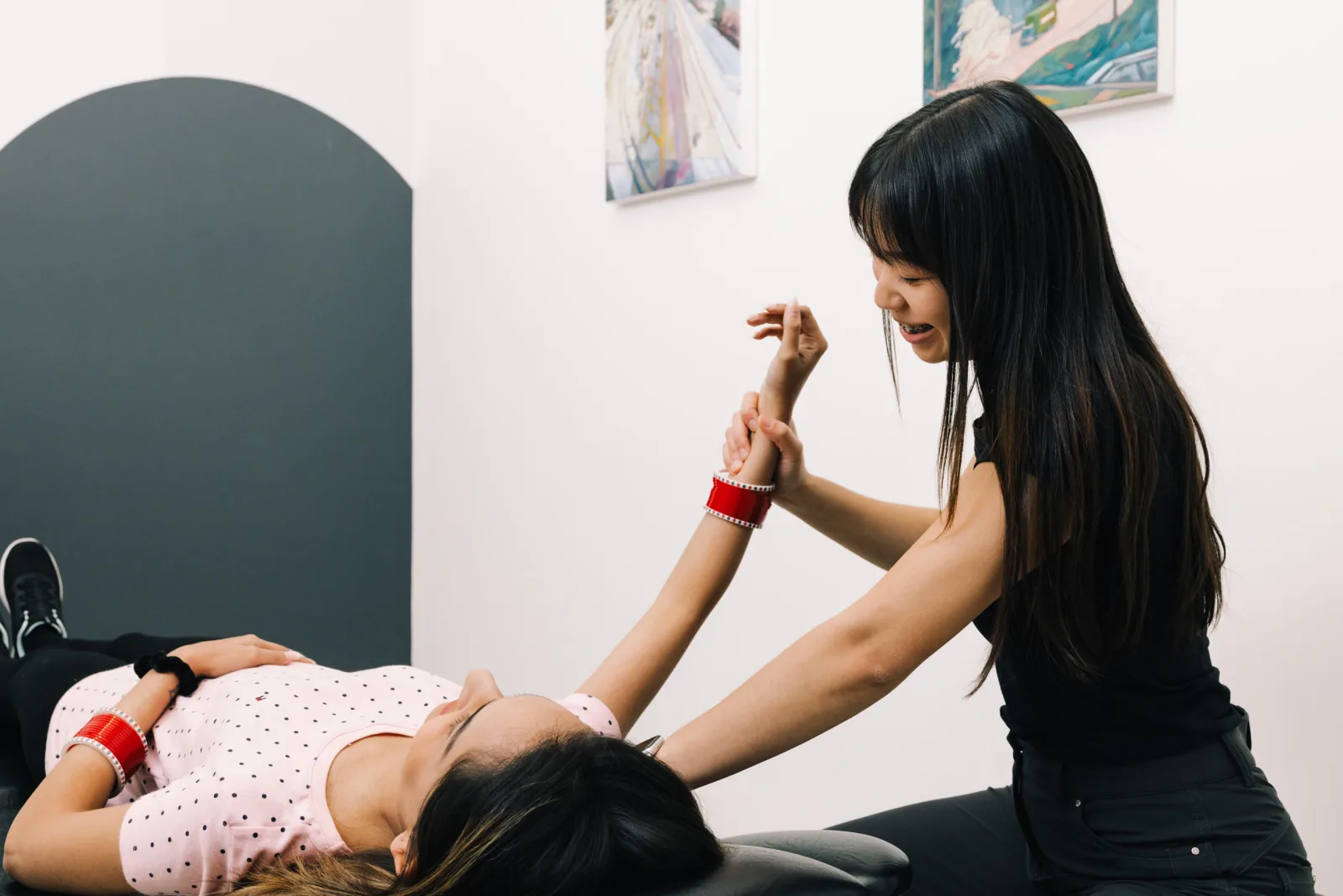
Manual lymphatic drainage is a trained therapist doing deliberately what daily movement does incidentally: applying gentle, directional pressure that encourages lymph toward working pathways and nodes. Because the vessels sit just under the skin, the pressure is light. Deep pressure flattens the vessels and works against the goal.
At Launch Rehab, MLD is delivered by a registered massage therapist trained in the Dr. Vodder method, at our Lougheed and New Westminster studios. If you are deciding whether MLD or a regular massage fits your situation, the next guide in this hub compares them directly.
BOOK OR ASK
Worth a conversation if
- A limb or area stays puffy for weeks, not days
- Swelling returns every time you sit or stand for long periods
- You have had surgery or radiation near lymph nodes
- Rings, shoes or waistbands feel tighter on one side
- A heavy, tight feeling in an arm or leg keeps coming back
MLD AT LAUNCH REHAB · TWO STUDIOS
Manual lymphatic drainage is delivered by Arra Younus, RMT, trained in the Dr. Vodder method and certified in lymphedema therapy. She treats at both studios below. Not sure MLD is the right booking? Call either studio and describe the swelling. It is a two-minute conversation.
FAQ
Common questions.
Lymph is mostly water, plus proteins, waste products from cells, fats absorbed from the gut, and immune cells called lymphocytes. It starts as the fluid that leaks naturally out of blood capillaries into tissue. Once that fluid enters a lymphatic vessel, it is called lymph and travels through nodes back to the bloodstream.
SOURCES
Where the facts on this page come from.
- Lymphatic System: Anatomy and Function · Cleveland Clinic · Accessed 27 August 2026
- Physiology, Lymphatic System (StatPearls) · NCBI Bookshelf, U.S. National Library of Medicine · Accessed 27 August 2026
- Lymphoedema: Overview · NHS (UK National Health Service) · Accessed 27 August 2026
KEEP READING
More from the MLD guides.
- Start here
MLD vs regular massage
One works the lymph vessels under your skin with feather-light strokes. The other works muscle. How to pick the right appointment.
READ - Swelling and conditions
Lymphedema
Chronic swelling from a damaged lymphatic system, most often after cancer treatment. What it is, how it is managed, and where MLD fits.
READ - Booking, cost and safety
Your first session
What actually happens in a first MLD appointment, minute by minute: the health history, the light-touch treatment, and the homework.
READ
READY?
Book manual lymphatic drainage in Burnaby or New Westminster.
Delivered by a Vodder-trained RMT and Certified Lymphedema Therapist at our Lougheed and New Westminster studios. Not sure MLD fits your situation? Call 604-813-8885 (Lougheed) or 604-519-0777 (New Westminster) and describe the swelling.