
CHRONIC PAIN
Physiotherapy for pain that has lasted longer than three months.
An assessment-led plan built on graded activity, pain education and coordinated care across our five Metro Vancouver studios.
OVERVIEW
What physiotherapy does for chronic pain
Pain is called chronic once it has lasted or kept returning for longer than three months. The International Association for the Study of Pain uses that threshold because most tissue healing from an acute injury has finished by then, so pain that persists past it is no longer just tracking tissue repair. It has often become its own clinical problem, shaped by the original injury but also by months of guarded movement, reduced activity and poorer sleep. The plan that worked for a fresh injury rarely works here.
Physiotherapy is a regulated health profession. In British Columbia every physiotherapist is licensed by the College of Health and Care Professionals of BC (CHCPBC) and works to a defined scope of practice. The 2021 NICE guideline for chronic primary pain recommends supervised exercise programmes as a first-line option and advises against relying on repeat passive-only treatment or routine imaging. That is the shape of the chronic pain plan at Launch Rehab: an honest assessment of what your system currently tolerates, a graded activity plan built on that, and the clinic time to progress it.
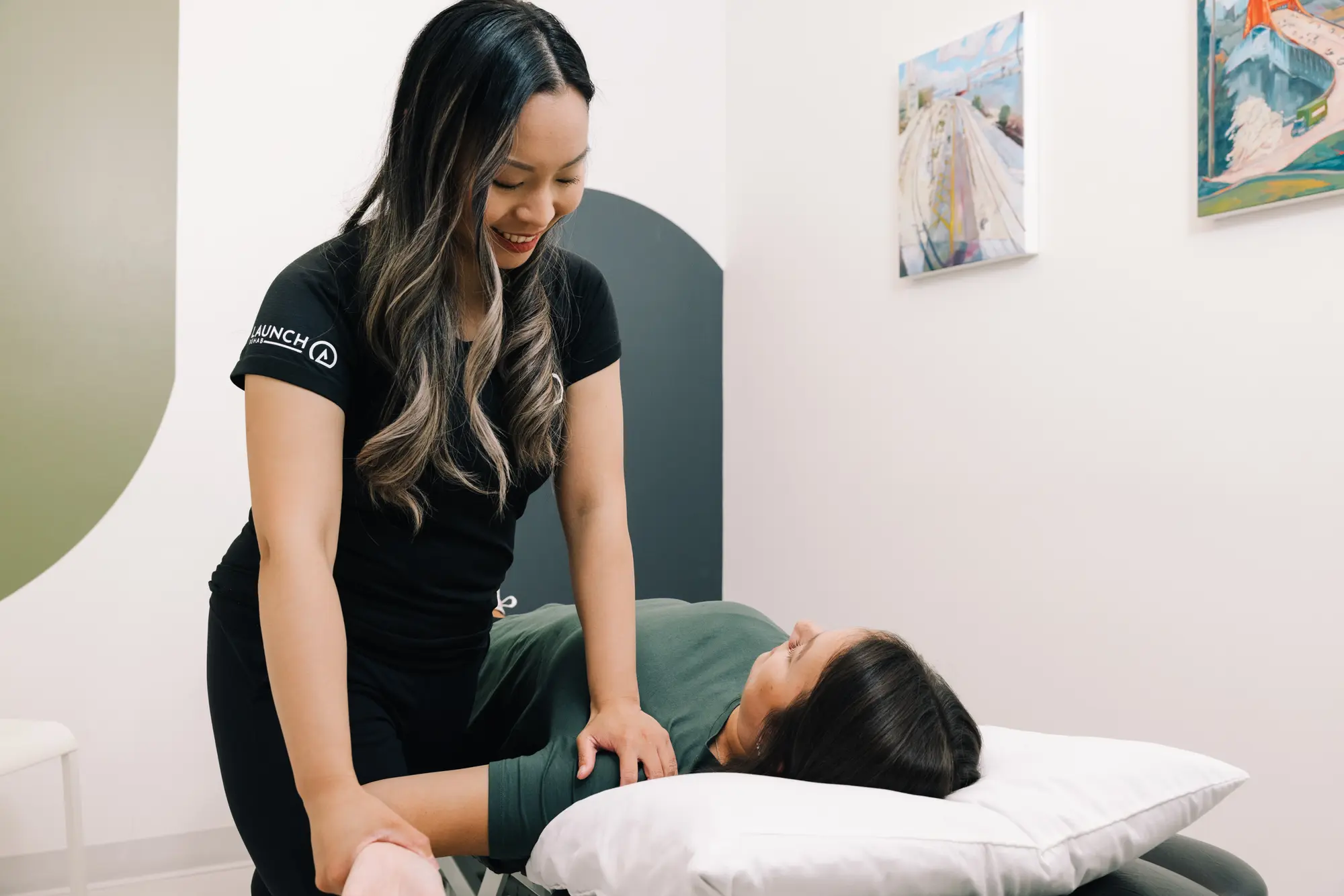
Chronic pain is treated at every Launch Rehab studio. A session is a one-on-one assessment, a hands-on treatment where it helps, and a short exercise plan you can actually do between visits. When pain has knotted into fear of movement, sleep problems, or a flat mood, we coordinate care across the clinic: physiotherapy led, with RMT, kinesiology, acupuncture or counselling added where they contribute.
This page is general information, not personal medical advice or a diagnosis. A regulated practitioner can confirm what applies to your specific situation.
BENEFITS
What this work is for.
- Build tolerance to work, walking, lifting and training without triggering a flare-up cycle
- Learn what long-term pain actually is, so decisions about activity are less driven by fear
- Pace activity so good days do not become bad weeks
- Coordinate care across physio, RMT, kinesiology, acupuncture and counselling when one profession is not enough
- Reduce reliance on scans, passive-only treatment and painkillers as the main plan
CONDITIONS WE TREAT
What we help with.
- Persistent low back pain and sciatica
- Long-term knee pain and post-ACL stiffness
- Chronic shoulder pain and frozen shoulder
- Jaw and face pain that has not settled
- Post-concussion symptoms past the usual recovery window
- Long-term neck and head pain
- Fibromyalgia and widespread pain presentations
- Pain that has stayed after a car crash claim closed
- Pain that has stayed after a WorkSafeBC claim closed
- Pain and reduced function in older adults
WHAT TO EXPECT
Your session, step by step.
An honest assessment
We take your history, screen for the red flags that need a doctor, and map what your body currently tolerates. The first visit does not promise a timeline. It gives you a working picture of what is driving the pain and a written plan.
Pain education
A short, plain-language explanation of why pain can persist after tissue healing is finished. This is a treatment, not a lecture. People who understand how long-term pain works are less afraid of movement, which is one of the biggest levers in recovery.
Graded activity and pacing
A specific plan starting at a level your system accepts, built up in small steps rather than in big jumps. Pacing is the part that stops good days turning into bad weeks. We review and progress the plan each visit.
Coordinated care when it helps
Physiotherapy leads the plan. When pain is also disturbing sleep, mood or the capacity to work, we add RMT, kinesiology, acupuncture or counselling, under one roof, with the clinicians talking to each other on your consent.
An honest assessment
We take your history, screen for the red flags that need a doctor, and map what your body currently tolerates. The first visit does not promise a timeline. It gives you a working picture of what is driving the pain and a written plan.
Pain education
A short, plain-language explanation of why pain can persist after tissue healing is finished. This is a treatment, not a lecture. People who understand how long-term pain works are less afraid of movement, which is one of the biggest levers in recovery.
Graded activity and pacing
A specific plan starting at a level your system accepts, built up in small steps rather than in big jumps. Pacing is the part that stops good days turning into bad weeks. We review and progress the plan each visit.
Coordinated care when it helps
Physiotherapy leads the plan. When pain is also disturbing sleep, mood or the capacity to work, we add RMT, kinesiology, acupuncture or counselling, under one roof, with the clinicians talking to each other on your consent.
UNDERSTANDING CHRONIC PAIN MANAGEMENT PHYSIOTHERAPY
A plain-language guide to chronic pain management.
WHAT IT IS
What makes pain 'chronic', and why that word changes the plan
The International Association for the Study of Pain uses three months as the threshold. Pain that has lasted or kept returning past that mark is no longer the acute pain of a fresh injury. It has had time to interact with sleep, mood, work, and the way the nervous system responds to normal movement. That is why the plan looks different.
The pain is real. The point is not to doubt it, it is to recognise that waiting for it to stop before you move again is often what keeps it going. A chronic pain plan builds tolerance back carefully rather than hunting for a single structure to blame.
A COMMON QUESTION
Rest or move: how we answer it on day one
The strongest instinct with ongoing pain is to protect it with rest, and the hardest thing to hear is that long rest usually makes a chronic pain problem worse. Deconditioning adds its own stiffness and fatigue on top of the original pain. A graded return to activity is the opposite instinct, and the one supported by both the NICE guideline for chronic primary pain and a Cochrane overview of exercise for chronic pain.
Start where your system accepts
Baseline is what you can do without a flare, not what you used to be able to do. We measure that in the first visit.
Build in steps that are a little bit boring
Small, repeatable increases over weeks beat big jumps on a good day. Pacing is a technical skill, not willpower.
A flare is information, not a setback
A flare up tells us the step was too big. We dial the plan back and continue, we do not throw the plan out.
Hands-on work supports the plan
Manual therapy, massage, IMS and acupuncture can settle a painful system between activity progressions. They are a tool, not the whole plan.
This is general information, not a treatment plan. Stop any movement that sharply increases your pain or sends new symptoms down a limb, and get urgent care for the red flags your assessor describes.
COVERAGE IN BC
What chronic pain physiotherapy costs and what covers it
In British Columbia you do not need a referral to book physiotherapy. Current session prices are on our rates page. How a session is paid for depends on how the pain started.
Extended health insurance
Most plans cover physiotherapy. We direct-bill most insurers up to your plan limit, and you pay any balance on the day.
ICBC (pain that has stayed after a crash)
If your pain started after a collision and the claim is still open, it is treated within ICBC's pre-approved physiotherapy. For pain that has stayed after the claim closed, we help you understand what reopening the file looks like.
WorkSafeBC
A work-related injury with an accepted claim is covered at no direct cost to you. For long-term pain after a WorkSafeBC claim closed, extended health or self-pay usually takes over.
MSP
MSP helps only with a limited number of physiotherapy visits for people on its supplementary benefits (lower-income households). It is not a general physiotherapy benefit.
Pain BC
Pain BC is a provincial not-for-profit offering free peer-led programmes (Making Sense of Pain, Coaching for Health, Pain Support and Wellness Groups) and a Pain Support Line. We often point readers to it between visits.
THE CHRONIC PAIN GUIDES
Chronic pain guides: how a plan is built, and when more than one profession joins it.
Plain-language guides to the methods a chronic pain plan is built on, and to how care is coordinated across the clinic when physiotherapy alone is not enough. Every guide names the studios that deliver it and ends with its sources.
How we work with long-term pain
The two methods a chronic pain plan is built on: graded activity and plain-language pain education.
Graded exposure and pacing
A structured way to rebuild activity after months of flare-ups: small steps, measured baselines, and no more boom-and-bust weeks.
READPain neuroscience education
A short, plain-language explanation of why pain can persist after tissue healing is finished, and what that means for your plan.
READ
Coordinating care
How physiotherapy, massage, kinesiology, acupuncture and counselling are coordinated when one profession is not enough.
ICBC COVERAGE
Pain that has stayed after a car crash?
A collision strains more than one body part at once, and pain can outlast the ICBC claim window. If your crash claim is still open we treat you within ICBC's pre-approved physiotherapy, with no referral needed. If it has closed and the pain has not, we help you understand the next step.
WHY LAUNCH REHAB
What you get with us.
One-on-one, always
The clinician who assesses you is the clinician who treats you and progresses your plan. No assistant hand-off.
Five Metro Vancouver studios
Lougheed, Coquitlam, Richmond, New Westminster and North Burnaby. Book at the studio nearest you.
Evenings and weekends
Appointments outside business hours so treatment fits around work, not the other way around.
Direct billing
ICBC, MSP, WorkSafeBC and most extended health plans billed directly by our client care coordinators.
Convenient parking
Free parking at our Lougheed, North Burnaby and Richmond studios; paid street and transit-station parking at Coquitlam and New Westminster.
Regulated practitioners
Every clinician is licensed by their BC college and held to its scope-of-practice and ethics standards.
KIND WORDS
What our clients say.

"After seeing different physiotherapists and chiropractors for over 10 years, I can confidently say Byron is one of the best physiotherapists I’ve worked with. From my very first appointment, he established that the goal wasn’t just to treat my pain temporarily, but to build a strong foundation so my back could heal properly for the long term. He took the time to thoroughly assess my condition and explained everything in a way that was easy to understand. For the first time, I truly understood why I was experiencing my symptoms and what the recovery process would look like. What really sets Byron apart is how thoughtful and patient he is. He always explains the purpose behind every exercise and how each one fits into my recovery plan. If an exercise feels too difficult or aggravates my symptoms, he genuinely listens to my feedback and quickly modifies the exercises so I can continue progressing safely. I never feel like my concerns are dismissed, and I always leave each session feeling informed, heard, and supported. After just one month of following his treatment plan, I’ve noticed a significant improvement in my back pain, strength, and confidence with movement. Although recovery will still take time, it’s been incredibly encouraging to regain a sense of control and independence in my daily life. It’s reassuring to see real progress after struggling with recurring back issues for so many years. Another thing I really appreciate is the teamwork at the clinic. If I’m unable to see Byron for one of my appointments, he collaborates closely with the another physiotherapist (Harleen) and thoroughly communicates my condition, treatment progress, and goals. Because of this, I never feel like I’m starting over with someone new. It’s reassuring to know I’ll receive the same high quality of care regardless of who I see. Overall, I’ve had a positive experience at Launch Rehab. If you’re looking for a physiotherapist who takes the time to educate you, creates a personalized recovery plan, and genuinely invests in your recovery, I highly recommend Byron. The quality of care I’ve received has been exceptional, and I’m incredibly grateful for his help."
JOEY CHU · LOUGHEED
FIVE STUDIOS · METRO VANCOUVER
OUR LOCATIONS
EST. 2025
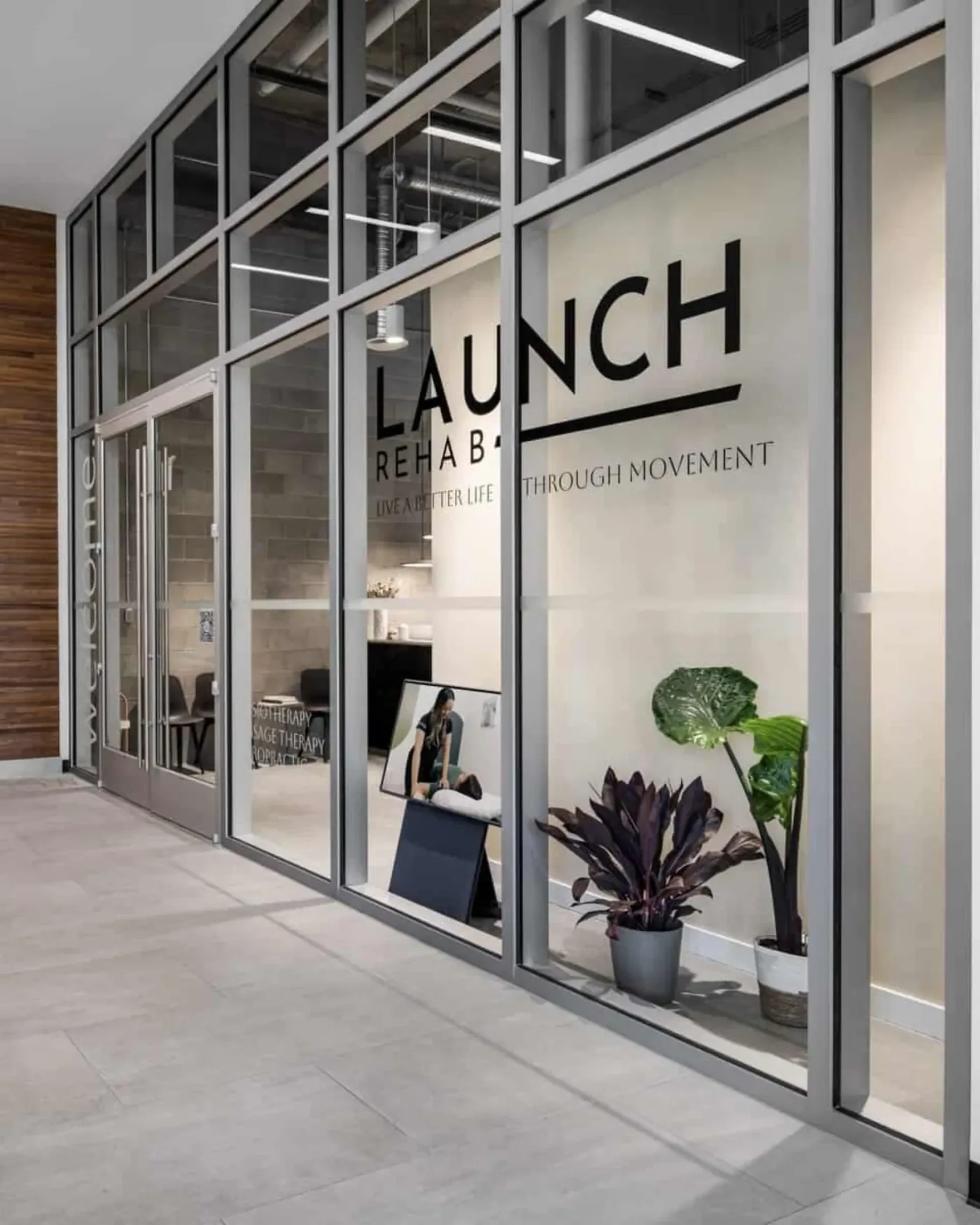
LAUNCH REHAB LOUGHEED
Located next to LifeLabs in the City of Lougheed.

EST. 2024
LAUNCH REHAB COQUITLAM
On the second floor of the Evergreen building at Pinetree Way and Glen Dr.

EST. 2023
LAUNCH REHAB RICHMOND
Northeast corner of Williams Rd and No. 3 Rd in Broadmoor.

EST. 2021
LAUNCH REHAB NEW WESTMINSTER
Second floor of the Shops at New West, inside the Skytrain Station.
EST. 2015
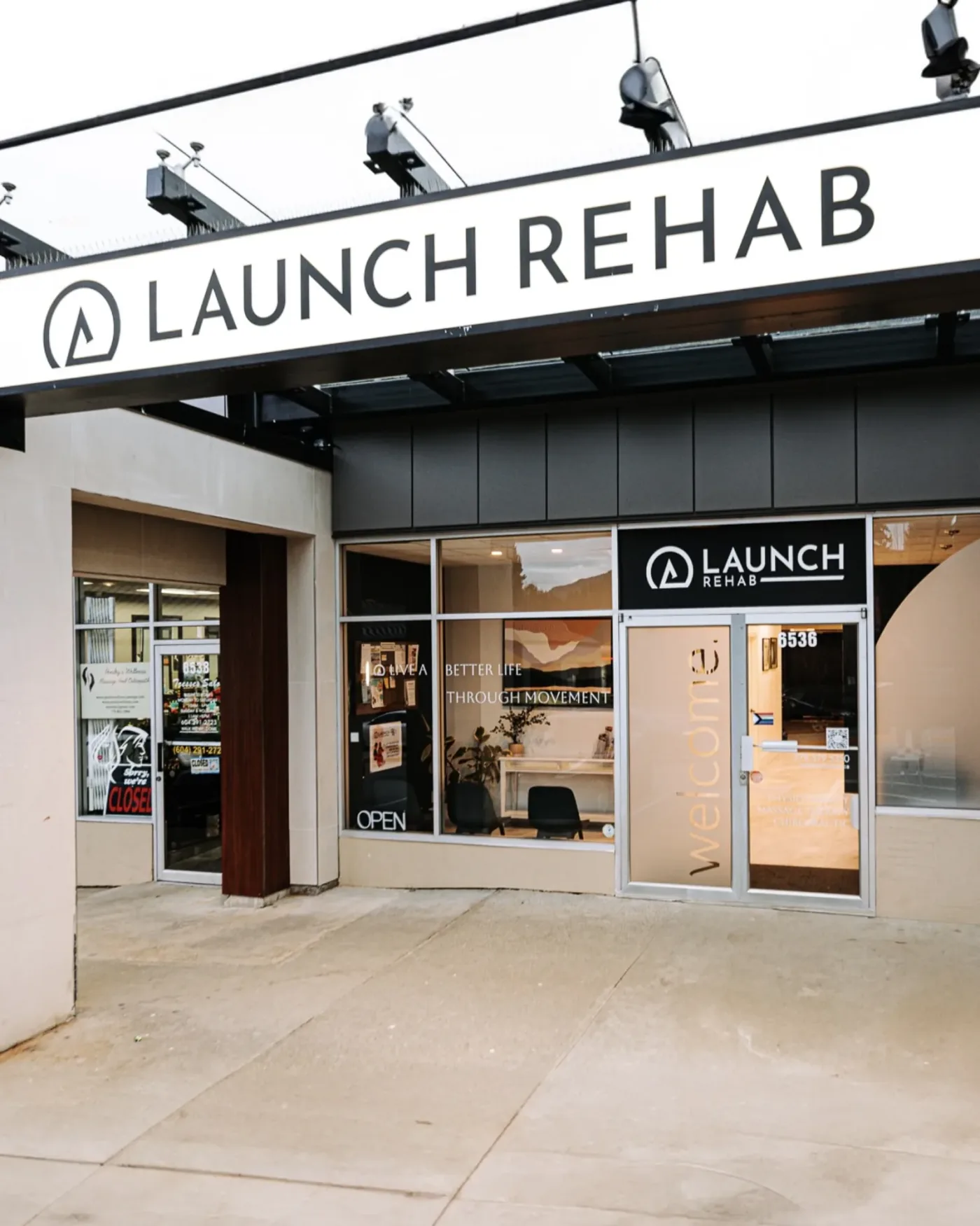
LAUNCH REHAB NORTH BURNABY
Kensington Square Shopping Centre at Kensington Ave and Hastings St.
FAQ
Frequently asked questions.
The International Association for the Study of Pain defines chronic pain as pain that persists or recurs for longer than three months. The threshold is not arbitrary: most tissue healing from an acute injury has finished by then, so pain that continues past it is no longer just tracking tissue repair. It is shaped by months of altered movement, reduced activity, sleep disturbance and nervous-system changes, and the plan is built around that rather than around hunting for a single structure.
FROM THE JOURNAL