
MLD GUIDE · CONDITIONS
Lymphatic drainage after surgery: what helps, and when.
Swelling after an operation is your body doing its job. MLD can support the cleanup, once the timing is right and your surgeon agrees.
THE SHORT ANSWER
Does lymphatic drainage help with swelling after surgery?
Manual lymphatic drainage may help manage the expected swelling, bruising and discomfort that follow certain procedures, by supporting the lymphatic system's cleanup of surgical fluid. Timing is the key variable: treatment must fit the procedure, your healing stage and your surgeon's post-operative instructions. At Launch Rehab we do not treat over healing incisions and we ask for medical clearance where the surgery requires it.
Every operation, from a knee scope to a tummy tuck, injures tissue on purpose. The body responds with inflammation: extra fluid, immune cells and repair materials flood the area, and the lymphatic system is the drain that carries the leftovers away. Swelling after surgery is that process working, and some amount of it is normal and expected.
Sometimes the drain falls behind. Fluid lingers, the area stays puffy and tight for weeks, bruising is slow to fade, and everything feels stiff. This is where manual lymphatic drainage earns its reputation in post-surgical care: a trained therapist supporting the drainage the body is already attempting. This guide covers what MLD can and cannot do after surgery, the timing question everyone asks, and the safety rules we will not bend.
AT A GLANCE
- Helps with
- Expected post-surgical swelling, bruising, tightness and discomfort
- Timing
- Depends on the procedure and healing. Your surgeon's guidance leads
- Hard rule
- No treatment over unhealed incisions, drains or infected tissue
- Clearance
- Required where the procedure or your health history calls for it
- Where
- Lougheed (Burnaby) and New Westminster studios
THE BACKGROUND
Why surgery causes swelling in the first place
Surgery cuts through skin, small blood vessels and, unavoidably, some of the fine lymphatic vessels in the area. The healing response floods the site with fluid at exactly the moment the local drainage network has been disrupted. More fluid in, less capacity out: swelling is the arithmetic of every post-operative week.
In most cases the balance corrects itself. Lymphatic vessels are good at rerouting and reconnecting, and the swelling of a routine procedure settles over days to weeks. How long that takes varies with the procedure, the person and the aftercare, so treat any confident universal timeline you read online with suspicion.
Some procedures carry a longer shadow. Operations that remove lymph nodes, or radiation in the same region, permanently reduce drainage capacity and carry a lymphedema risk, which the lymphedema guide in this hub covers in depth. For routine surgery, the concern is not lymphedema but comfort and pace: helping normal swelling settle so movement and healing stay on track.
THE ROLE OF MLD
What MLD can realistically do after surgery
MLD supports the cleanup. Light, directional skin stretches encourage fluid out of the congested area toward lymph node groups that are working normally, often starting the sequence well away from the surgical site. Clients typically notice the area feels less tight and heavy after sessions, and clinicians use MLD widely in post-operative recovery for exactly that reason.
Honesty about evidence matters to us. Strong trial evidence for MLD after surgery is limited, and it varies by procedure. What we can say plainly: the technique is gentle, it is recognized in lymphedema care where a Cochrane review found it safe alongside compression, and its post-surgical use is standard practice in the massage therapy profession. What we will not say: that MLD speeds healing by a specific number of days, or that everyone needs it.
MLD also has clear non-jobs after surgery. It does not replace your surgeon's follow-up, it does not treat infection, it does not fix a seroma or hematoma that needs medical drainage, and it is not a way around wearing the compression garment your surgeon prescribed.
THE BIG QUESTION
When after surgery can MLD start?
There is no single safe start date, because a knee arthroscopy, a caesarean section and a facelift heal on different schedules. The honest answer has three parts: the procedure sets the range, your individual healing sets the moment, and your surgeon's post-operative instructions override everything printed here.
In practice, the earliest MLD work stays well away from the incision, treating central pathways to make room downstream, and only approaches the surgical region as healing allows. Wounds must be closed, drains removed, and any surgeon-specified waiting period respected. When a client arrives too early, we say so and reschedule rather than improvise.
Bring your operative and discharge notes, or at least the surgery date, procedure name and your surgeon's aftercare sheet, to the first appointment. If anything is ambiguous, we ask you to get written clearance before hands-on work near the site. A one-week delay is cheap. A wound complication is not.
Your surgeon leads
Post-operative instructions and clearance override any general guidance, including ours.
Closed wounds only
No MLD over incisions that are still healing, taped, draining or infected.
Start away, work in
Early sessions treat central pathways first and approach the site only as healing allows.
When unsure, wait
We reschedule rather than treat through uncertainty. The window does not close.
Fever, spreading redness, discharge from the incision, sudden one-sided calf swelling or chest symptoms after surgery are medical emergencies or urgent-care problems. Contact your surgeon or seek urgent care. Do not book a massage appointment for them.
IN THE ROOM
What a post-surgical MLD session looks like
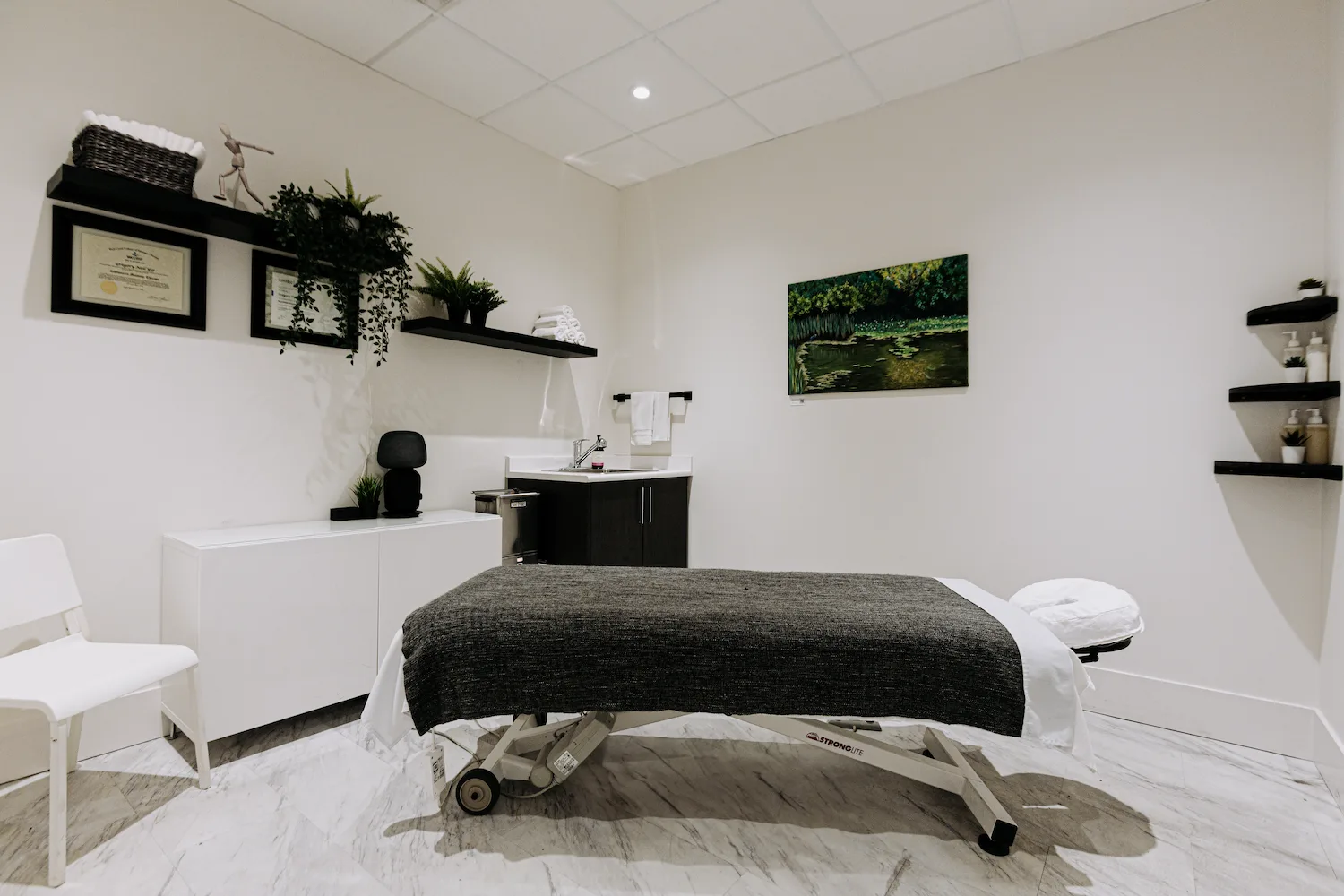
The first visit starts with paperwork that matters: your procedure, its date, your surgeon's instructions, medications, and any complications so far. Then a look at the area, without treating anything that is not ready. Only after that does treatment begin, and it may be shorter and lighter than you expect on day one.
Treatment itself is quiet and gentle: bare hands, no oil, slow rhythmic skin stretches sequenced toward working lymph nodes. Sessions run 45 to 90 minutes depending on the areas involved, and early post-surgical work often sits at the shorter end. Many clients use the time to simply rest, which is not wasted either.
Between sessions you will usually get simple homework: elevation habits, gentle movement or breathing work, skin care around the healing area, and compression as prescribed by your surgeon. The between-session work often does as much as the table time, because your lymphatic system runs around the clock and our hands are only on you for an hour.
IS THIS YOU
Who tends to book post-surgical MLD
We see the full range: orthopedic surgery clients whose ankle or knee is still puffy weeks later, post-caesarean and abdominal-surgery clients managing tightness, and cosmetic-surgery clients whose surgeons recommended lymphatic massage as part of aftercare. The common thread is expected swelling that is slow to settle, in a person cleared to receive gentle treatment.
If your surgery involved lymph node removal or radiation, read the lymphedema guide as well, because your situation deserves the longer-term lens and Arra's Certified Lymphedema Therapist training becomes directly relevant. If you are unsure which category you fall into, book the assessment and bring your notes. Sorting that out is what the first visit is for.
This page is general information. It does not replace assessment by a regulated practitioner. If a swollen limb becomes hot, red or painful, or swelling appears suddenly with shortness of breath or chest pain, seek urgent medical care rather than booking a massage appointment.
BOOK OR ASK
Worth booking if
- Your surgeon recommended lymphatic drainage as part of aftercare
- Swelling or bruising is settling slower than your follow-up expected
- The area feels tight and heavy now that the wound has healed
- You had nodes removed and want a therapist trained in lymphedema care
- You want a plan for the weeks of recovery, not just one session
MLD AT LAUNCH REHAB · TWO STUDIOS
Manual lymphatic drainage is delivered by Arra Younus, RMT, trained in the Dr. Vodder method and certified in lymphedema therapy. She treats at both studios below. Not sure MLD is the right booking? Call either studio and describe the swelling. It is a two-minute conversation.
FAQ
Common questions.
It depends on the procedure, your healing and your surgeon's instructions, so there is no universal start date. Wounds must be closed and any surgeon-specified waiting period respected. Early sessions can often begin sooner by working well away from the surgical site, but your surgeon's guidance always decides.
SOURCES
Where the facts on this page come from.
- Lymphoedema: Treatment (decongestive lymphatic therapy components) · NHS (UK National Health Service) · Accessed 27 August 2026
- Ezzo J, et al. Manual lymphatic drainage for lymphedema following breast cancer treatment (Cochrane Review) · Cochrane Database of Systematic Reviews, via PubMed · Published 2015. Accessed 27 August 2026
- Lymphatic System: Anatomy and Function · Cleveland Clinic · Accessed 27 August 2026
KEEP READING
More from the MLD guides.
- Swelling and conditions
Lymphedema
Chronic swelling from a damaged lymphatic system, most often after cancer treatment. What it is, how it is managed, and where MLD fits.
READ - Booking, cost and safety
Your first session
What actually happens in a first MLD appointment, minute by minute: the health history, the light-touch treatment, and the homework.
READ - Booking, cost and safety
Safety and who should wait
MLD is gentle, but gentle is not the same as harmless. The conditions that rule it out, the ones that need clearance first, and why.
READ
READY?
Book manual lymphatic drainage in Burnaby or New Westminster.
Delivered by a Vodder-trained RMT and Certified Lymphedema Therapist at our Lougheed and New Westminster studios. Not sure MLD fits your situation? Call 604-813-8885 (Lougheed) or 604-519-0777 (New Westminster) and describe the swelling.