
New Year Training Injuries: A Physiotherapy Guide to a Safer Return to Exercise
New shin pain, knee pain, or a sore lower back after starting a January fitness plan usually comes down to one thing: training load went up faster than tissue could adapt. Here is why that happens, which injuries show up most, and how a physiotherapist can help you build volume back safely.
BY THE LAUNCH REHAB TEAM
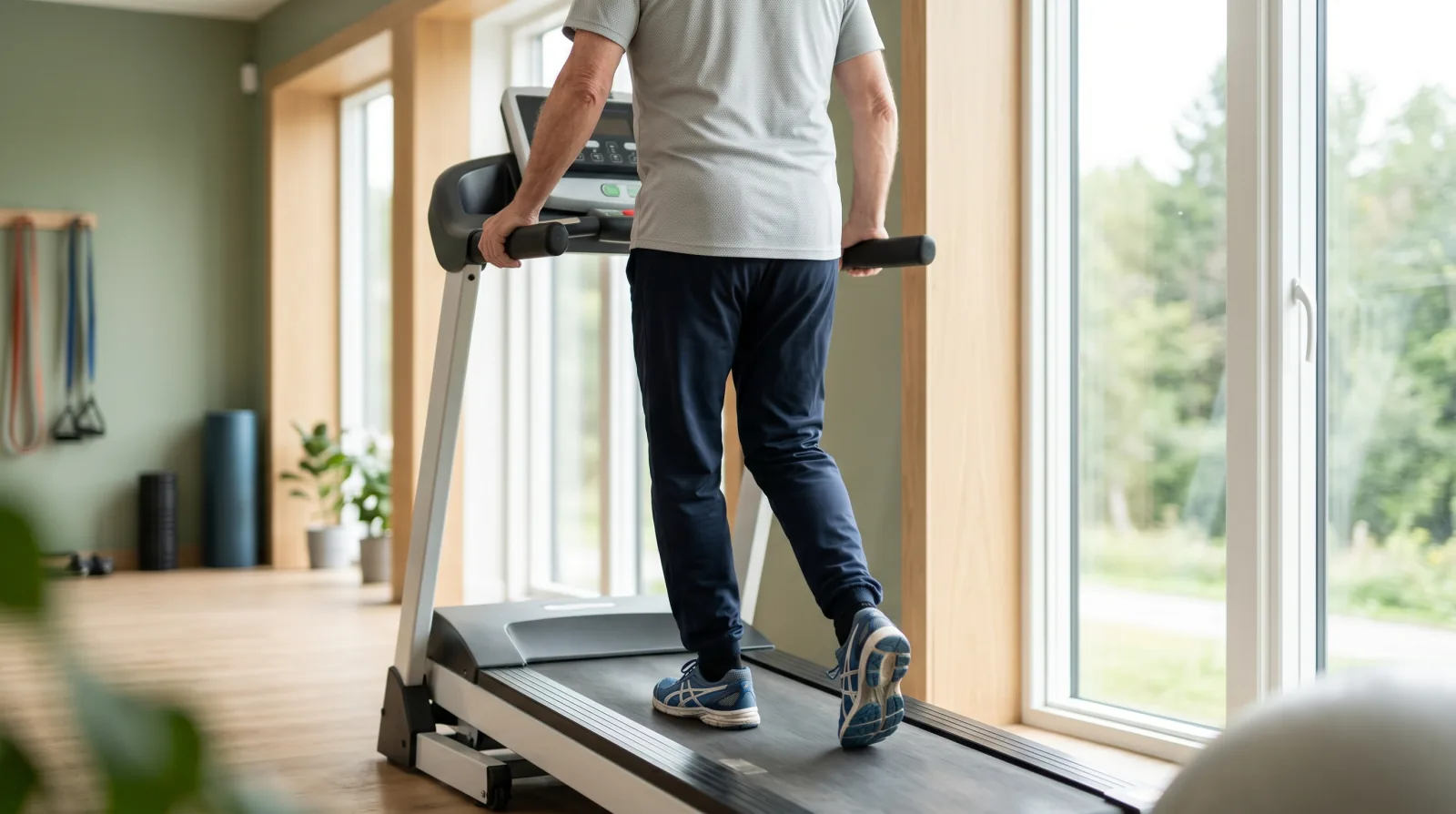
Shin pain in week two of a new running plan. A sore kneecap after adding squats back into a gym routine. A lower back that seized up on the first heavy lift of the year. Every January, the same pattern shows up in clinic: someone restarts exercise after months of low activity, feels great for a week or two, then gets hurt. This is what causes it, which injuries show up most, and how to build volume back without derailing the resolution in week three.
Why a fast jump in training load causes injury
Muscle, tendon, and bone all adapt to exercise, but not on the same timeline. Muscle strength and cardiovascular fitness respond within days to weeks. Tendon and bone respond much more slowly. Collagen synthesis in tendon ramps up after a bout of loading, but the structural changes that make a tendon more tolerant of load take a sustained period of repeated loading, not a single week of enthusiasm (Kjaer et al., Scandinavian Journal of Medicine & Science in Sports, 2009).
That gap between how fast the cardiovascular system adapts and how slowly connective tissue adapts is the core mechanism behind most "too much too soon" injuries. You feel capable of more because your breathing and effort tolerance improved fast. Your tendons and bone have not caught up yet. The result is pain that tracks with a recent jump in volume or intensity rather than with any single bad rep.
The research on exactly how much of a jump is safe is less settled than the popular "10% rule" suggests. A systematic review of training parameters and running injuries found the evidence on recent changes in training load was conflicting, and concluded the common advice to cap weekly distance increases at 10% is not well supported by the data (Journal of Athletic Training systematic review, 2021). What the literature does support more consistently is that a sudden, large jump in a single session, rather than a steady week-over-week climb, is where injury risk concentrates. In sport settings, the ratio between a person's recent (acute) training load and their longer-term (chronic) training load has been studied as a risk marker, with the lowest injury rates seen when that ratio stays in a moderate range rather than spiking sharply upward. Recent systematic reviews caution that this ratio should be read as one input among several, not a standalone predictor (systematic review and meta-analysis, 2020). The practical takeaway is the same either way: build volume in steps your tissue has recently tolerated, rather than in steps that match your motivation.
Shin pain: the most common running comeback injury
Shin pain along the inner edge of the tibia, often called shin splints or medial tibial stress syndrome, is one of the most frequent injuries in runners who increase mileage quickly after time off. Clinical reviews consistently describe a recent increase in training volume, frequency, or intensity as the pattern that precedes onset, and first-line management centres on reducing or modifying the training load that caused it, sometimes shifting to lower-impact cardio like cycling or swimming while the bone and soft tissue catch up (JOSPT clinical commentary, 2025). We cover the specifics of assessment and graded return to running in our post on shin splints and MTSS in runners.
Kneecap tendon pain from squats, lunges, and jump training
Patellar tendinopathy, commonly called jumper's knee, shows up at the bottom of the kneecap after activities that load the knee extensor mechanism repeatedly: squats, lunges, stairs, running, and jump-based group classes. It develops from cumulative loading of the tendon that outpaces its current capacity, which is exactly the scenario created by adding several new leg-heavy sessions per week in January after a quiet fall. The clinical approach to managing it centres on progressively rebuilding the tendon's tolerance to load rather than resting completely, since underloading a tendon can be as unhelpful as overloading it (Malliaras et al., Journal of Orthopaedic & Sports Physical Therapy, 2015). More on the pattern and a graded loading approach in our post on patellar tendinopathy and jumper's knee.
Low back strain from a heavier-than-usual lift
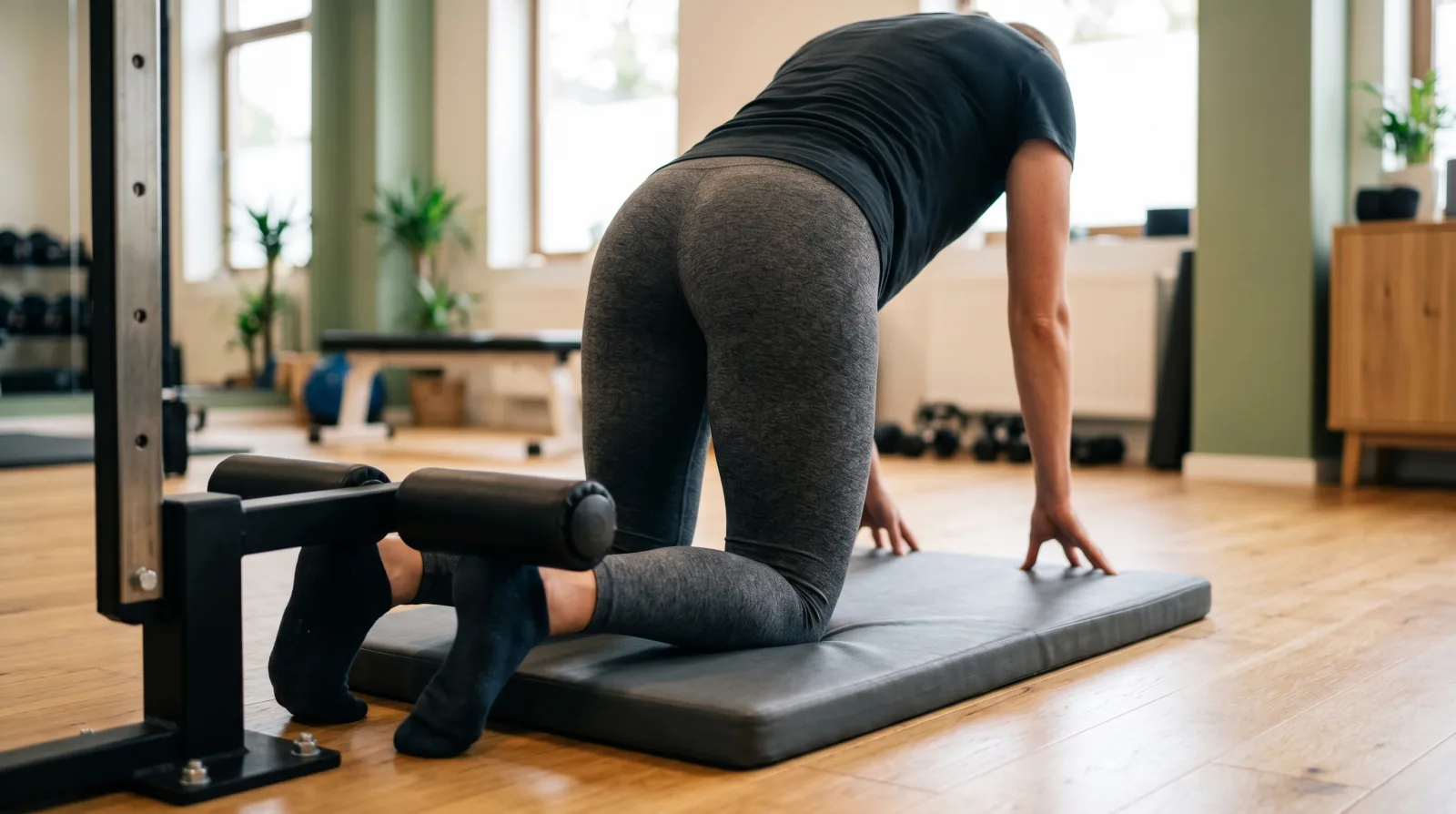
A lower back that strains on the first deadlift or squat session back at the gym is a common presentation in January. The muscles and connective tissue of the low back, like tendon elsewhere, need a period of graded reintroduction to heavy lifting after months away. Clinical guidance for acute low back pain, including from the UK's National Institute for Health and Care Excellence, consistently recommends staying active and continuing ordinary movement within what pain allows, rather than resting completely, while building load back in a structured way. A flare after a heavy first session is common and, in most cases, not a sign of structural damage. It is a sign the load outpaced what the tissue was ready for that day.
Shoulder irritation from resumed overhead lifting
Rotator cuff irritation is a frequent complaint after someone returns to bench press, overhead press, or pull-based lifting without easing back in. The rotator cuff tendons are subject to the same adaptation lag as other tendons in the body: they can tolerate a session or two of higher load, then become irritated once repeated sessions accumulate faster than the tendon can adapt. This usually presents as an ache with overhead reaching or lifting, sometimes at night, rather than a sudden sharp injury. It is worth distinguishing ordinary post-training soreness from a rotator cuff irritation pattern early, since the loading strategy for each is different.
Soreness versus injury: how to tell the difference
Delayed onset muscle soreness, the generalized ache that follows a new or harder workout, usually peaks at 24 to 72 hours, affects muscle broadly rather than one specific point, and improves day over day even without changing your training. That pattern does not usually need a physiotherapy visit.
A few signs point toward something that benefits from a screening assessment rather than pushing through:
- Pain that is localized to one specific spot (a point on the shin, the bottom of the kneecap, one side of the low back) rather than general muscle soreness.
- Pain that gets worse with the same activity level rather than easing over a few days.
- Pain that changes how you move: limping, avoiding a joint's full range, bracing the back differently.
- Pain that shows up at rest or at night, not only during exercise.
- Any numbness, tingling, or weakness, which are reasons to be seen sooner rather than waiting it out.
None of this is a diagnosis. It is a rough filter for deciding whether to keep training through it or get it looked at.
How a physiotherapist builds a safer return to training
A physiotherapist's role here is mostly about pacing, not permission. A screening assessment before or early into a new program checks joint range of motion, current strength, and how a specific tissue responds to load, then uses that information to set a starting point and a progression rate that matches your history rather than a generic template. This is often called graded loading: increasing volume, intensity, or complexity in planned steps small enough that tissue capacity keeps pace with demand, adjusting the next step based on how the body responded to the last one.
For someone who already has shin, knee, back, or shoulder discomfort from a fast start, the same graded approach applies in reverse. The physiotherapist identifies which structure is irritated, works out how far training load needs to drop to let it settle, and then rebuilds it in stages rather than telling you to simply stop and start over from zero. Details on what a first visit involves are in our post on how long physiotherapy takes, and general guidance on finding the right fit for an assessment is in our post on choosing a physiotherapy clinic in Metro Vancouver.
What to do next if you are already sore or hurting
If what you are feeling matches ordinary muscle soreness, easing off for a day or two and continuing your plan is reasonable. If pain is localized, worsening, or changing how you move, that is a reasonable prompt to get a screening assessment rather than guessing at how much to scale back on your own. The strongest outcomes we see come from people who adjust their pace early, not from people who push through a localized pain signal until it becomes a bigger problem in February.
This article is general information, not personal medical advice. A regulated practitioner can confirm whether the patterns described apply to you.
Frequently asked questions
Why do I keep getting hurt every time I start a new fitness resolution?
The most common reason is a training load increase that outpaces how fast tendon, bone, and connective tissue can adapt, even when cardiovascular fitness feels ready for more. Building volume and intensity in smaller, planned steps, rather than in the amount your motivation wants to give it, is the main fix.
Is a little soreness after starting a new program normal?
Yes, in most cases. General muscle soreness that peaks around 24 to 72 hours after a new or harder session and improves day over day without changing your routine is a normal adaptation response, not an injury.
How fast should I increase my running mileage in January?
There is no single safe percentage that current research supports. A systematic review of training load and running injuries found the popular 10% weekly increase rule is not well supported by the evidence. What matters more is avoiding a large jump in any single session and building volume in steps that match what you have recently tolerated.
What is the difference between shin splints and a stress fracture?
Both can follow a fast increase in running volume, and both can feel similar early on. Shin splints typically cause pain along a broader area of the inner shin that eases with rest, while a stress fracture tends to produce more localized, sharper pain that does not settle the way general shin soreness does. A physiotherapy or medical assessment is the way to tell the two apart rather than guessing.
Should I stop exercising completely if my knee hurts after starting squats again?
Not necessarily. Tendon pain such as patellar tendinopathy is usually managed by adjusting load rather than stopping activity altogether, since a tendon that goes from heavy loading to none can become less tolerant of load, not more. A physiotherapist can help set a level of activity that keeps the tendon working without aggravating it further.
My lower back hurt after my first heavy lift back at the gym. Did I injure something serious?
Usually not. A back that reacts to a much heavier load than it has handled recently often reflects a tissue that needs a more graded reintroduction to lifting, not structural damage. Guidance for acute low back pain generally favours staying active within what pain allows. If pain is severe, includes numbness or weakness, or is not easing after a few days, that is worth a physiotherapy or medical assessment.
When should I see a physiotherapist instead of just resting?
Consider an assessment when pain is localized to one specific spot rather than general soreness, when it worsens instead of easing over a few days, when it changes how you walk or move, or when it includes numbness, tingling, or weakness. General, whole-muscle soreness that improves daily usually does not need a visit.
Can a physiotherapist help me plan my return to exercise before I get hurt, not just after?
Yes. A screening assessment before ramping up a new program checks current strength, range of motion, and how specific tissues respond to load, which sets a realistic starting point and progression pace. This is often more useful before a training block than after an injury has already started.
Sources
- From mechanical loading to collagen synthesis, structural changes and function in human tendon, Scandinavian Journal of Medicine & Science in Sports (2009)
- The Association Between Running Injuries and Training Parameters: A Systematic Review, Journal of Athletic Training (2021)
- The Relationship Between Acute: Chronic Workload Ratios and Injury Risk in Sports: A Systematic Review, Open Access Journal of Sports Medicine (2020)
- Medial Tibial Stress Syndrome Needs a New Name, Journal of Orthopaedic & Sports Physical Therapy (2025)
- Malliaras P, Cook J, Purdam C, Rio E. Patellar Tendinopathy: Clinical Diagnosis, Load Management, and Advice for Challenging Case Presentations, Journal of Orthopaedic & Sports Physical Therapy (2015)
- Low back pain and sciatica in over 16s: assessment and management, NICE Guideline NG59
- College of Health and Care Professionals of BC (CHCPBC): regulator of physiotherapists in British Columbia
WRITTEN BY
The Launch Rehab Team
Practical recovery and training notes from the clinicians at our five Metro Vancouver studios.
FOUND THIS USEFUL?
Share it with your network on LinkedIn. We wrote a ready-to-post version for you.
FILED UNDER
- return-to-exercise
- training-load
- shin-splints
- patellar-tendinopathy
- low-back-pain
- new-years-resolution
- bc