
GRAVEL BIKE FITTING
Gravel bike fitting in New Westminster.
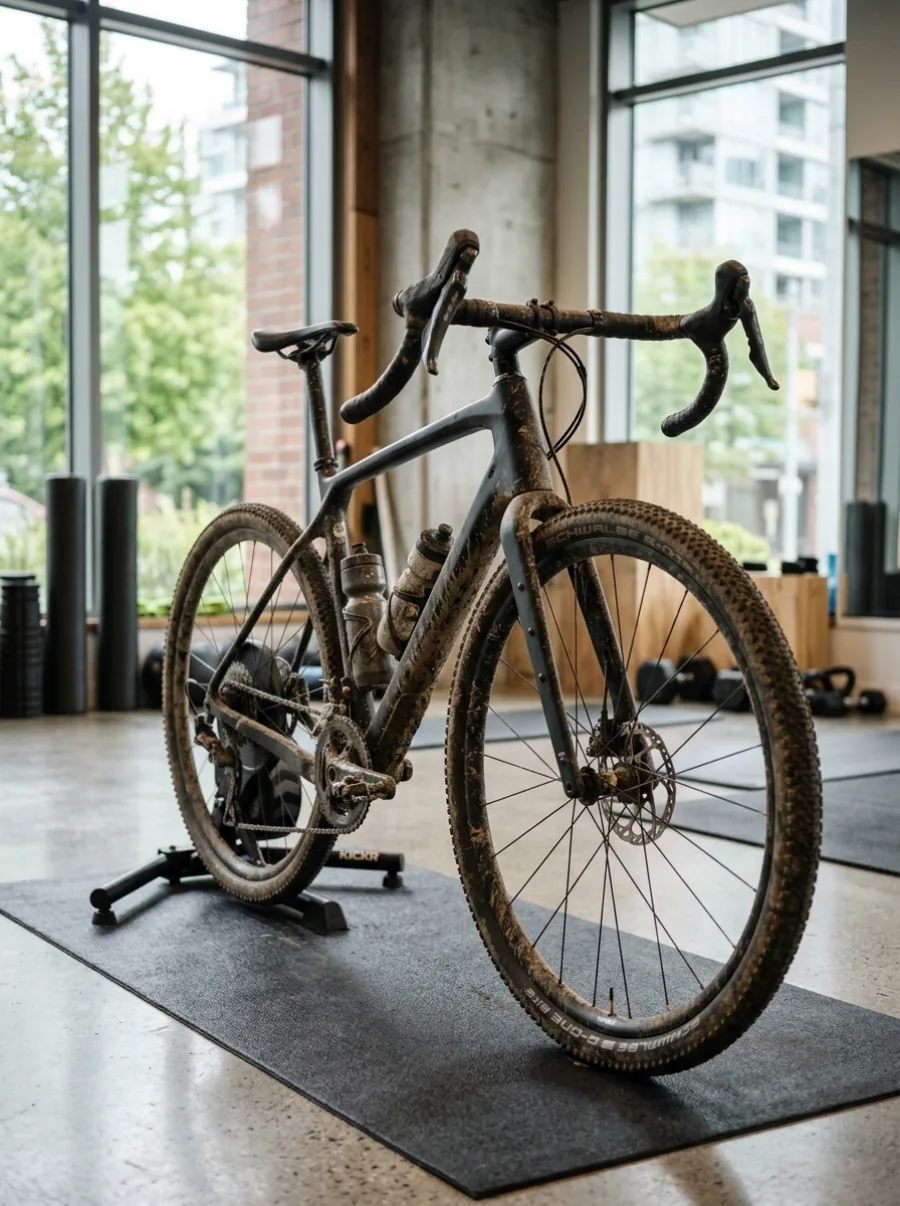
Gravel days are longer, rougher, and full of getting out of the saddle. The position has to earn its keep over six hours, not sixty minutes.
THE SHORT ANSWER
How is a gravel bike fit different from a road fit?
The principles are the same and the priorities shift. Gravel riding means longer days on rougher surfaces, more time standing, and more need to control the bike rather than just pedal it. That usually means a slightly more upright position than the same rider's road setup, a bar height that lets you see and steer over rough ground, wider and often flared bars for leverage and stability, and careful attention to hand comfort because vibration adds up over six hours. Tyre pressure does more for gravel comfort than most components, and it is part of the conversation.
6hrs
The kind of day a gravel position has to survive, not one hour
90min
The initial fit, including the off-bike assessment and the written summary
0$
Cost of the biggest comfort change on gravel: getting tyre pressure right
60min
The follow-up, once you have ridden the new position for a few weeks
Gravel is the fastest-growing kind of riding we see in the clinic, and it brings its own pattern of complaints. Riders come from road bikes and set their gravel bike up like a road bike, then wonder why their hands and neck are wrecked after five hours on a forest service road.
The difference is not that gravel needs a soft, upright position. It is that gravel adds vibration, unpredictable surfaces and a lot of standing and repositioning, and the setup has to accommodate all three.
It also tends to involve much longer days. A rider who is comfortable for the 90-minute road loop may be in a completely different situation at hour five, and the fit has to be judged against the second number.
AT A GLANCE
- Priorities
- Control and long-day comfort over aero
- Common complaint
- Hands and neck on long, rough days
- Where
- New Westminster studio, by appointment
- Session length
- 90 minutes for the initial fit
THE POSITION
Why gravel usually sits a little higher
Most riders end up slightly more upright on a gravel bike than on their road bike, and there are good mechanical reasons for it rather than just comfort.
You need to see further ahead to read the surface, which is harder from a low position. You need weight back for loose descents. And you spend more time supporting yourself against bumps, which is much harder when you are already stretched out.
Bar height
Usually a little higher than the road position, which keeps weight off the hands over rough ground and lets you look up the trail.
Reach
Often slightly shorter, so you can absorb bumps through soft elbows rather than bracing with straight arms.
Saddle setback
Some riders benefit from being slightly further back for control on loose descents, though it is a small adjustment.
Standing room
The position has to work standing as well as seated, because on gravel you will be standing a lot.
HANDS AND VIBRATION
The complaint gravel riders actually get
Hand numbness and forearm fatigue are the most common gravel-specific problems, and they are a vibration and duration issue on top of the usual weight-on-the-bars issue.
Every bump goes into the palms. Over six hours that adds up in a way it never does on tarmac, and riders who have never had numb hands on the road get them on gravel.
Flared bars
The flare widens your hand position in the drops, which improves control and changes the angle at the wrist. Many riders find it noticeably more comfortable.
Bar width
Wider bars give leverage over rough ground, at the cost of a longer effective reach. Getting the balance right is part of the fit.
Tyre pressure
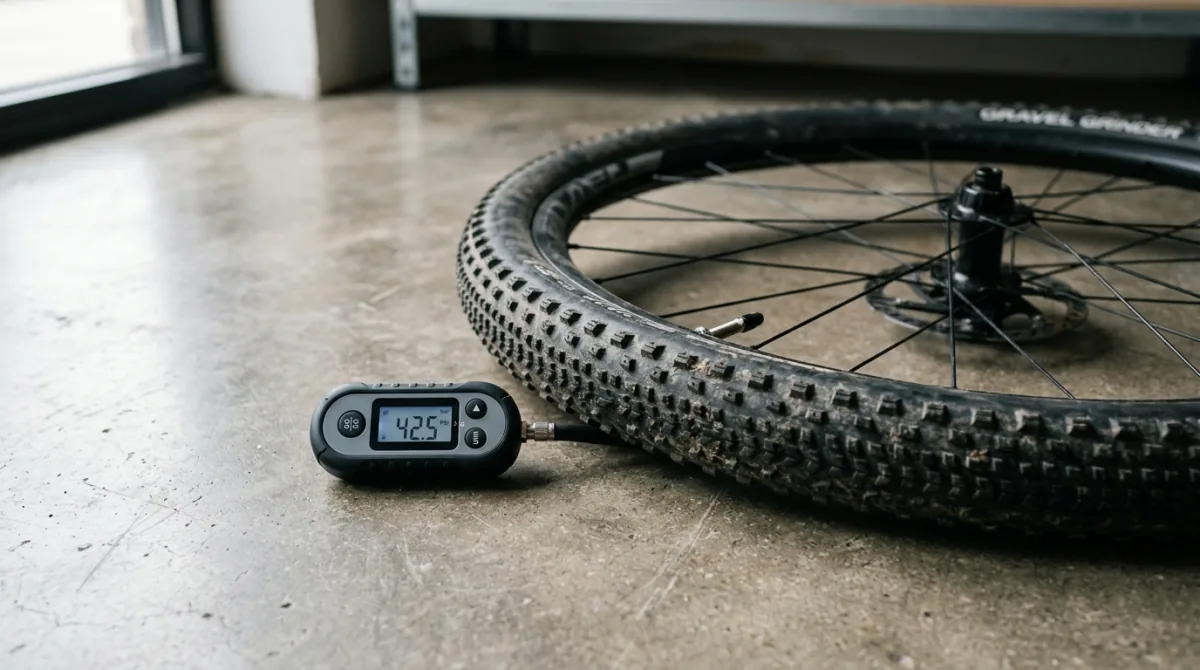
The single most effective comfort change on gravel and the cheapest. Most riders run too much pressure. Wider tyres at lower pressure absorb what your hands otherwise absorb.
Lever position
On flared bars the levers sit at a different angle. Getting the rotation right decides whether the hoods are a comfortable place to spend hours.
Bar tape
Thicker tape genuinely helps here. This is one of the few places where padding is a real answer rather than a workaround.
THE LONG DAY PROBLEM
Fitting for hour five, not hour one
This is the part that catches people out. A gravel event or a big backcountry day can be twice as long as your longest road ride, and everything that is slightly wrong gets amplified by time.
A saddle that is fine for two hours can be unbearable at six. Shoes that fit at the start are tight once your feet have swollen. A position that requires low-level core work is fine until you are tired, at which point you sag onto the bars and the neck takes over.
So when we fit a gravel bike we ask about the longest day you actually plan to do, not your average ride. The position is set against that number.
Saddle choice matters more
Six hours reveals saddle problems that two hours hides. Worth getting right rather than tolerating.
Shoe room for swelling
Feet swell substantially on long days. A shoe with a little room across the forefoot avoids hot foot late in a ride.
Fatigue changes your position
As the core tires, the position collapses forward. Endurance work off the bike protects the position when it matters.
Somewhere to move to
Multiple usable hand positions and the ability to stand comfortably are worth more than a marginal aero gain.
RIDING HERE
Gravel around Metro Vancouver
Local gravel covers a lot of ground. There are flat, fast dyke and trail routes along the Fraser that ride almost like road, and there are steep, loose forest service roads in the mountains that are closer to mountain biking. The two ask different things of a position.
Riders who mix both are the ones who benefit most from a considered setup, because a position tuned only for fast flat riding gets uncomfortable and less controllable when the surface turns. We fit for the mix you actually ride.
ENQUIRE IN NEW WESTMINSTER
Book a fit if
- Your hands go numb on long gravel days
- You have set your gravel bike up like your road bike and it does not feel right
- You feel unstable or nervous on loose descents
- You have an event coming up that is longer than anything you have ridden
- Your neck and shoulders are wrecked after rough rides
- You have just moved to flared or wider bars
LAUNCH REHAB NEW WESTMINSTER
Bike fitting runs from our New Westminster studio, by appointment. Tell us what happens on the bike and we will tell you whether you need a fit, a physiotherapy assessment, or both. It is a two-minute conversation and it saves booking the wrong thing.
- Address
- 219-800 Carnarvon St, New Westminster, BC V3M 0G3
- Getting here
- Inside Shops at New West, above New Westminster SkyTrain station
Bike fitting is by appointment only and books out during the spring and summer riding season. Enquire early if you have an event coming up. About the New Westminster studio.
FAQ
Common questions.
As a starting point, yes, and it is a sensible place to begin. Expect to raise the bars somewhat and possibly shorten the reach a little. Copying the road position exactly is the most common gravel setup mistake we see, because it ignores that you will be standing more, absorbing more, and riding longer.
KEEP READING
More from the bike fitting guides.
- By type of bike
Road bike
The balance between a position you can hold for hours and one that is actually efficient.
READ - By type of bike
Mountain bike
Position changes constantly, so the fit is about the contact points, the seated climb, and room to move.
READ - Pain and symptoms
Numb hands
Which fingers go numb tells us where the pressure is landing, and that points straight at the fix.
READ
FROM THE JOURNAL
Related reading from our clinicians.
READY?
Book your bike fit in New Westminster.
By appointment at 219-800 Carnarvon St, New Westminster, BC V3M 0G3. Not sure which appointment you need? Call 604-519-0777 and describe what happens on the bike.