
NUMB HANDS AND WRISTS
Numb hands when cycling, and how a bike fit fixes them.
Two nerves cross the palm in exactly the places a handlebar presses. Which fingers go numb tells us which one is being squashed.
THE SHORT ANSWER
Why do my hands go numb when cycling?
Because a nerve is being compressed where your hand meets the handlebar, usually because too much body weight is going through your hands for too long without a break. Numbness in the little and ring fingers points to pressure on the outer edge of the palm. Numbness in the thumb, index and middle fingers points to pressure through the middle of the palm, often combined with a wrist that is bent backwards. The fix is nearly always reducing hand load rather than adding padding: correcting saddle tilt so you are not sliding forward, shortening the reach, rotating the bars, adjusting lever position, and changing hand position regularly. Numbness that persists after the ride should be assessed.
2
Nerves crossing the palm. Which fingers go numb tells us which one
90min
The initial fit, including the off-bike assessment and the written summary
1 to 2°
Saddle tilt change that often stops you sliding onto your hands
60min
The follow-up, once you have ridden the new position for a few weeks
Hand numbness is one of the most common cycling complaints and one of the most reliably fixable. Riders often assume it is unavoidable, or that the answer is thicker gloves. It is usually neither.
Two nerves supply the hand, and they enter it at two different places, both of which sit right where a handlebar presses. That anatomy is why the pattern of numbness is so useful: it points at a location, and the location points at the adjustment.
The single biggest factor is how much of your body weight your hands are carrying. Your hands are meant to steer and steady you. When they end up supporting you, the pressure at those two points goes up and stays up.
AT A GLANCE
- Most common driver
- Too much body weight on the hands
- Fastest single fix
- Saddle tilt, so you stop sliding forward
- Where it is assessed
- New Westminster studio, by appointment
- When to see a clinician
- Numbness that lingers after you get off
WORK OUT WHICH NERVE
Which fingers go numb, and what it means
Before you change anything, notice exactly which fingers are affected. It takes one ride to work out and it narrows the problem considerably.
Little finger and half the ring finger
Pressure on the outer edge of the palm, on the side below the little finger. Very common on drop bars when a lot of weight is on the hoods or the drops.
Thumb, index, middle and half the ring finger
Pressure through the middle of the palm, usually made worse by riding with the wrist bent backwards.
All the fingers, both hands, equally
Usually a straightforward weight problem rather than one specific nerve. Too much load, spread across the whole palm.
One hand only
Worth a proper look. It can be a bar or lever set slightly differently side to side, a saddle you sit on off-centre, or something in the neck or shoulder on that side.
Numbness that is still there an hour after you get off the bike, that you also notice at night or at a desk, or that comes with weakness or clumsiness in the hand, is not a bike fit problem. Have it assessed by a physiotherapist or physician.
THE ROOT CAUSE
Why your hands are carrying too much
In a good position your weight is shared between the saddle, the pedals and the hands, with the hands taking the smallest share. Several common setup faults quietly shift more of it onto the bars, and once it is there it stays there for the whole ride.
Saddle tilted nose-down
The most common cause and the easiest fix. You slide forward continuously and push back against the bars to stop. A degree or two of tilt makes a large difference.
Saddle too far forward
Moves your centre of mass toward the front wheel, so the arms carry more of you.
Reach too long
You lean further forward to get to the bars, and the further forward you are the more your hands hold.
Saddle too high
Tips you forward over the bars, on top of everything else it does.
Riding with locked elbows
Straight arms send every bump directly into the palms. A soft bend absorbs a lot of it.
AT THE HANDLEBAR
Bar rotation, lever position and what you hold
Once the weight problem is dealt with, the contact point itself is worth getting right. Small changes here decide whether the load that remains is spread across the palm or concentrated on a nerve.
Bar rotation
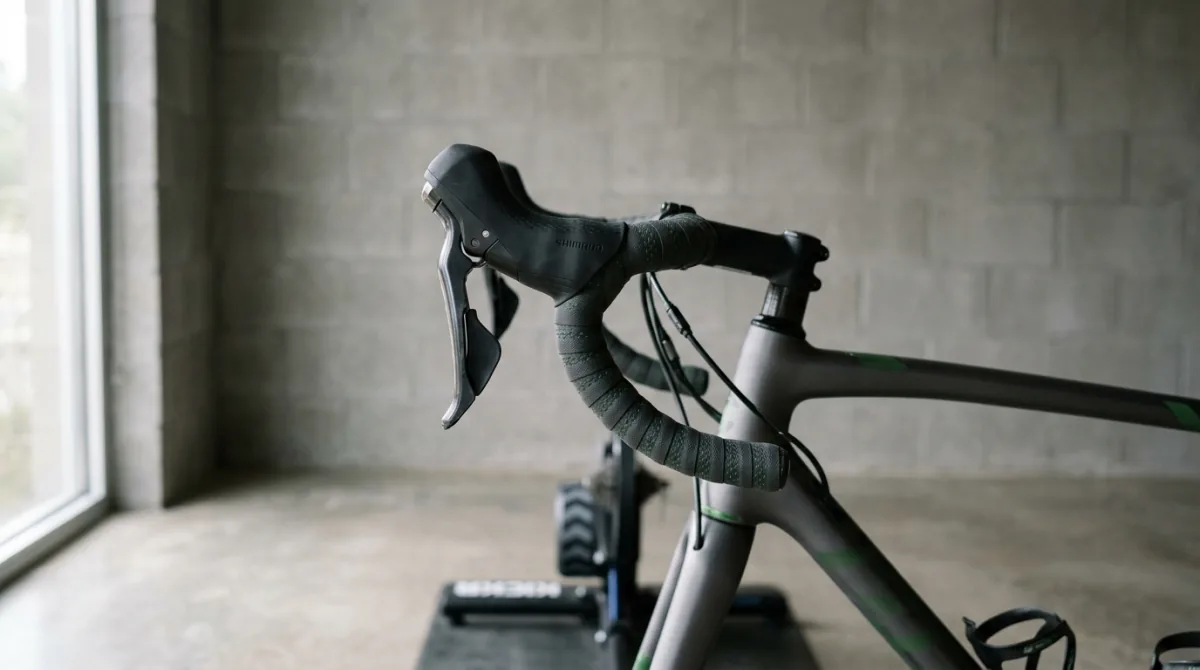
Rotating drop bars a few degrees changes the angle of the flat section and where your palm sits on the hoods. This is a free change and often the most effective one.
Lever position
Levers set too low force the wrist to bend backwards to reach the hoods. Moving them up flattens the wrist.
A neutral wrist
The aim is a hand roughly in line with the forearm. A wrist bent sharply back narrows the space the nerve passes through.
Bar tape and gloves
Useful, but secondary. Padding spreads pressure, it does not remove load. Very thick padding can even make you grip harder.
Bar shape and width
The flat top section, the reach to the hoods and the drop shape all change how the palm sits. Some hands simply do better on a different bar.
WHILE RIDING
The habit that matters most
Even a well-set-up bike will make your hands numb if you never move them. Nerve compression is about pressure multiplied by time, and you can only control one of those while you are riding.
Set yourself a rough interval, something like every 15 to 20 minutes, and change something: move from hoods to tops to drops, shake out one hand at a time, unweight the hands for a few seconds on a smooth stretch, or stand for 20 seconds. Riders who do this out of habit rarely get numb hands even on long days.
- Change hand position every 15 to 20 minutes as a rule, not when it starts hurting
- Keep a soft bend in the elbows so the arms absorb bumps instead of the palms
- Grip the bars lightly, firm enough to control the bike and no firmer
- Stand out of the saddle briefly on climbs and rises to unload the hands completely
- On rough surfaces, lower tyre pressure does more for hand comfort than thicker gloves
This is general information, not a personal assessment. Nothing here replaces having the joint looked at. Stop any change that increases your pain, and see a regulated clinician if the pain is sharp, swelling, giving way, or getting worse week to week.
ENQUIRE IN NEW WESTMINSTER
Book a fit if
- Your hands go numb on most rides over an hour
- You have already tried thicker gloves or padded tape
- You find yourself pushing back off the bars to stop sliding forward
- Only one hand is affected
- It started after a new bike, new bars or a new saddle
- You get numb hands and a sore neck together
LAUNCH REHAB NEW WESTMINSTER
Bike fitting runs from our New Westminster studio, by appointment. Tell us what happens on the bike and we will tell you whether you need a fit, a physiotherapy assessment, or both. It is a two-minute conversation and it saves booking the wrong thing.
- Address
- 219-800 Carnarvon St, New Westminster, BC V3M 0G3
- Getting here
- Inside Shops at New West, above New Westminster SkyTrain station
Bike fitting is by appointment only and books out during the spring and summer riding season. Enquire early if you have an event coming up. About the New Westminster studio.
FAQ
Common questions.
They help a bit and they are worth having, but they treat the symptom. Padding spreads pressure over a slightly larger area. It does not reduce how much of your weight the hands are carrying, which is the actual cause in most riders. Very thick padding can also make the bar feel bulky enough that you grip harder, which works against you. Fix the load first, then use gloves to take the edge off what remains.
KEEP READING
More from the bike fitting guides.
- Pain and symptoms
Neck and shoulders
Drop, reach and how far you have to lift your head to see the road. Plus how much weight is on your hands.
READ - Pain and symptoms
Saddle pain
Rarely about how soft the saddle is. Almost always about where your weight lands and how long it stays there.
READ - How a fit works
What happens in a fit
The full 90 minutes, step by step, from the first question to the numbers you take home.
READ
FROM THE JOURNAL
Related reading from our clinicians.
READY?
Book your bike fit in New Westminster.
By appointment at 219-800 Carnarvon St, New Westminster, BC V3M 0G3. Not sure which appointment you need? Call 604-519-0777 and describe what happens on the bike.