
MOUNTAIN BIKE FITTING
Mountain bike fitting in New Westminster.
On a trail bike you are rarely in one position. The fit is about the climb you sit for and the room to move when it points down.
THE SHORT ANSWER
Do mountain bikes need a bike fit?
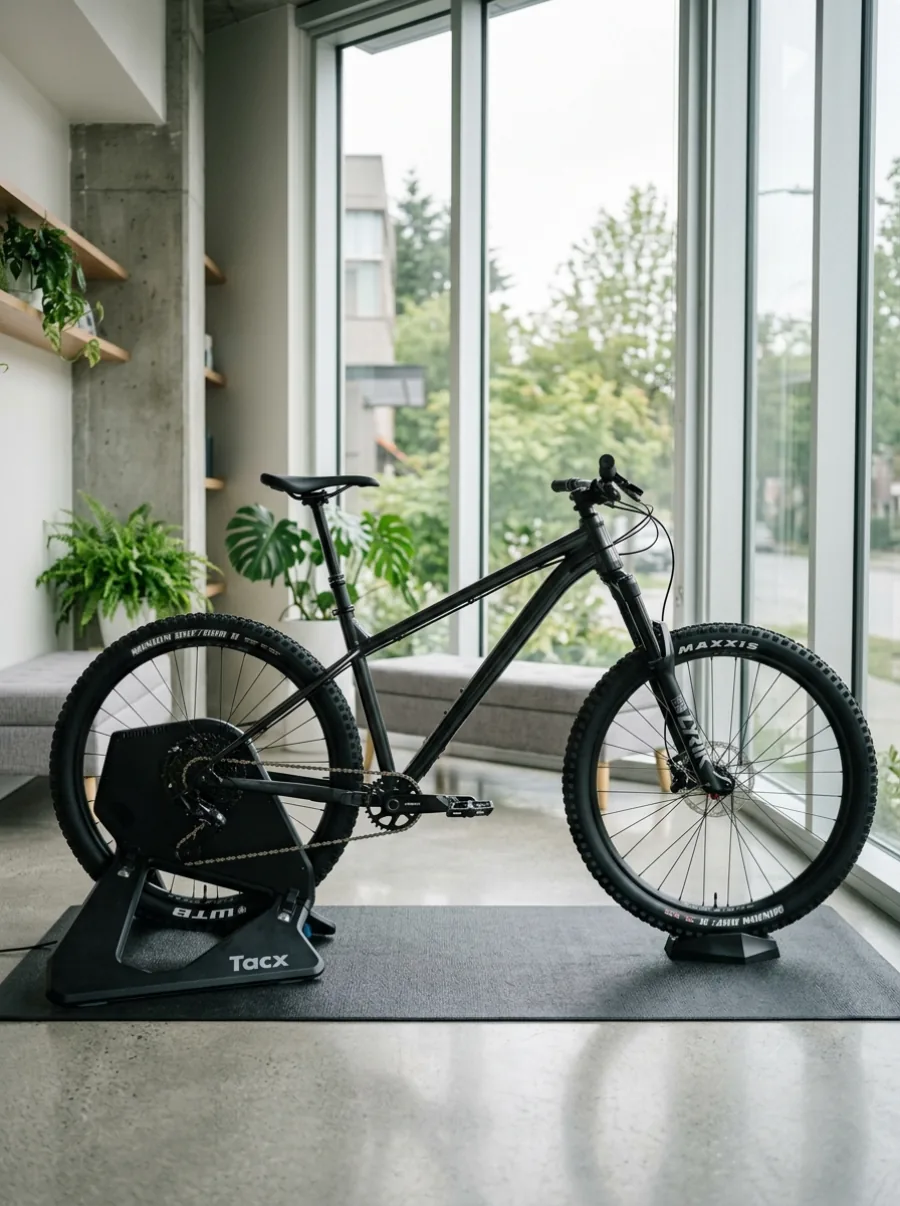
Yes, though it works differently from a road fit. On a mountain bike your position changes constantly, so the fit focuses on three things: the seated position you climb in, which is where most of the pedalling and most of the overuse injuries happen; the contact points, meaning saddle, grips, brake lever position and cleat setup, which cause most of the hand, wrist and knee complaints; and having room to move behind and around the saddle on descents. Bar width, bar roll, lever angle and dropper post length matter more than the millimetre-level saddle numbers a road fit obsesses over.
1hr
Typical seated fire road climb, which is where trail overuse injuries start
90min
The initial fit, including the off-bike assessment and the written summary
4
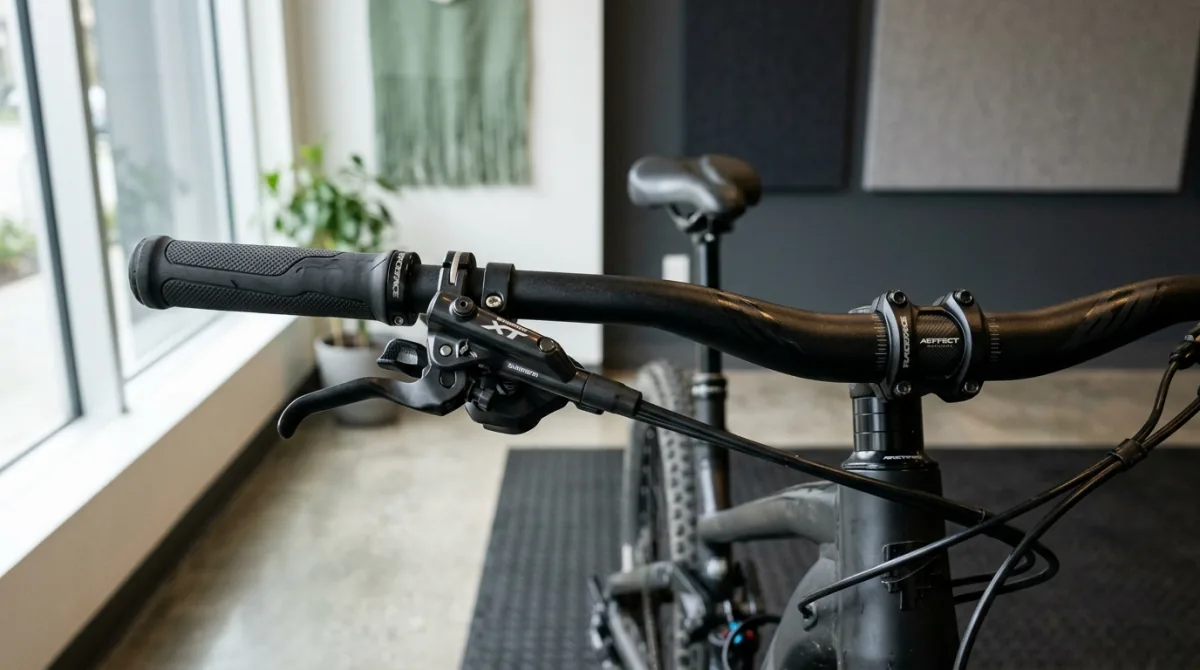
Cockpit adjustments: bar width, bar roll, lever angle, lever reach
60min
The follow-up, once you have ridden the new position for a few weeks
Mountain bikers often assume fitting is a road cyclist's concern. It is not, it is just a different job. The injuries we see from trail riding are real and repetitive: knee pain from long fire road climbs, wrist and hand pain from braking and impacts, and neck and shoulder pain from holding a heavy bike on rough descents.
The reason a fit still helps is that mountain biking has a hidden road ride inside it. Every trail day includes a substantial amount of seated climbing, and that is a fixed, repetitive position exactly like road riding. That is where knee problems come from.
The descending part is not about a fixed position at all. It is about whether the bike lets you move, and whether your controls are where your hands naturally fall.
AT A GLANCE
- Where the overuse happens
- Seated climbing, not descending
- Biggest lever
- Cockpit setup: bar width, roll and lever angle
- Where
- New Westminster studio, by appointment
- Session length
- 90 minutes for the initial fit
THE SEATED CLIMB
Where the repetitive load actually is
A local trail day often means an hour of climbing fire road before anything fun happens. That climb is seated, at a steady cadence, in a fixed position, and it is where a mountain biker's knees earn their complaints.
It is also where saddle height matters as much as it does on a road bike. Riders often set their saddle low because that is where it lives while descending, then climb an hour with the knee bent far more than it should be. Dropper posts have largely solved this, and plenty of riders still do not use the full extension for climbing.
Climb at full saddle height
The dropper exists so you can have a proper pedalling height for the climb and get it out of the way for the descent. Use it.
Saddle fore and aft
Steep climbs push you toward the nose of the saddle. Where the saddle sits changes how much of the climb you spend perched there.
Cleat position
Trail riders often benefit from a cleat set further back than road convention, which reduces calf load and feels more stable on rough ground.
Gearing
Grinding a heavy gear up a steep climb loads the front of the knee. Sometimes the fix is an easier gear rather than a fit change.
THE COCKPIT
Bar width, bar roll and lever position
The cockpit is where most mountain bikers get the biggest return from a fit, because it drives hand, wrist, elbow and shoulder comfort, and because so many bikes come set up in a generic way that nobody ever revisits.
Bars have got wider over the years and plenty of riders are on bars wider than suits them. Too wide puts the shoulders in a stretched, braced position and makes the front end feel vague. Too narrow costs you control.
Bar width
Wide enough for control and leverage, narrow enough that your shoulders are not stretched out. It should match you, not the current trend.
Bar roll
How far the bar is rotated forward or back in the clamp. It changes the wrist angle on every descent and is a free adjustment most riders never touch.
Brake lever angle
Levers should meet your fingers where your hands naturally sit when you are in the attack position, not where they sit standing next to the bike. Too steep an angle bends the wrist and is a common cause of hand and forearm pain.
Lever reach
The distance from grip to lever. Set so you can brake firmly with one finger without stretching, which matters a lot on long descents.
Grips
Diameter and compound change how hard you have to hold on. Riders with hand pain often do better on a thinner grip than they expect.
DESCENDING
Room to move
Descending is not a fixed position, so we do not fit one. What we check is whether the bike gives you room to do what you need to do, and whether anything is in the way.
The most common problem is a saddle that does not drop far enough, which keeps the bike between your legs when you want to get behind it. A dropper post with adequate travel for your leg length solves more descending complaints than any other single change.
Dropper travel
Enough that the saddle is genuinely out of the way. Many riders are on less travel than their frame and legs would allow.
Dropper lever position
It should be reachable without moving your hand off the grip, because if it is awkward you will not use it when it matters.
Standing position
You should be able to stand with soft elbows and knees and a level, balanced stance rather than reaching for the bars.
Suspension setup
Sag, rebound and pressure are part of how the bike fits you. A fork set up wrong sends far more impact into your hands.
HANDS AND WRISTS
The mountain biker's most common complaint
Arm pump, wrist pain and numb hands are the complaints we hear most from trail riders, and they are more about grip force and impact than about weight distribution.
The North Shore and Burnaby Mountain trails involve sustained braking on steep, rough ground. That means gripping hard while absorbing repeated impacts, for minutes at a time, which is a genuinely demanding thing to ask of a forearm.
Lever angle and reach
The first thing to check. A badly angled lever forces a bent wrist for the entire descent.
Grip diameter
A grip that is too fat makes you work harder to hold on. Smaller hands usually want a thinner grip.
Suspension doing its job
A fork with too much pressure or badly set rebound passes impact into the hands instead of absorbing it.
Grip force habit
Many riders hold on far harder than needed. Consciously relaxing the hands between corners makes a real difference.
Forearm and grip strength
Arm pump has a fitness component. Specific forearm work genuinely helps riders who get it every time.
This is general information, not a personal assessment. Nothing here replaces having the joint looked at. Stop any change that increases your pain, and see a regulated clinician if the pain is sharp, swelling, giving way, or getting worse week to week.
ENQUIRE IN NEW WESTMINSTER
Book a fit if
- Your knees hurt after long fire road climbs
- You get arm pump or numb hands on every descent
- Your wrists hurt after a day on the trails
- You feel stretched out or cramped and cannot say which
- You have a new bike and it does not feel like your old one
- You are returning to riding after a crash or an injury
LAUNCH REHAB NEW WESTMINSTER
Bike fitting runs from our New Westminster studio, by appointment. Tell us what happens on the bike and we will tell you whether you need a fit, a physiotherapy assessment, or both. It is a two-minute conversation and it saves booking the wrong thing.
- Address
- 219-800 Carnarvon St, New Westminster, BC V3M 0G3
- Getting here
- Inside Shops at New West, above New Westminster SkyTrain station
Bike fitting is by appointment only and books out during the spring and summer riding season. Enquire early if you have an event coming up. About the New Westminster studio.
FAQ
Common questions.
It is less about millimetres than a road fit and still worth it, because the injuries are real. Knee pain from seated climbing, hand and wrist pain from braking, and neck and shoulder fatigue are all common and all respond to setup changes. If nothing hurts and the bike feels good, you probably do not need one. If something hurts every ride, the setup is usually part of it.
KEEP READING
More from the bike fitting guides.
- By type of bike
Gravel bike
Longer days, rougher surfaces, more standing. Control and comfort earn their place over pure efficiency.
READ - Pain and symptoms
Knee pain
Front, back, inside or outside. Where the pain sits narrows down which part of the setup is doing it.
READ - Pain and symptoms
Numb hands
Which fingers go numb tells us where the pressure is landing, and that points straight at the fix.
READ
FROM THE JOURNAL
Related reading from our clinicians.
READY?
Book your bike fit in New Westminster.
By appointment at 219-800 Carnarvon St, New Westminster, BC V3M 0G3. Not sure which appointment you need? Call 604-519-0777 and describe what happens on the bike.