
TRIATHLON AND TT FITTING
Triathlon and time trial bike fitting.
An aero position is only worth having if you can hold it. Hip range, not willpower, is what sets how low you can go.
THE SHORT ANSWER
How low should my triathlon bike position be?
As low as your hips allow you to hold comfortably for the full distance, and no lower. A low aero position closes the angle between your torso and thigh, so the limiting factor is how much hip flexion you have available at the top of the pedal stroke. Riders who force a position beyond that range lose power, get lower back and neck pain, and in triathlon run badly off the bike. A fit measures your hip range first, sets the position inside it, and identifies the mobility and strength work that would let you get lower over a season. Aerodynamic gain from a position you abandon after 30 kilometres is worth nothing.
1
Constraint that decides your aero position: how far the hip flexes
90min
The initial fit, including the off-bike assessment and the written summary
2
Things the position must do: hold your power, and leave you able to run
60min
The follow-up, once you have ridden the new position for a few weeks
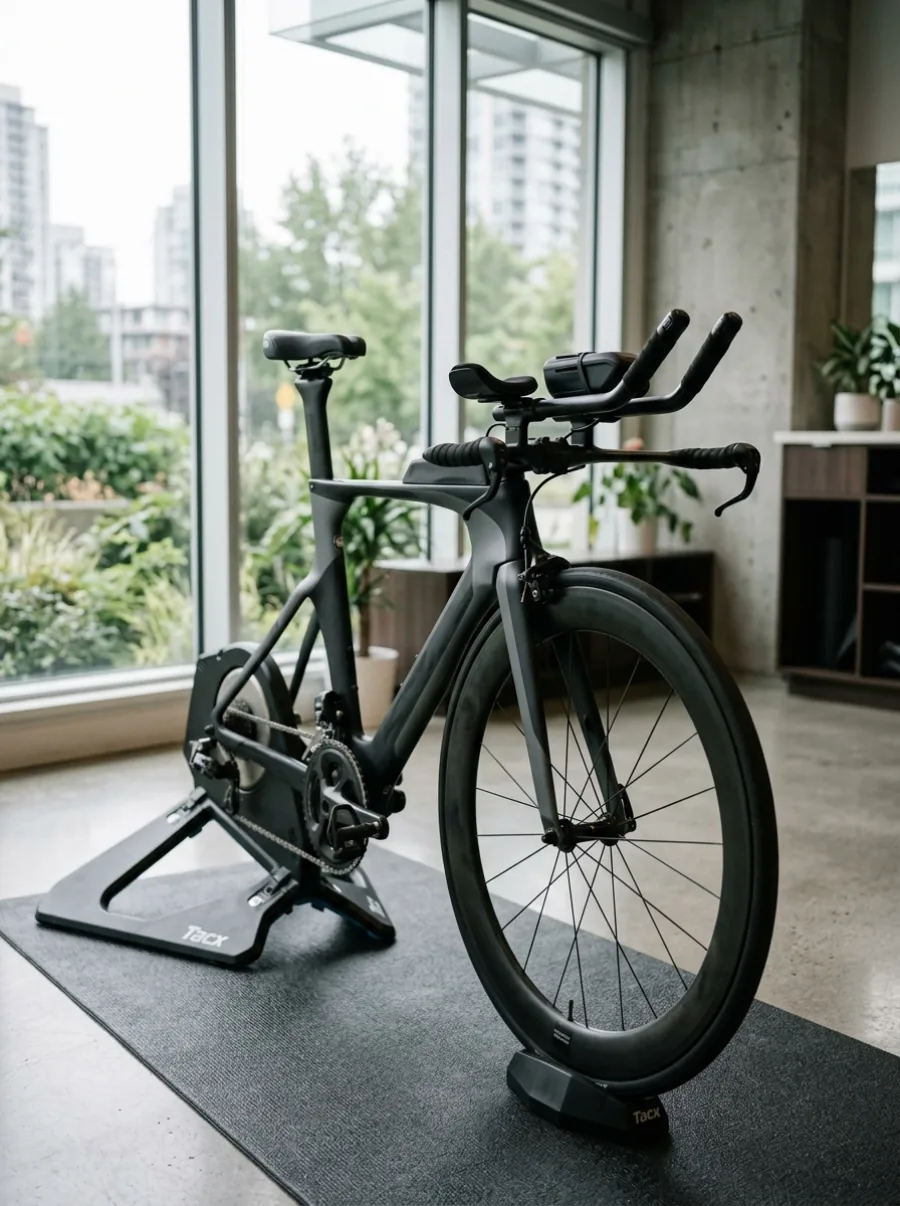
The time trial and triathlon fit is the most demanding one we do, because it has to satisfy requirements that pull against each other. It should be aerodynamic, it should produce power, it should be holdable for anything from 40 minutes to five hours, and in triathlon you have to get off it and run.
Most riders arrive having chased the first of those and ignored the rest. The internet is full of positions belonging to athletes with unusual hip mobility and full-time training. Copying the shape without the range underneath it is how riders end up in pain and slower.
The honest framing is that your aero position is limited by your body, and the good news is that the limit moves. Riders regularly get meaningfully lower over a season when the position and the physical work are planned together.
AT A GLANCE
- The limiting factor
- Hip flexion range, almost always
- Triathlon extra
- The position has to leave you able to run
- Where
- New Westminster studio, by appointment
- Session length
- 90 minutes, follow-up strongly recommended
THE CONSTRAINT
Why hip angle decides everything
In an aero position your torso comes down toward horizontal while your thigh still has to come up to the top of the pedal stroke. The angle between them closes. Get low enough and there is simply no room left for the leg to complete the movement.
When that happens the body finds workarounds. The pelvis rocks. The lower back rounds hard. The rider slides back off the front of the saddle. Power drops, because the hip cannot extend through its strong range. And the whole thing hurts.
This is why we measure hip flexion before touching the bike. It gives an honest number for how low you can go today, and it separates riders whose limit is soft tissue, which can change, from riders whose limit is the shape of the joint, which cannot.
Saddle forward and up
Rotating the whole position forward is how TT bikes open the hip angle back up while keeping the torso low. It is why TT saddles sit so far ahead of road saddles.
Saddle nose design
Snub-nosed and split TT saddles exist because you ride on a different part of the pelvis in an aero position. A road saddle usually is not the answer.
Armrest height
The most direct control over how low you actually are. Small changes here have large effects on both comfort and power.
Armrest width
Narrower is usually more aerodynamic and harder to hold. There is a point where narrow costs you more in stability than it gains in drag.
TRIATHLON SPECIFIC
The position has to leave you able to run
This is the requirement that separates a triathlon fit from a pure time trial fit, and it is the one most commonly ignored.
A position that loads your hip flexors heavily for three hours leaves them tight and fatigued at exactly the moment you need them to drive a running stride. Athletes describe legs that feel locked for the first few kilometres of the run, or a lower back that will not straighten. Some of that is inevitable in long-course racing. A lot of it is the position.
So for triathletes we deliberately trade a small amount of theoretical aerodynamic gain for a position that leaves the hips and back in a state to run. Over a half or full distance that trade is almost always worth it.
Hip flexor load
A very closed hip angle keeps the flexors short and working. They then have to lengthen and drive during the run.
Lower back position
Hours of hard rounding leaves the back stiff. A position that keeps the pelvis rotating rather than the spine rounding runs better off the bike.
Distance matters
A sprint-distance athlete can hold a position that a full-distance athlete should not. We fit for your race, not for the category.
Practise the position
The aero position needs training in, the same as any other. Time spent riding in it is what makes it holdable on race day.
COMMON COMPLAINTS
Neck, shoulders and the numb everything
The aero position combines every risk factor for neck trouble: a low torso, a head extended back to see the road, and no ability to change hand position for hours. It is why neck pain is the most common complaint from TT and triathlon riders.
It also concentrates pressure. Your weight is spread between the saddle, the pedals and two small armrests, which is why forearm and elbow discomfort and saddle numbness are both more common here than on a road bike.
Head position
How far you have to extend the neck to see ahead. Sometimes the answer is the position, sometimes it is the helmet, and sometimes it is practising looking with the eyes rather than lifting the head.
Armrest padding and shape
Hours on two small pads. Shape and padding matter more than most riders expect.
Saddle numbness
Much more common in an aero position, because you are rotated forward onto the front of the pelvis. Usually needs a TT-specific saddle rather than tolerance.
Elbow angle
Where the elbow sits relative to the shoulder changes how much of your upper body weight you have to hold up.
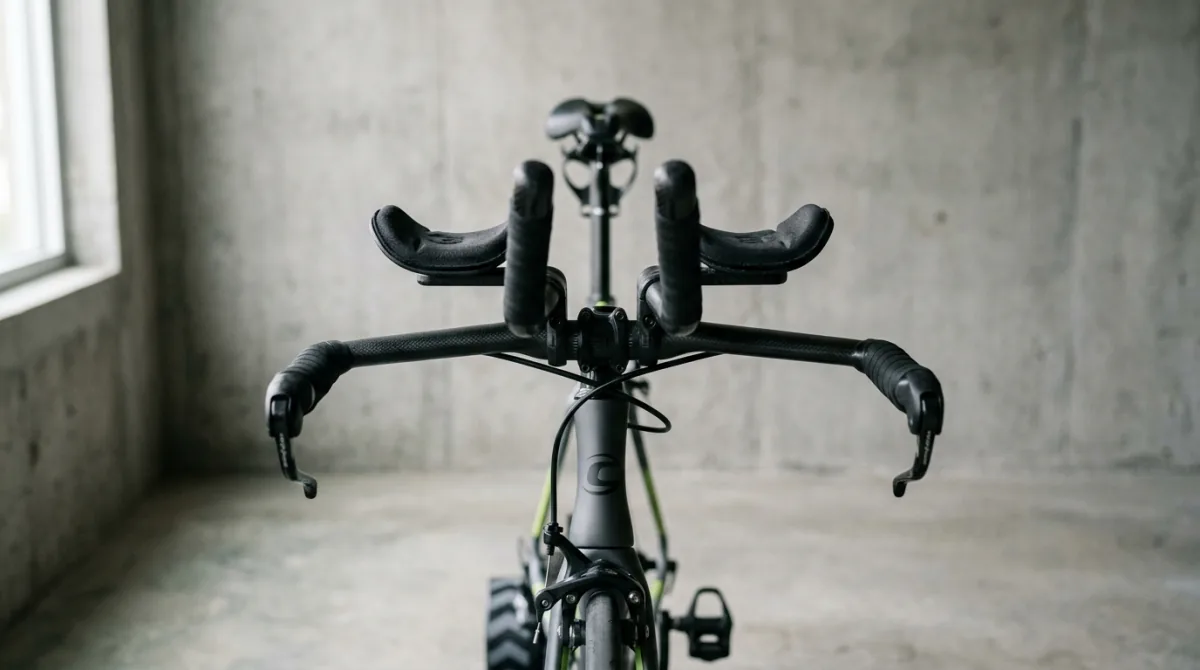
Saddle numbness in an aero position is common and should still not be ridden through. It means pressure on nerves and blood vessels, and it is a signal to change the setup.
OVER A SEASON
How riders actually get lower
Getting more aerodynamic is a training project, not a single adjustment. The riders who succeed do it in steps over months, and it works because the tissue adapts to each step before the next one.
What changes is hip and hamstring range, trunk endurance in a forward position, and the neck's tolerance for holding the head up. That is a short list and it responds well to specific work.
This is where having a physiotherapist do the fit pays off, because the same person who identified the limit can build the program to move it and then re-fit you against the new range.
- Change the position in small steps, then ride in it for a few weeks before the next change
- Work on hip flexion and hamstring range specifically, not general stretching
- Build trunk endurance in a forward position rather than in a plank on the floor
- Train the neck to hold the head up under sustained low load
- Book a follow-up fit once the range has changed, so the position keeps up with you
ENQUIRE IN NEW WESTMINSTER
Book a fit if
- You cannot hold your aero position for a full race distance
- Your neck is the limiting factor rather than your legs
- You run badly off the bike with tight hips or a locked back
- You go numb at the saddle in the aero position
- You have a new TT or triathlon bike
- You want to get lower and do not know what is stopping you
LAUNCH REHAB NEW WESTMINSTER
Bike fitting runs from our New Westminster studio, by appointment. Tell us what happens on the bike and we will tell you whether you need a fit, a physiotherapy assessment, or both. It is a two-minute conversation and it saves booking the wrong thing.
- Address
- 219-800 Carnarvon St, New Westminster, BC V3M 0G3
- Getting here
- Inside Shops at New West, above New Westminster SkyTrain station
Bike fitting is by appointment only and books out during the spring and summer riding season. Enquire early if you have an event coming up. About the New Westminster studio.
FAQ
Common questions.
You can, and plenty of age-group athletes do it well. It needs a proper setup rather than just bolting bars on, because adding extensions to an unchanged road position closes the hip angle dramatically and usually makes the bike uncomfortable and slower. Normally the saddle needs to come forward and often up to rotate the whole position. That is exactly the kind of change worth doing in a fit.
KEEP READING
More from the bike fitting guides.
- By type of bike
Road bike
The balance between a position you can hold for hours and one that is actually efficient.
READ - Pain and symptoms
Hip pain
Pinching at the front, aching on the outside, or a hip that just will not let you get low.
READ - Pain and symptoms
Neck and shoulders
Drop, reach and how far you have to lift your head to see the road. Plus how much weight is on your hands.
READ
FROM THE JOURNAL
Related reading from our clinicians.
READY?
Book your bike fit in New Westminster.
By appointment at 219-800 Carnarvon St, New Westminster, BC V3M 0G3. Not sure which appointment you need? Call 604-519-0777 and describe what happens on the bike.