
LOW BACK PAIN ON THE BIKE
Bike fit for lower back pain when cycling.
Riders blame the saddle. The answer is usually further up, in how far the hips can rotate before the back has to take over.
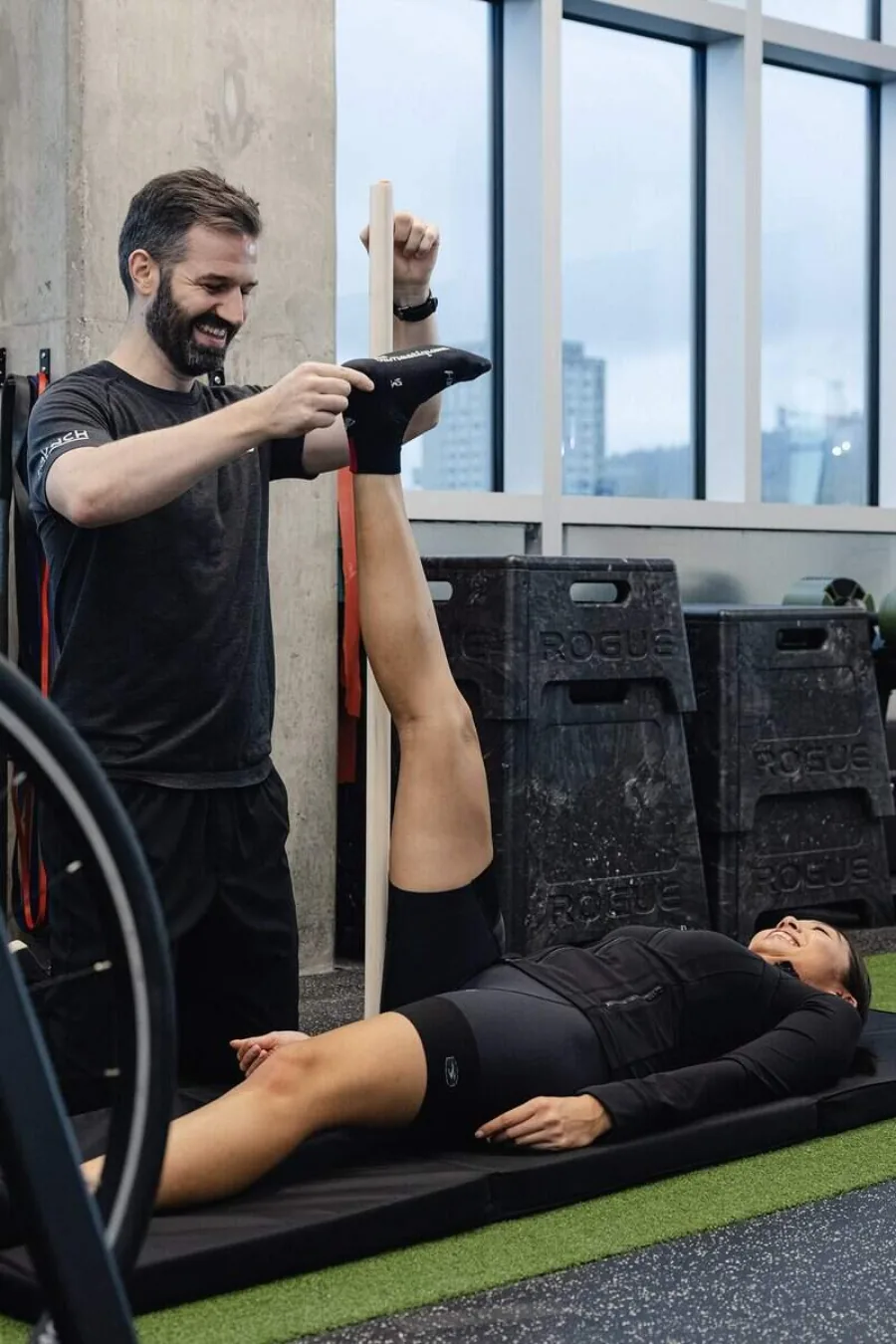
THE SHORT ANSWER
Why does my lower back hurt when I cycle?
Most cycling low back pain comes from the hips, not the back. Reaching the handlebars requires your pelvis to rotate forward. If your hips and hamstrings do not allow enough of that rotation, your lower back rounds to make up the difference and then holds that rounded position for the entire ride. The back is doing sustained work it is not built for. The fix is either shortening the reach so your hips can cope, improving hip and hamstring range so they can reach further, or usually a bit of both. Raising the handlebars alone often helps less than riders expect, because it does not change what the hips can do.
45 to 90min
How far into a ride low back pain typically starts
90min
The initial fit, including the off-bike assessment and the written summary
2
Ways to close the gap: shorten the reach, or increase what the hips allow
60min
The follow-up, once you have ridden the new position for a few weeks
Low back pain is the second most common complaint we hear from cyclists, and the one riders most often try to solve by buying something. A new saddle, a shorter stem, a suspension seatpost. Sometimes those help. More often they change where the discomfort sits without removing the cause.
The reason is that cycling does something unusual to the low back. In most sports the back moves. On a bike it holds one position, usually a slightly rounded one, for as long as the ride lasts. Muscles that are good at moving get tired when asked to hold still under tension, and a tired muscle that cannot stop is what an aching back feels like at 60 kilometres.
So the useful question is not how to make the back stronger in that position. It is why the back is being asked to hold that position at all.
AT A GLANCE
- Most common driver
- Hip and hamstring range against the reach
- Typical onset
- 45 to 90 minutes into a ride
- Where it is assessed
- New Westminster studio, by appointment
- Session length
- 90 minutes for the initial fit
THE REAL DRIVER
Why the hips decide what the back does
Sit on a chair and reach forward to touch your toes. You can do it two ways. You can tip your pelvis forward and keep your spine long, or you can keep your pelvis still and round your back. Most people do a mix, and the ratio depends on how much range the hips and hamstrings have.
Riding is the same movement, held. When you reach for the bars, your pelvis should tip forward so your spine stays relatively long. If your hips will not tip that far, your lower back rounds to cover the gap and stays rounded for hours.
This is why raising the handlebars sometimes fails to fix a sore back. It reduces how far you have to reach, which helps, but if the hips are the limit then a small change in bar height may not be enough to bring the position back inside what your body allows.
Hamstring length
Tight hamstrings pull the back of the pelvis down and stop it tipping forward, which forces the low back to round.
Hip flexion range
How far your thigh can come toward your chest. Riding at the top of the pedal stroke uses a lot of it, and a low position uses more.
Hip rotation
Restricted rotation, sometimes from an old injury or a hip that is shaped a little differently, limits how comfortably you can sit forward.
Trunk endurance
Holding a position for three hours is an endurance job. Riders with plenty of strength but no endurance in that position fade late in a ride.
ON THE BIKE
What in the setup makes it worse
Once we know what your hips allow, the position changes are straightforward. The aim is a reach your pelvis can meet without the back rounding hard, and enough support under you that you are not hanging off the bars.
Reach too long
The most common single cause. You stretch out to reach the bars and the back rounds to close the distance.
Bars too low
A drop that suited you five years ago may not suit you now. Hip range changes with age, time off, and injury.
Saddle tilted nose-down
Slides you forward, so you brace against the bars and grip with the low back to stop sliding.
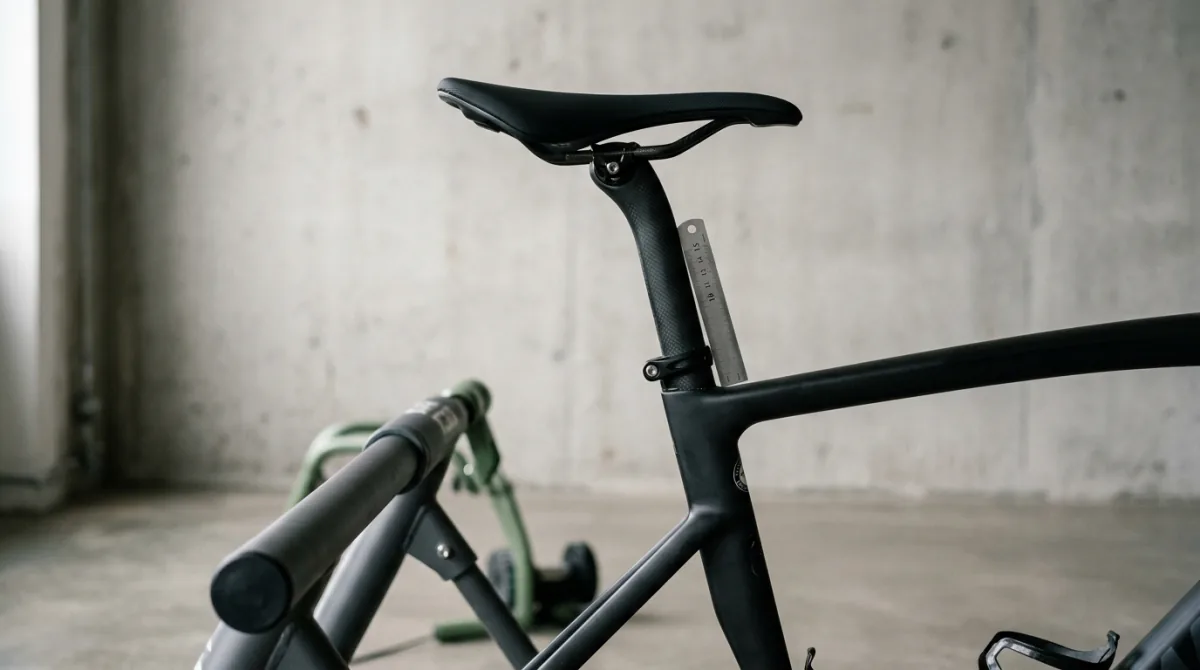
Saddle too far back
Increases the effective reach and opens the hip angle in a way that can pull on the back.
Saddle too high
Makes the hips rock side to side to reach the pedals, and that rocking is a small twisting movement in the low back on every stroke.
Never getting out of the saddle
Standing for 20 seconds every few minutes changes the load and gives the back a break. Many riders on flat routes never do it.
WHEN IT IS NOT JUST THE BACK
Back pain, or nerve pain down the leg?
Low back pain that stays in the back is a different problem from pain, numbness or weakness that runs down the buttock and leg. The second one suggests a nerve in the low back is irritated, and it changes both the assessment and what is safe to do.
Riding can be comfortable with nerve-related pain, because the seated position takes some pressure off, and it can also be provocative for exactly the reasons above. Which one applies to you needs a proper assessment rather than a rule.
Some symptoms are urgent rather than a physiotherapy booking. Loss of control of your bladder or bowel, numbness around the groin or inner thighs, or sudden significant leg weakness mean a same-day trip to an emergency department. New back pain with fever, unexplained weight loss, or a history of cancer needs a physician first.
OFF THE BIKE
The work that makes the position sustainable
Changing the bike gets you a position your body can hold today. Off-bike work widens what your body can hold, which is what stops the problem coming back when your rides get longer.
This is short and specific rather than a general gym program. The assessment tells us which two or three things are actually limiting you, and those are the ones worth your time.
Hip and hamstring range
Enough to let the pelvis tip forward, so the back does not have to round to reach.
Trunk endurance, not just strength
The ability to hold a position under low load for a long time, which is what riding actually demands.
Glute strength
Supports the pelvis and shares the work that the low back otherwise absorbs.
Thoracic mobility
If the upper back moves better, the low back has to compensate less to get you low.
This is general information, not a personal assessment. Nothing here replaces having the joint looked at. Stop any change that increases your pain, and see a regulated clinician if the pain is sharp, swelling, giving way, or getting worse week to week.
ENQUIRE IN NEW WESTMINSTER
Book a fit if
- Your back aches at a predictable point in every ride
- You shift around on the saddle constantly to get comfortable
- The pain eases within an hour of finishing but returns next ride
- You have raised the bars already and it only partly helped
- You have moved to longer rides or a lower position recently
- Your back is fine off the bike and only complains on it
LAUNCH REHAB NEW WESTMINSTER
Bike fitting runs from our New Westminster studio, by appointment. Tell us what happens on the bike and we will tell you whether you need a fit, a physiotherapy assessment, or both. It is a two-minute conversation and it saves booking the wrong thing.
- Address
- 219-800 Carnarvon St, New Westminster, BC V3M 0G3
- Getting here
- Inside Shops at New West, above New Westminster SkyTrain station
Bike fitting is by appointment only and books out during the spring and summer riding season. Enquire early if you have an event coming up. About the New Westminster studio.
FAQ
Common questions.
It often helps and it is a sensible first thing to try, because it reduces how far your pelvis has to rotate. It fails when the hips are so restricted that even the higher position is beyond them, or when the real problem is saddle tilt sliding you forward onto the bars. If a bar height change gave you partial relief, that is useful information rather than a dead end. It says the direction is right and the amount was not enough.
KEEP READING
More from the bike fitting guides.
- Pain and symptoms
Hip pain
Pinching at the front, aching on the outside, or a hip that just will not let you get low.
READ - Pain and symptoms
Neck and shoulders
Drop, reach and how far you have to lift your head to see the road. Plus how much weight is on your hands.
READ - How a fit works
Saddle height
The most influential number on the bike, and the one most riders have wrong by more than they think.
READ
FROM THE JOURNAL
Related reading from our clinicians.
READY?
Book your bike fit in New Westminster.
By appointment at 219-800 Carnarvon St, New Westminster, BC V3M 0G3. Not sure which appointment you need? Call 604-519-0777 and describe what happens on the bike.