

RUNEASI GUIDE · RESEARCH
The research behind Runeasi.
A spin-off of KU Leuven, built on 10 years of work in human movement and artificial intelligence, according to the company.
THE SHORT ANSWER
Is Runeasi based on research?
Runeasi says it is based on 10 years of research by the Human Movement and Artificial Intelligence research groups at KU Leuven and Stellenbosch University. The company started as a spin-off of KU Leuven, and its booklet cites published studies for each of its measures.
Everything on this page comes from Runeasi's own booklet: the company's history, its research goal, the studies it cites, and two quotes from running specialists.
AT A GLANCE
- Origin
- Spin-off of KU Leuven
- Research
- 10 years, KU Leuven and Stellenbosch University
- CEO
- Dr. Kurt Schütte
- Method
- One validated sensor tracking the body's centre of mass
- Users
- More than 1,000 professionals, by Runeasi's count
WHERE IT CAME FROM
Ten years of university research.
Runeasi describes 10 years of joint research between the Human Movement and Artificial Intelligence research groups of KU Leuven and Stellenbosch University. The company started as a spin-off of KU Leuven.
Its CEO, Dr. Kurt Schütte, explains the research goal: to find out how sensors and artificial intelligence can give each person insight into the movement factors behind injury risk and performance, without an expensive motion lab that works only indoors.
THE METHOD
One validated sensor.
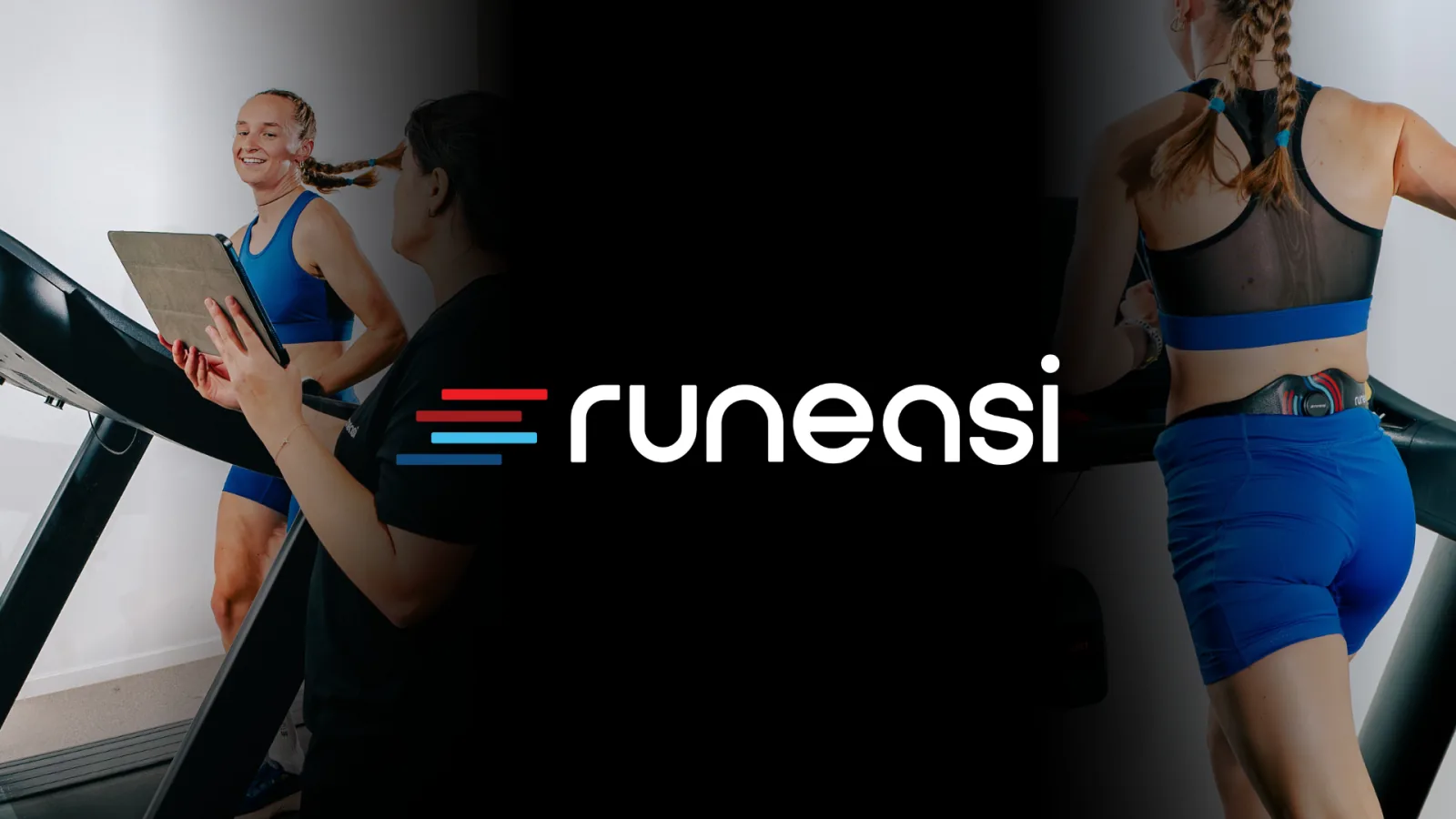
Runeasi's assessment uses a single sensor that the company describes as validated. It tracks the acceleration of your body's centre of mass during running or walking.
The app then analyses all the measures automatically and turns them into personal training advice.
THE STUDIES
The studies Runeasi cites.
Runeasi's booklet names these studies, by author and year, for each measure:
- Dynamic stability: Schütte and colleagues, 2014, 2016 and 2017
- Impact absorption: Burke and colleagues, 2022
- Symmetry: White and colleagues, 2013; Thomson and colleagues, 2018; Melo and colleagues, 2020
- Step data: Patoz and colleagues, 2020; Lussiana and colleagues, 2019; Bonnaerens and colleagues, 2020; Hanley and colleagues, 2022
- Running during pregnancy: work with Marion Raballand's research group
WHAT SPECIALISTS SAY
What two running specialists say.
Runeasi's booklet quotes Chris Johnson, a physical therapist for runners and triathletes. He says he held back from all running technology until he found Runeasi, and he points to its 10 years of research.
It also quotes Jay Dicharry, a physiotherapist and biomechanics researcher. He says a therapist can see things such as one elbow swinging out more than the other, or a knee moving inward, and cannot measure the forces acting on the runner. His words on Runeasi:
“It can measure things you can't see.”
Runeasi says more than 1,000 professionals use its system.
FREE PDF GUIDE
Would you like the full Runeasi guide as a PDF?
Every page of this guide in one file, with all the photos: the test, the measures, your score, the belt, the uses, the case examples and the research. Leave your name and email and the download is ready right away.
PDF, made by Launch Rehab
FAQ
Common questions.
KU Leuven is the university where Runeasi started as a spin-off company. Runeasi's research also involved Stellenbosch University.
He is the CEO of Runeasi. In the booklet he explains the research goal behind the system.
Yes. Runeasi describes its single-sensor method for both running and walking assessments.

SOURCES
Where the facts on this page come from.
- Runeasi, info booklet (24 pages). Supplied October 2026.
- Runeasi, “Welcome to Runeasi: your running analysis, explained” (client one-pager, 2 pages, and slide version, 7 pages). Supplied October 2026.
Facts about the Runeasi system, the company and its case examples are Runeasi's own statements. The studio facts are Launch Rehab's.

NEW WESTMINSTER ONLY
Book a running assessment with Runeasi.
Runeasi is offered at the Launch Rehab New Westminster studio, 219-800 Carnarvon St. Prices and session lengths are on the running assessment page.