

RUNEASI GUIDE · THE TEST
What happens during a Runeasi running test.
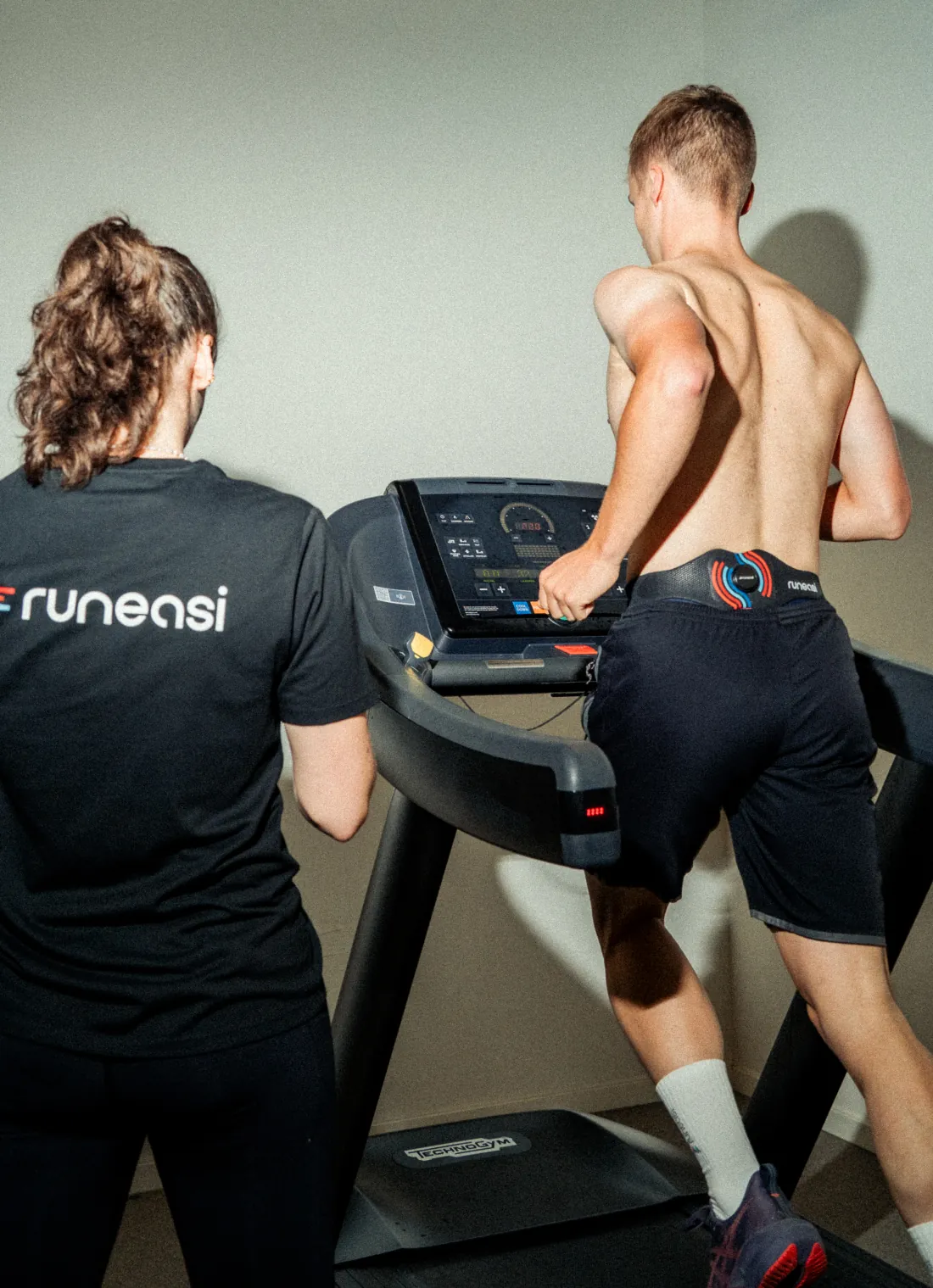
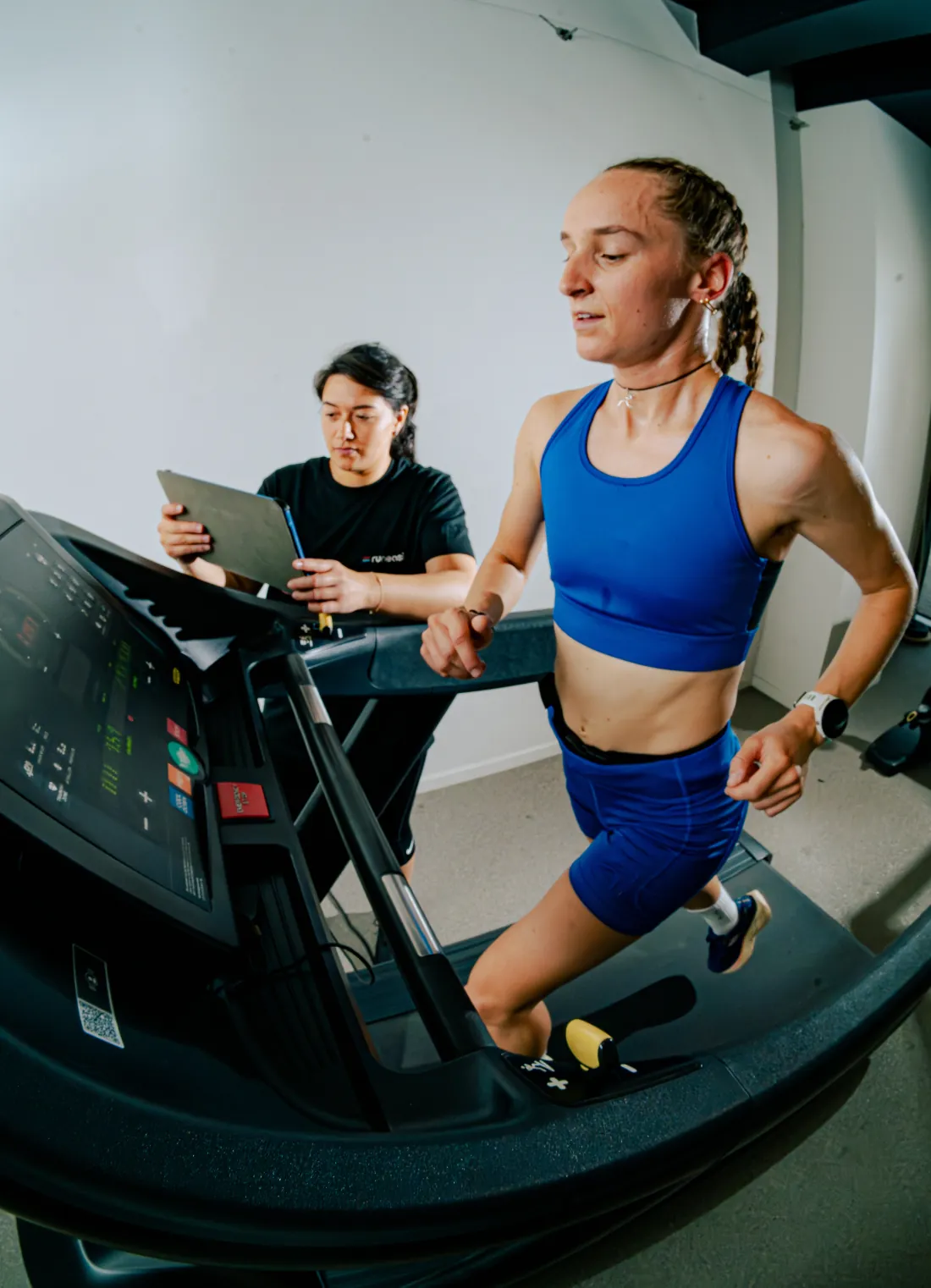
The belt goes on in under 30 seconds. Then you run for a few minutes, the way you usually run, while the sensor records each step.
THE SHORT ANSWER
What do I do during a Runeasi test?
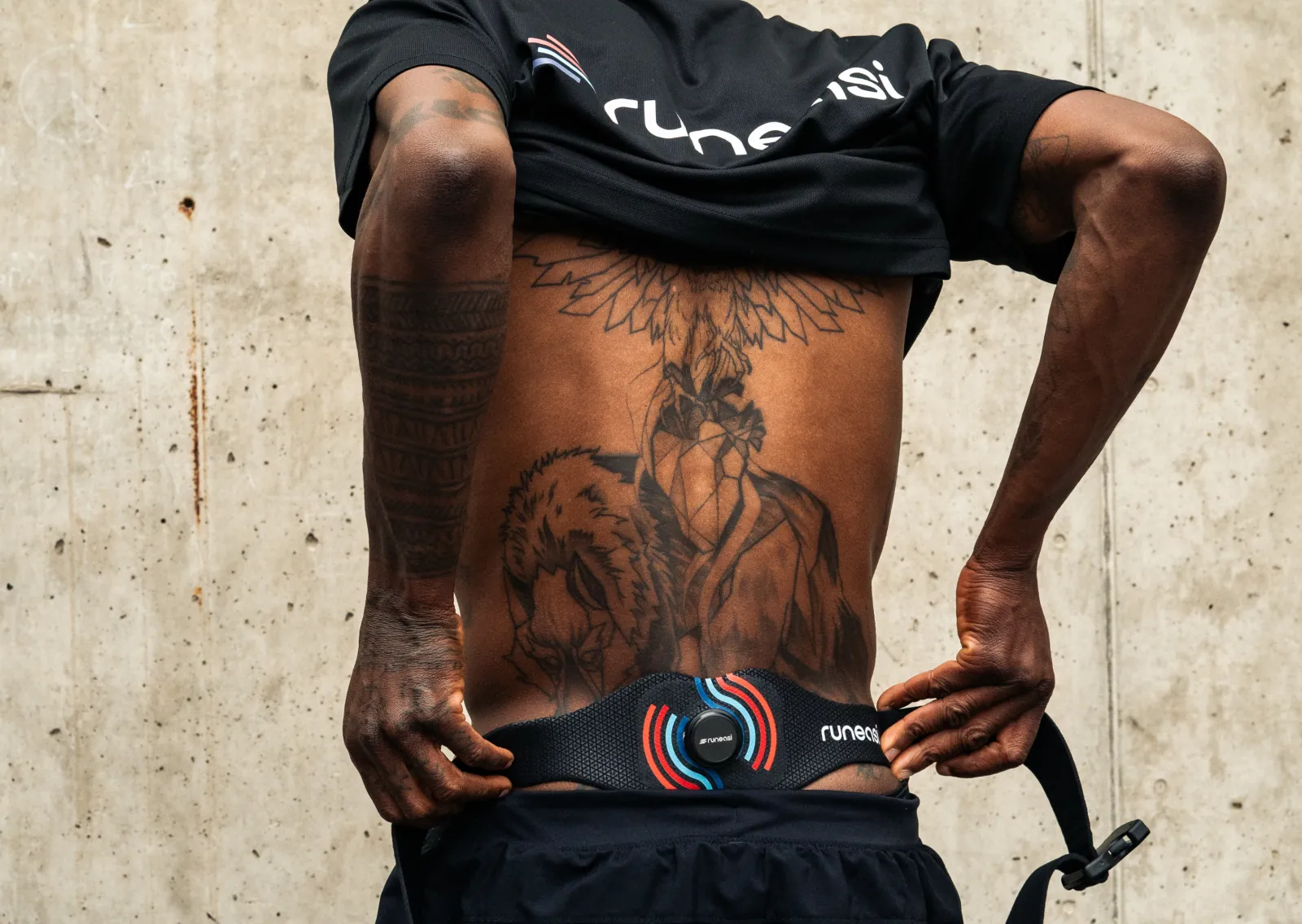
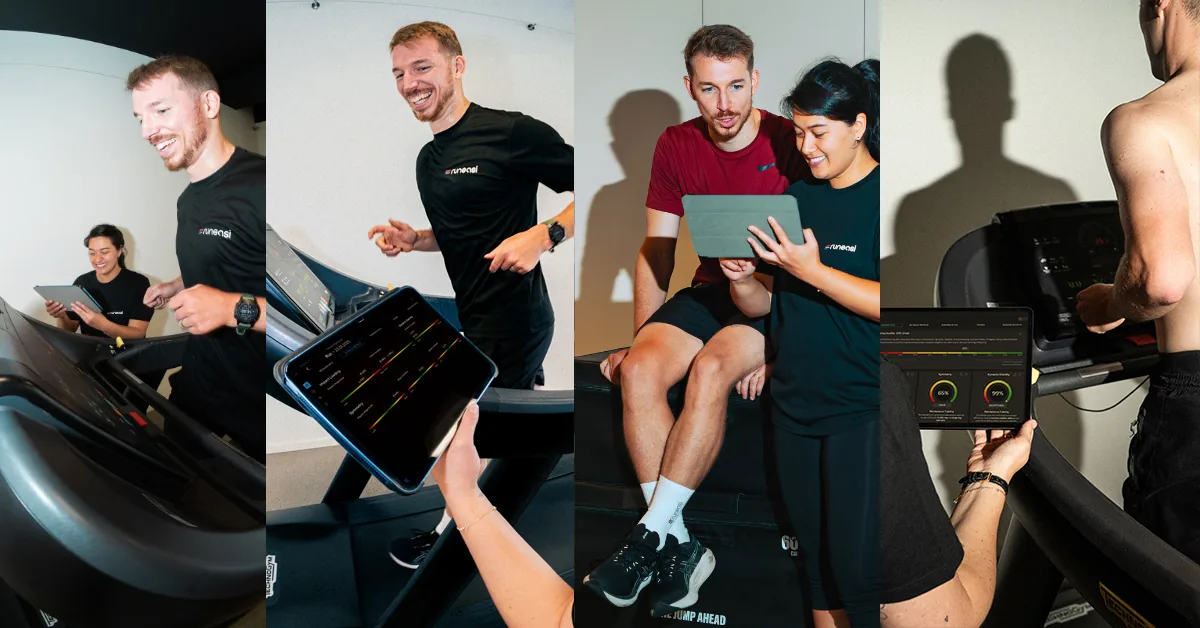
You put on a light belt with a small sensor at your lower back, then run for a few minutes at your normal pace, on a treadmill or outside. The sensor records how your body responds to impact and movement. Your therapist follows the data live on a tablet, and the app builds your results as soon as you stop.
A Runeasi test has four steps: the belt goes on, you run, the sensor records, and the results appear on the tablet. The details below come from Runeasi's own descriptions and app screens.
AT A GLANCE
- Belt on and off
- Under 30 seconds, by Runeasi's figure
- Running time
- A few minutes
- Where
- Treadmill, track, trail or road
- Speed test
- Ten stages of 2 minutes, from 5 to 14 km/h
- Data
- Sent by Bluetooth, live or after the run
STEP 1
The belt goes on.
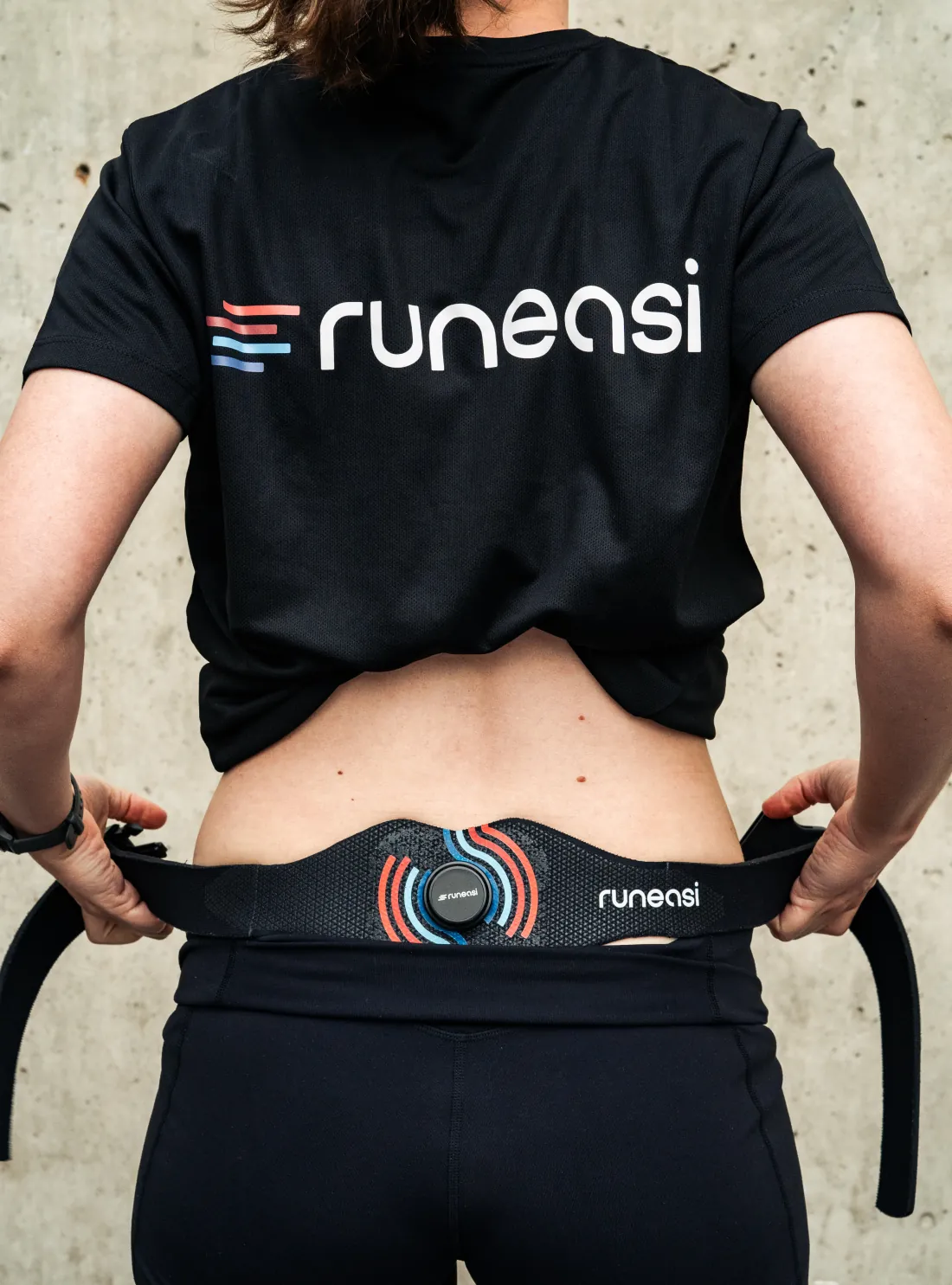
The belt wraps around your waist and holds one small sensor. Runeasi says it takes under 30 seconds to put on or take off, so setup is short.
The belt is made of anti-slip neoprene. It is comfortable on the skin and holds the sensor in the same place for the whole run, so the readings come from your movement alone.
The sensor can sit in two positions:
- Upright at the centre of your lower back, close to your body's centre of mass. Here it records how your pelvis moves in three directions and how your body responds to impact.
- Flat across the middle of your pelvis. Here it gives separate results for your left leg and your right leg.
STEP 2
You run for a few minutes.
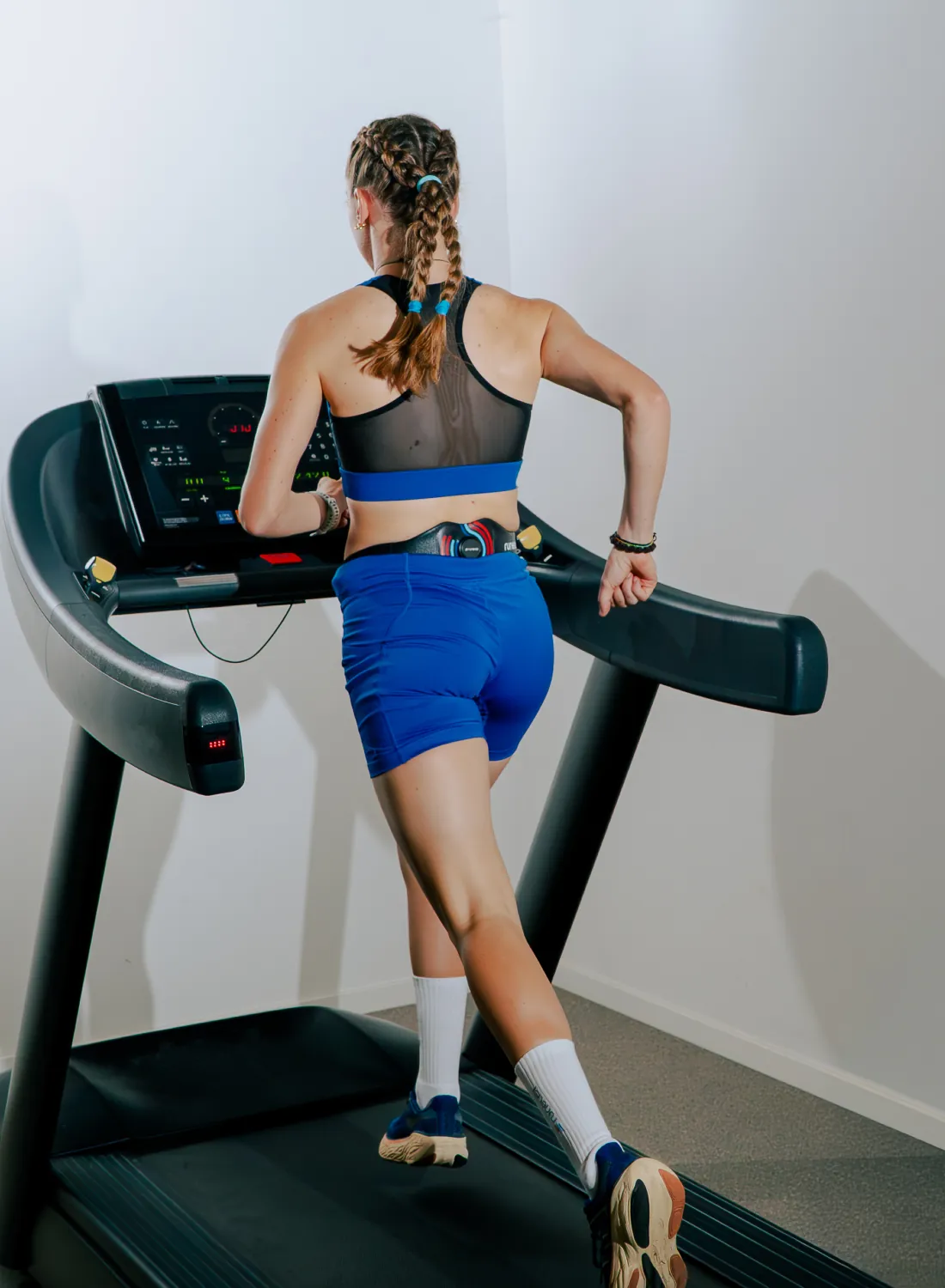
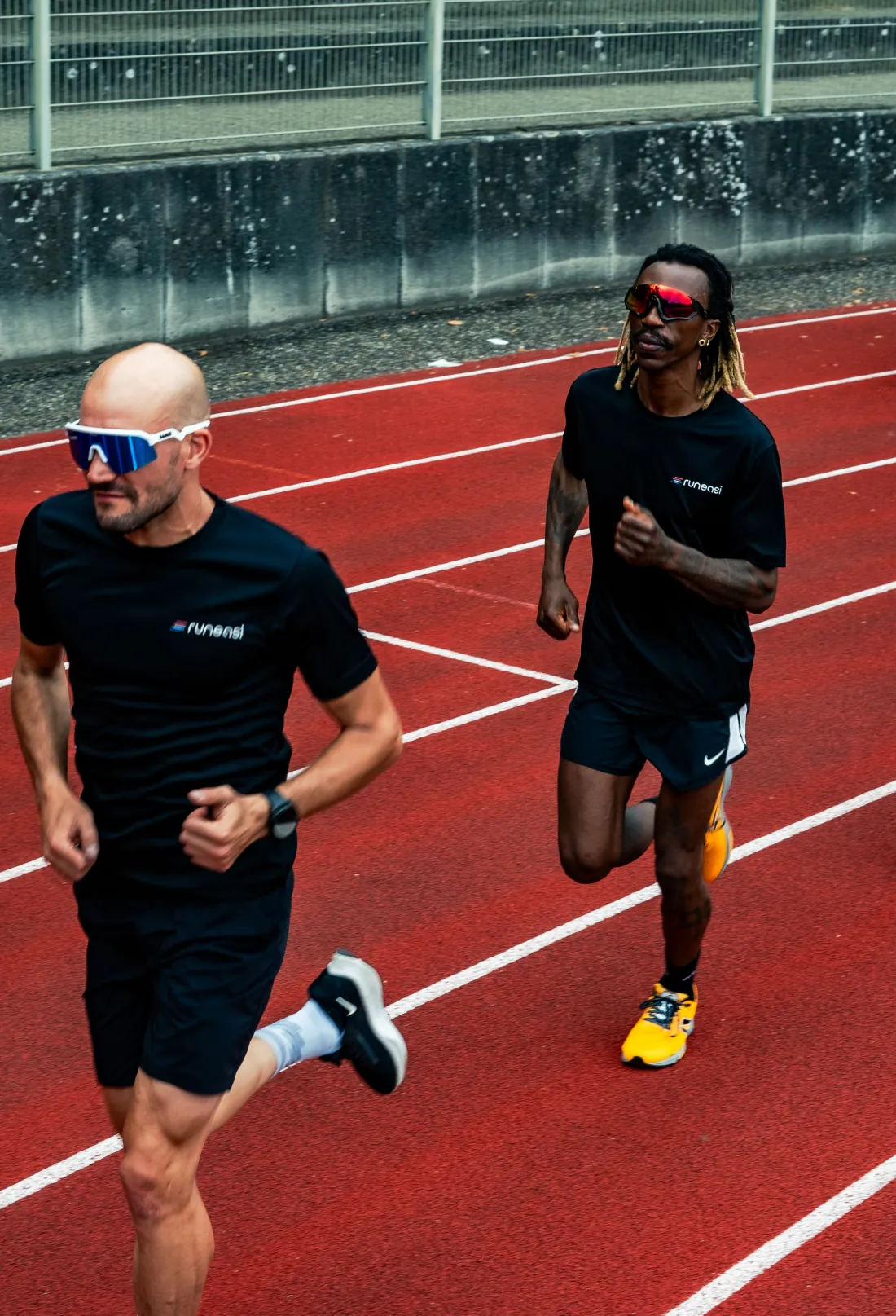
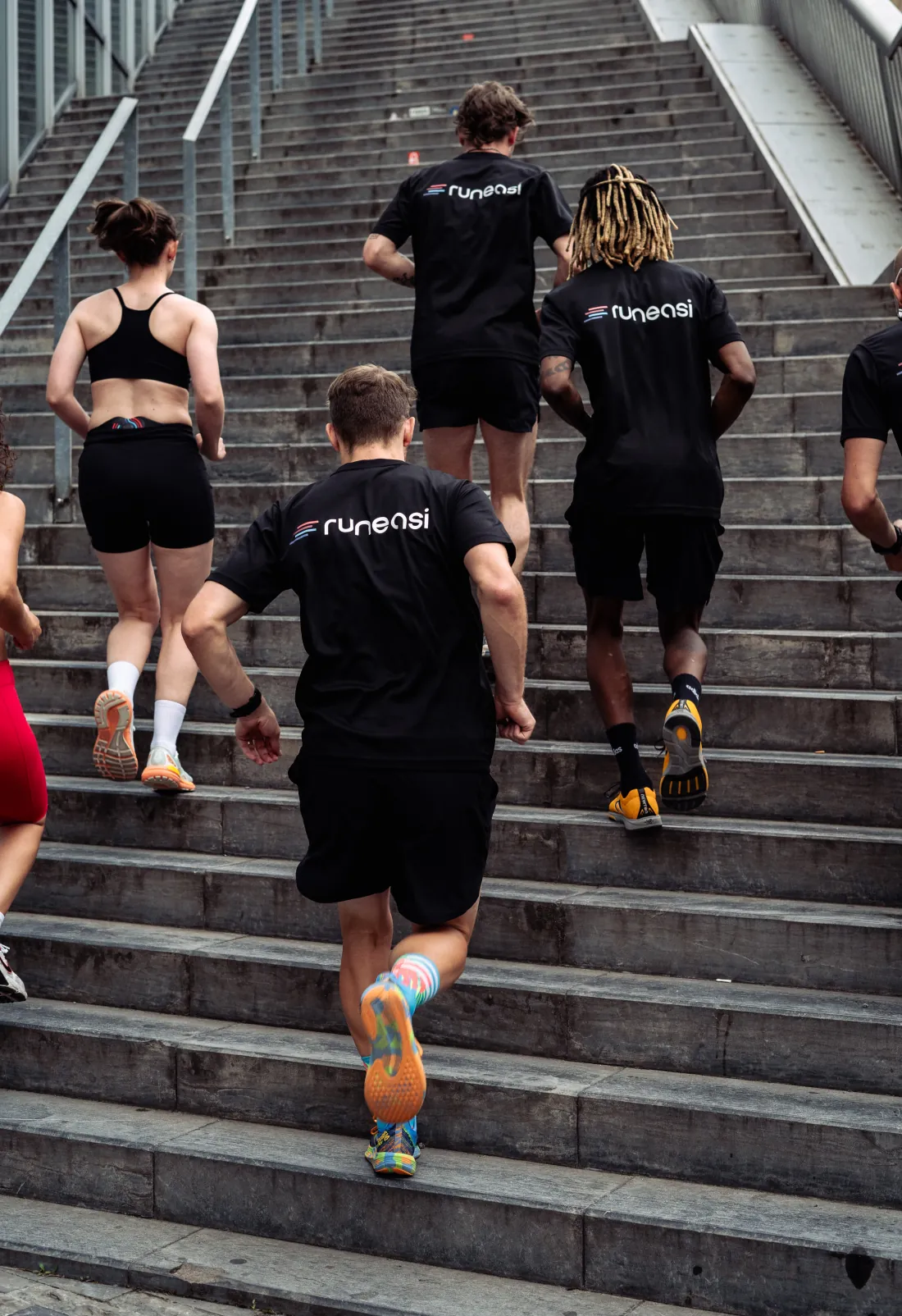
You run for a few minutes at your normal pace. You can run on a treadmill indoors, or outside on a track, a trail or the road.
Runeasi was designed to take the test to the places where you train, so the data shows how you move in your usual setting.
STEP 3
The sensor records how your body handles load.
Runeasi records how your body handles the load of each step:
- How big the impact is when your foot lands, and how fast it reaches your pelvis
- How much your pelvis moves sideways while your foot is on the ground
- Differences between your left and right side
- Your steps per minute, how long each foot stays on the ground, and how much of each step you spend in the air
ON THE SCREEN
What your therapist sees while you run.
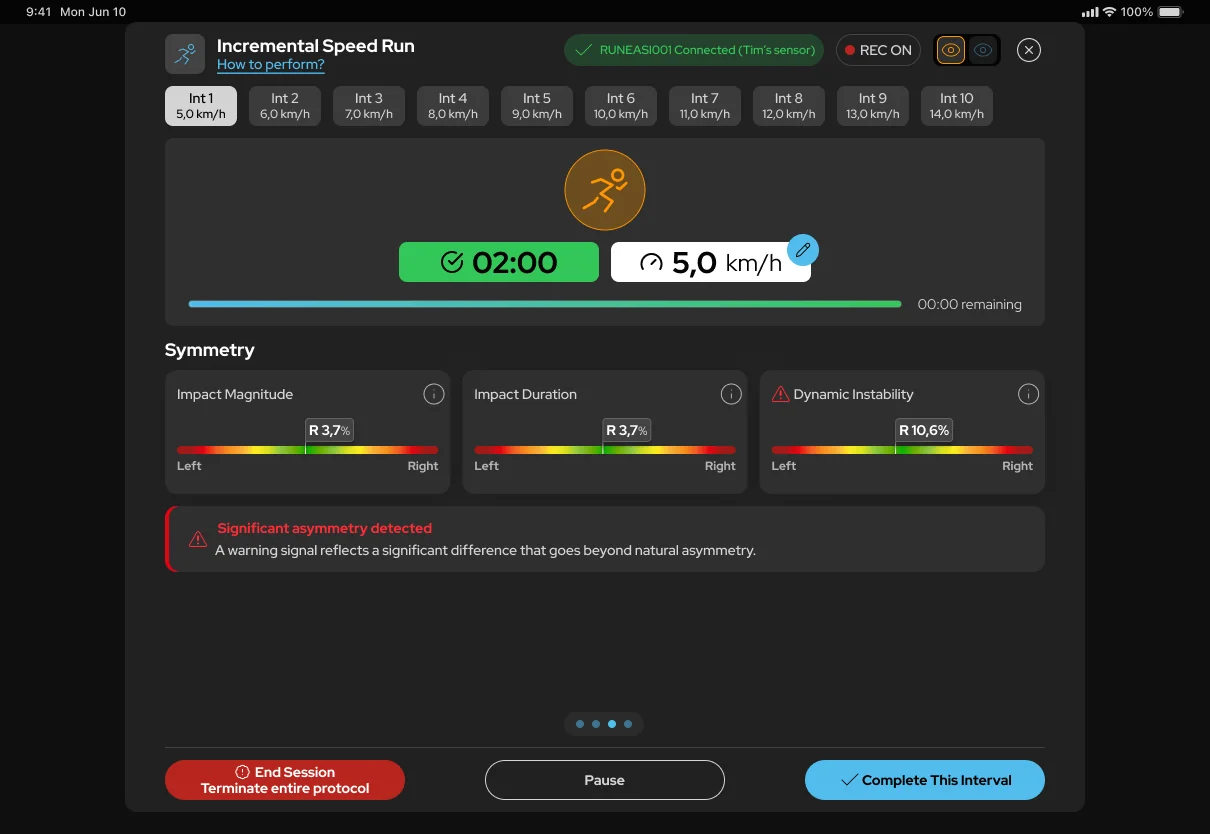
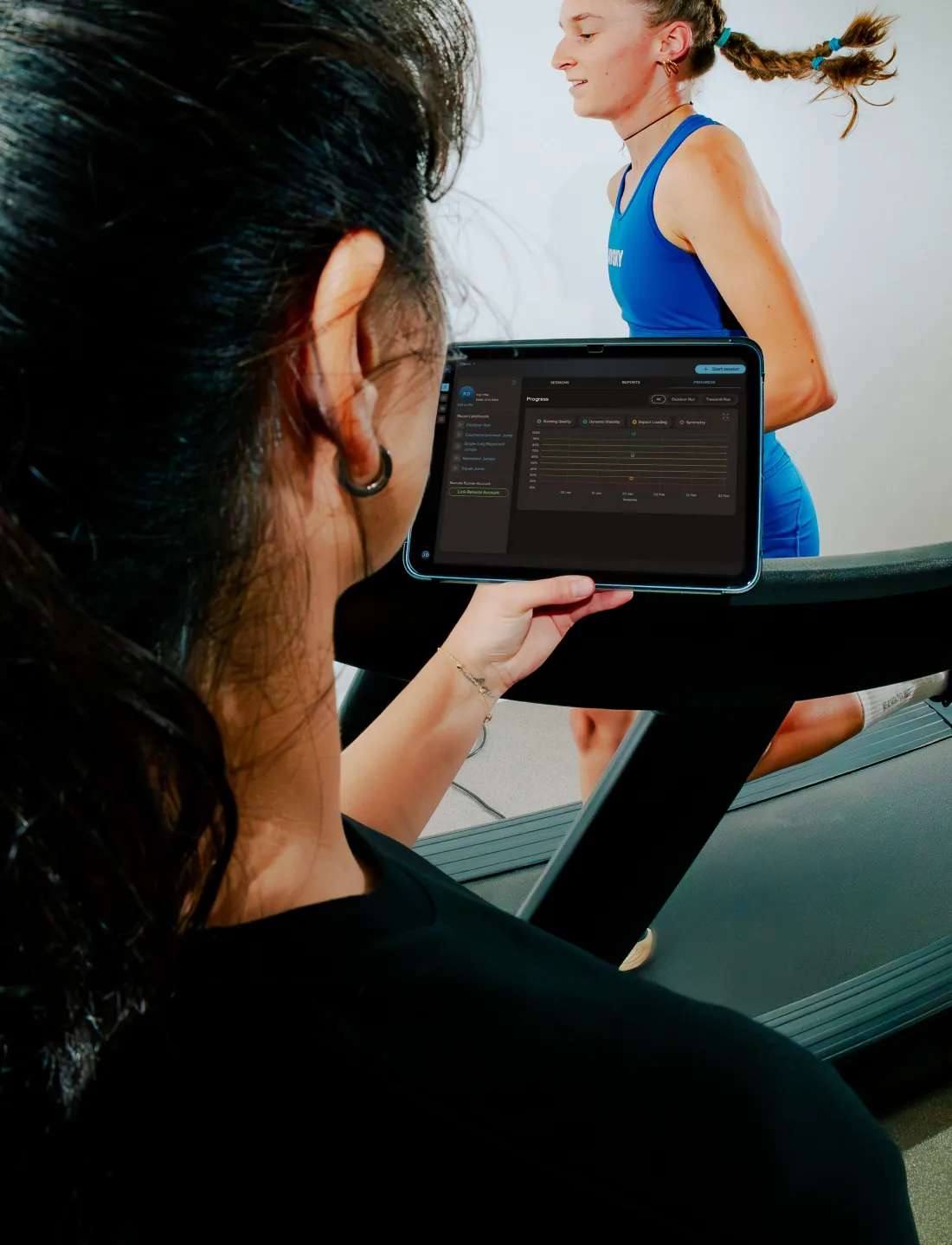
The app shows live data on a tablet: results for your left leg and your right leg, a symmetry reading, the main measures on colour bands from poor to excellent, and step data such as cadence. Your therapist can set how often the feedback updates.
One test in the app, the incremental speed run, raises the treadmill speed in steps: ten stages of two minutes each, from 5 km/h up to 14 km/h. A warning appears when a difference between your sides goes beyond natural asymmetry.
Speed matters because some differences between sides appear only at higher speeds. Runeasi's football example shows this.
STEP 4
Results are ready right after the run.
Runeasi analyses all the measures automatically and puts them together for your therapist. The report takes seconds to make, so the time goes into talking about the results and the plan.
MORE FROM RUNEASI
FREE PDF GUIDE
Would you like the full Runeasi guide as a PDF?
Every page of this guide in one file, with all the photos: the test, the measures, your score, the belt, the uses, the case examples and the research. Leave your name and email and the download is ready right away.
PDF, made by Launch Rehab
FAQ
Common questions.
Only at the New Westminster studio. Book a running assessment there and the test is part of the visit.
Yes. The sensor is water and shock proof and made for outdoor running in rain or sun. Runeasi lists track, trail and road testing among its normal uses.
Within seconds. Runeasi says the report is ready a few seconds after the run, and the app shows straight away which measure most needs work.
It runs on a replaceable coin-cell battery that lasts up to months, depending on use. There is no cable and no charging between runs.
It can be. The sensor uses Bluetooth 5.0 to send data to the app live during the run, or after the session.
Runeasi can also measure walking. It is used to check walking early in a return to sport, before running starts.

SOURCES
Where the facts on this page come from.
- Runeasi, “Welcome to Runeasi: your running analysis, explained” (client one-pager, 2 pages, and slide version, 7 pages). Supplied October 2026.
- Runeasi, info booklet (24 pages). Supplied October 2026.
- Runeasi app screens and photos (media folder). Supplied October 2026.
Facts about the Runeasi system, the company and its case examples are Runeasi's own statements. The studio facts are Launch Rehab's.

NEW WESTMINSTER ONLY
Book a running assessment with Runeasi.
Runeasi is offered at the Launch Rehab New Westminster studio, 219-800 Carnarvon St. Prices and session lengths are on the running assessment page.