

RUNEASI GUIDE · THE BELT
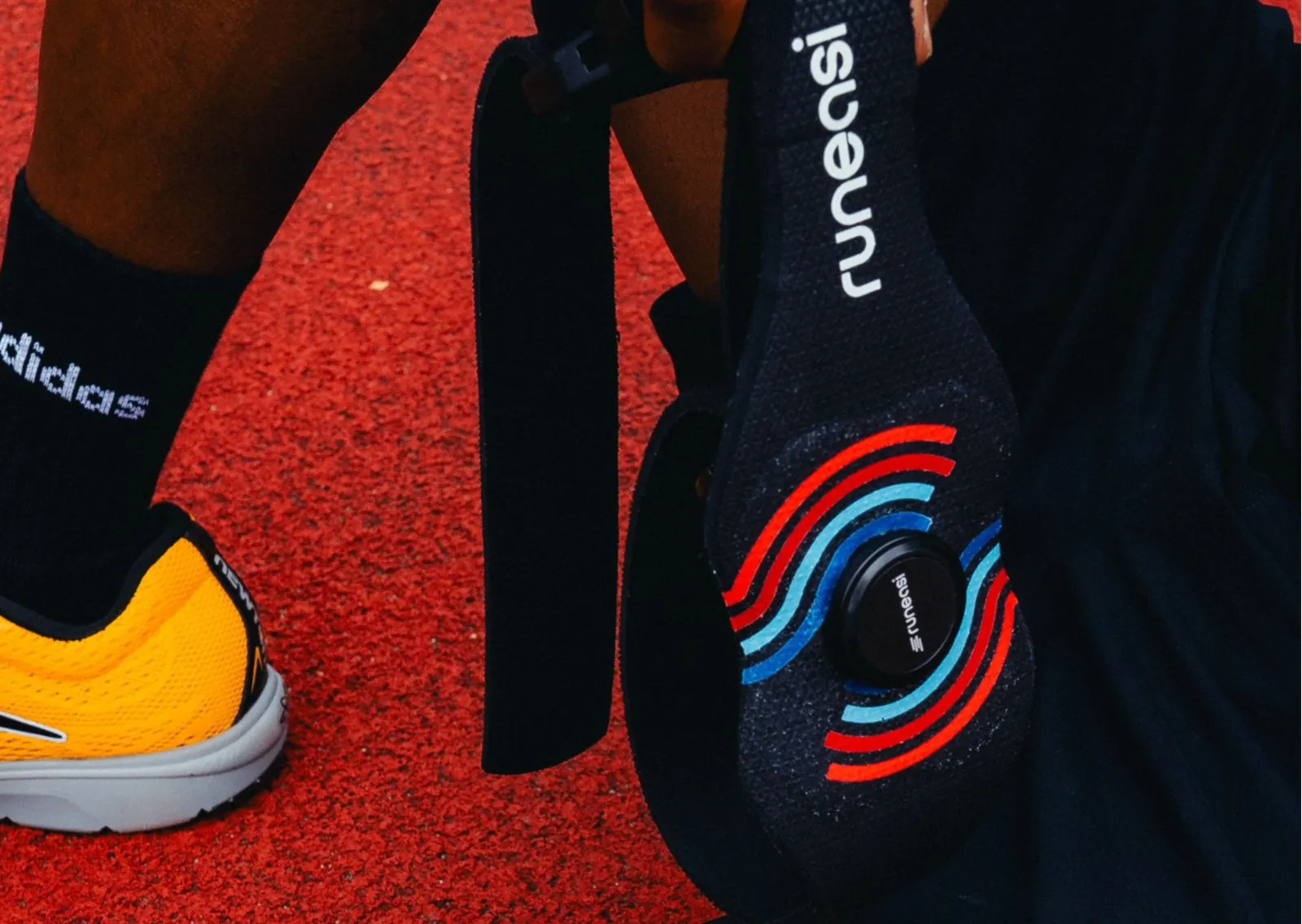
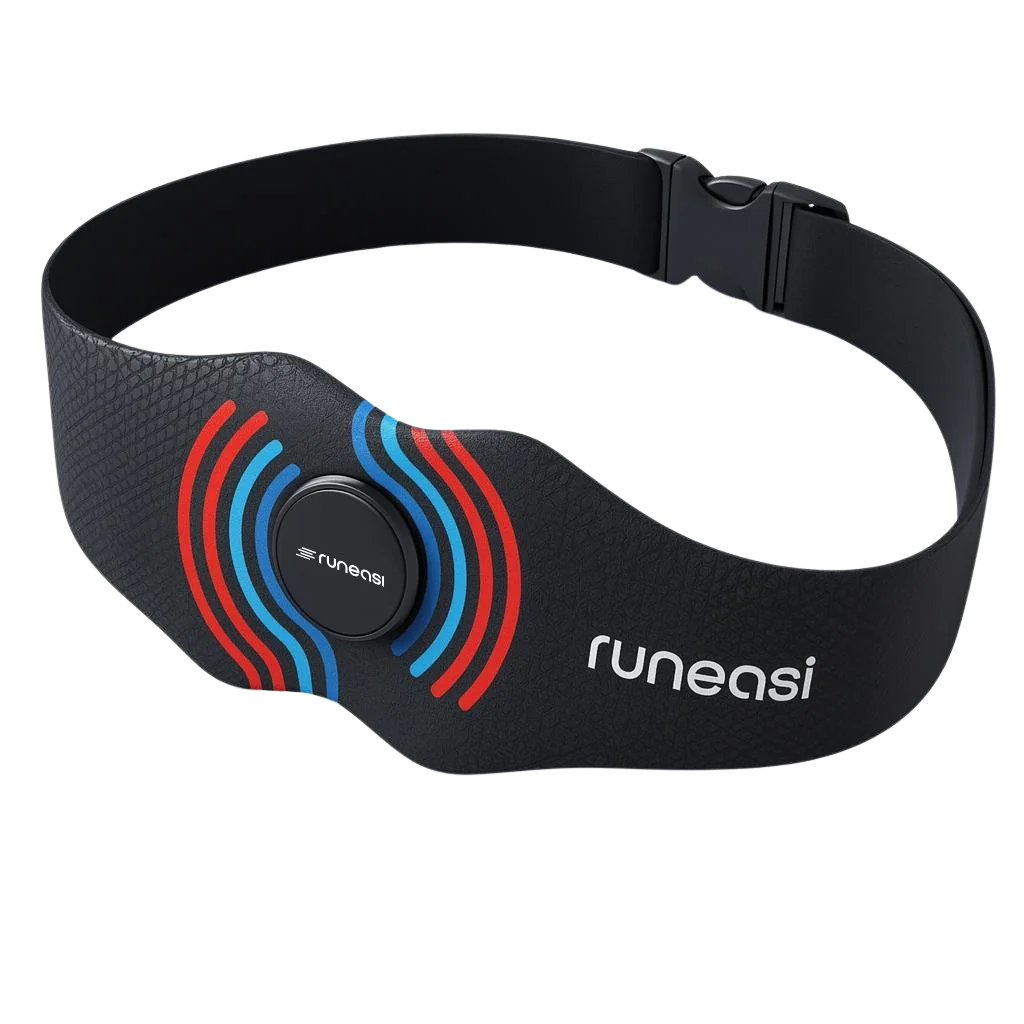
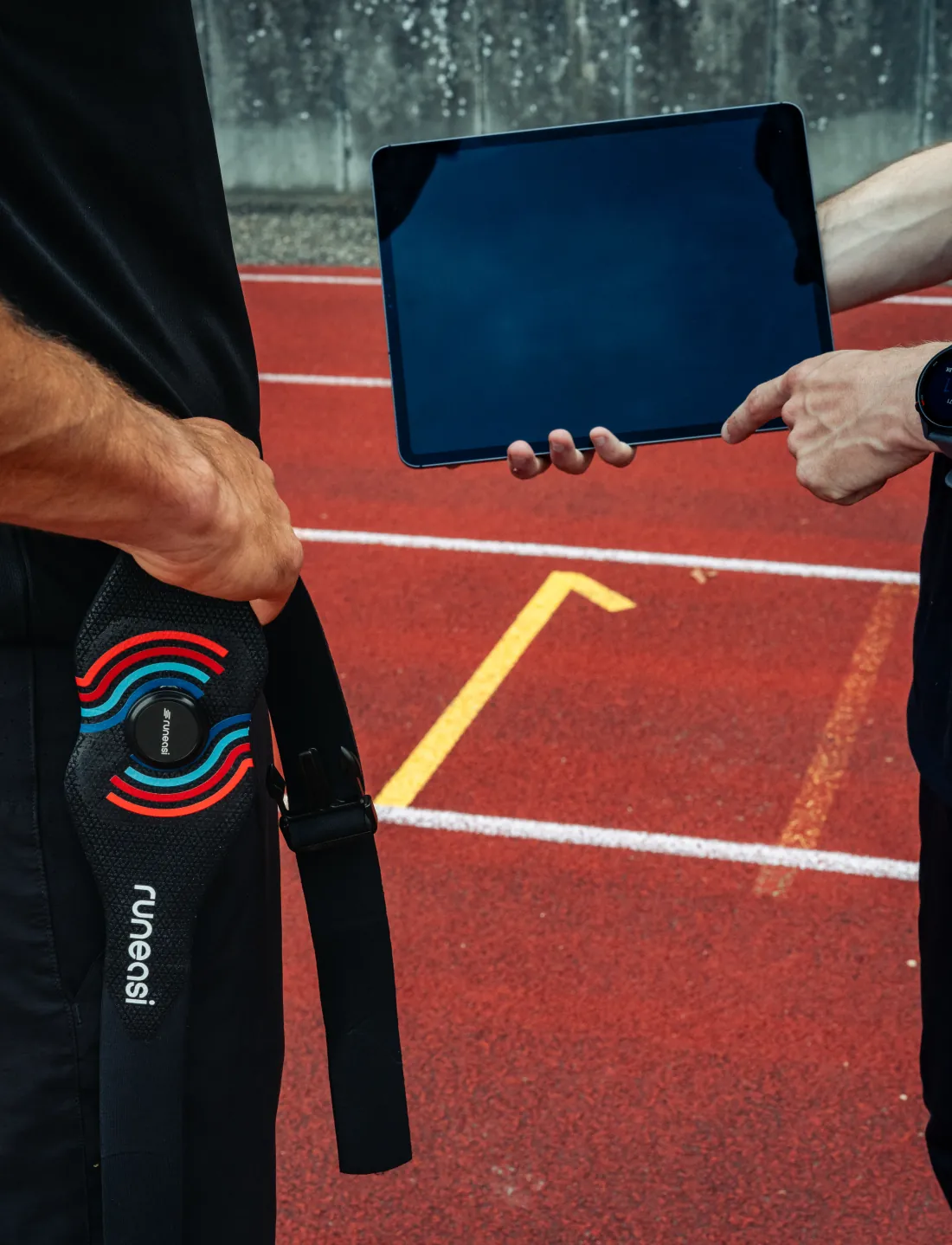
The Runeasi belt and sensor.
One small sensor in a neoprene belt, with no cables to plug in.
THE SHORT ANSWER
What is the Runeasi sensor?
It is a small motion sensor, 36.6 mm (1.44 in) across and 10.6 mm (0.42 in) thick, that weighs 9.4 g (0.33 oz) with its battery. It takes 1,000 readings a second, handles impacts up to 16 times the pull of gravity, and sends data by Bluetooth 5.0. A neoprene belt holds it at your waist.
Runeasi's booklet describes the sensor and belt in detail. These are its figures.
AT A GLANCE
- Weight
- 9.4 g (0.33 oz) with battery
- Size
- 36.6 mm (1.44 in) across, 10.6 mm (0.42 in) thick
- Readings
- 1,000 a second
- Range
- Up to 16 g, 16 times the pull of gravity
- Battery
- Replaceable coin cell, up to months of use
- Connection
- Bluetooth 5.0, live or after the session
- Belt on and off
- Under 30 seconds
THE SENSOR
A small, precise motion sensor.
The sensor measures acceleration: how fast your movement speeds up or slows down. It can measure up to 16 g, which is 16 times the pull of gravity, and it takes 1,000 readings every second. Runeasi says this range and speed capture the full range of running movement and are needed to measure the forces involved.
It is slim and light: 9.4 g (0.33 oz) with the battery, 36.6 mm (1.44 in) across and 10.6 mm (0.42 in) thick, small enough to sit close to the body.
BUILT FOR RUNNING
Water and shock proof.
The sensor is built for hard training and sweat, and for running outside in rain or sun. It is made to take the repeated impact of running.
POWER
No charging, no wires.
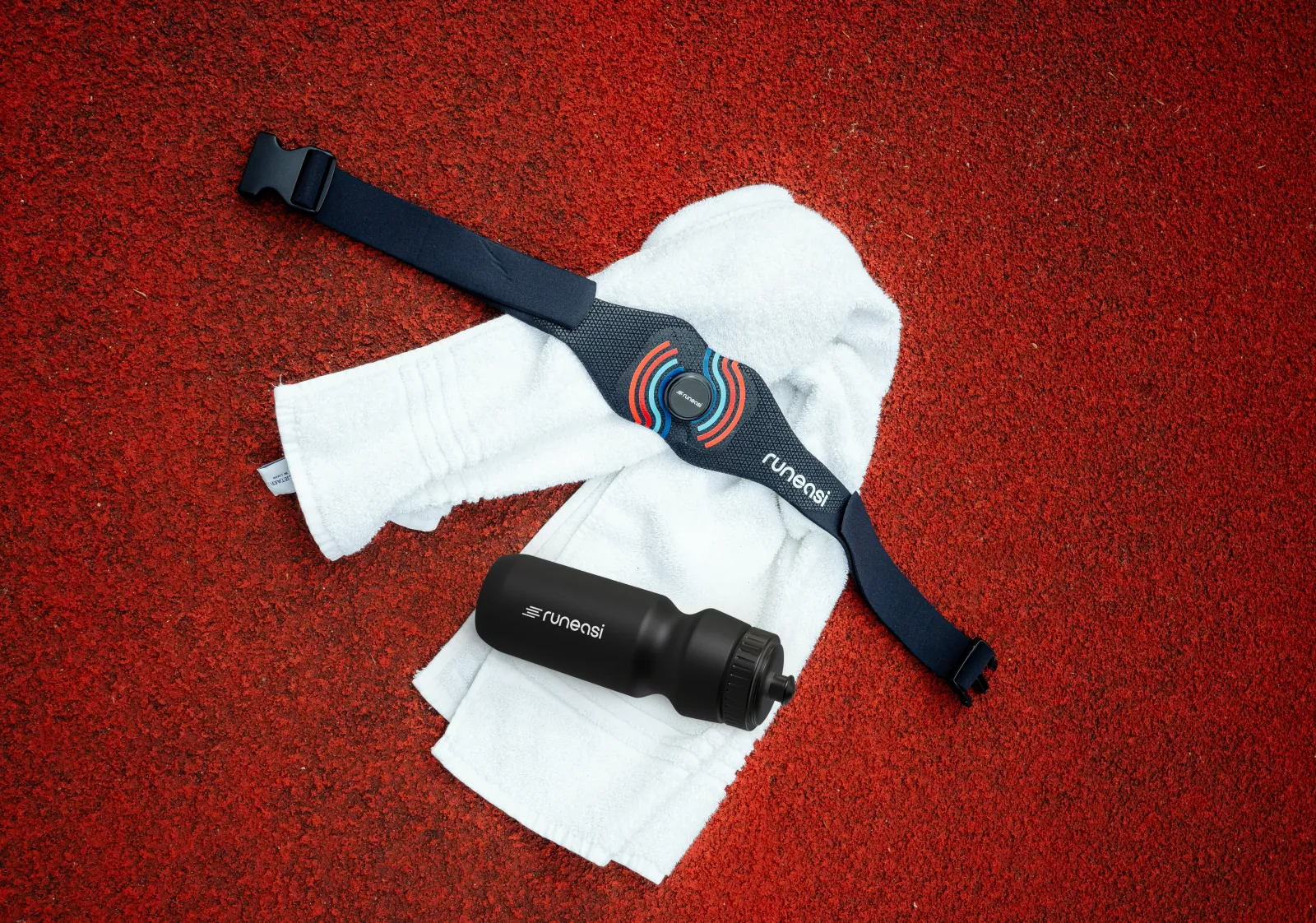
A replaceable coin-cell battery powers the sensor for up to months, depending on how much it is used. Data goes to the app by Bluetooth 5.0, live during the run or after the session.
THE BELT
A belt that holds the sensor still.
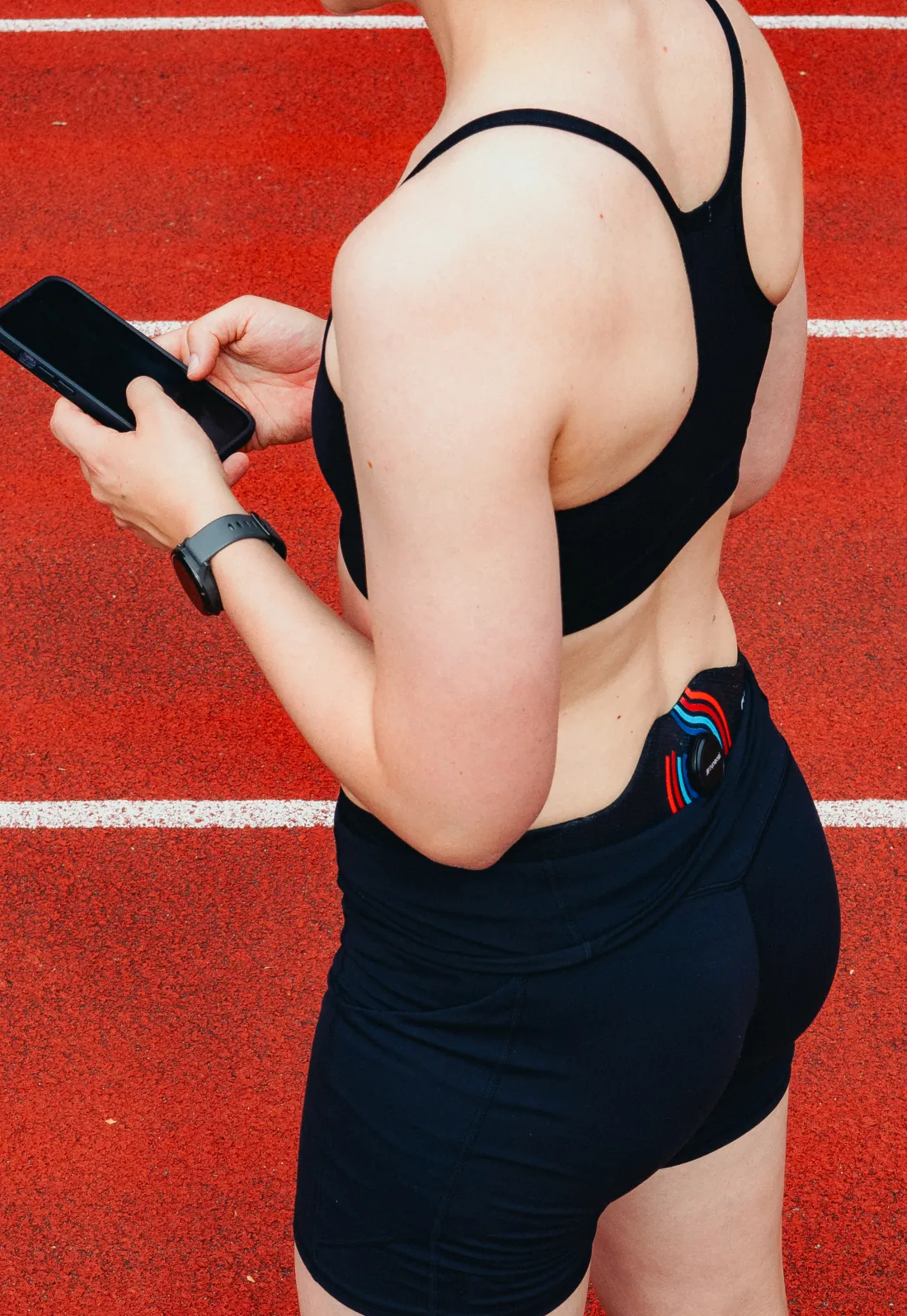
The belt holds the one sensor, and it goes on and off in under 30 seconds. Anti-slip neoprene keeps it comfortable on the skin and keeps the sensor in the same place for the whole run, so the readings come from your movement alone.
The sensor sits upright at the centre of the lower back for whole-body and pelvis data, or flat across the pelvis for separate left and right leg data.
FREE PDF GUIDE
Would you like the full Runeasi guide as a PDF?
Every page of this guide in one file, with all the photos: the test, the measures, your score, the belt, the uses, the case examples and the research. Leave your name and email and the download is ready right away.
PDF, made by Launch Rehab
FAQ
Common questions.
Runeasi's method rests on one validated sensor that tracks the acceleration of your body's centre of mass. The research behind it set out to give these insights without an expensive indoor motion lab.
Yes. Runeasi's jump screening uses the same belt and sensor to measure jump landing and jump performance, on two legs or on one.
Runeasi lists remote testing among its uses, and the sensor is built for outdoor running. Ask the New Westminster studio what fits your plan.
Only at the New Westminster studio, as part of running assessments.

SOURCES
Where the facts on this page come from.
- Runeasi, info booklet (24 pages). Supplied October 2026.
Facts about the Runeasi system, the company and its case examples are Runeasi's own statements. The studio facts are Launch Rehab's.
KEEP READING
More Runeasi guides.

NEW WESTMINSTER ONLY
Book a running assessment with Runeasi.
Runeasi is offered at the Launch Rehab New Westminster studio, 219-800 Carnarvon St. Prices and session lengths are on the running assessment page.