Winter Running Injury Prevention in Metro Vancouver's Cold, Wet Months
Running through a Metro Vancouver winter changes the risk picture: wet, uneven footing, cold muscle tissue, and low light all shift where injuries come from. Here is what to change in your warm-up, footwear, and route choice, and when an ache needs a physiotherapy assessment instead of more rest.
BY THE LAUNCH REHAB TEAM
Running through a Metro Vancouver winter is common enough that most local running clubs keep their weekday routes going straight through December and January. What changes between July and January is which injuries show up, and why.
This is a practical look at how cold, wet, low-light conditions shift running injury risk, which two injuries turn up most often in this population, what to actually change in your warm-up and footwear, and when a persistent ache is a physiotherapy question rather than a rest-and-see-what-happens one.
Why winter conditions change the injury picture, not just the discomfort
Three things are different about a winter run compared with a summer one, and each one changes load on a different tissue.
Cold air lowers the temperature of muscle and tendon before you have moved enough to raise it back up. Tissue that is colder is stiffer and has a narrower range where it stretches and returns force efficiently, which is one reason sports medicine guidance on cold-weather exercise consistently recommends a longer, more gradual warm-up in low temperatures rather than jumping straight into pace work (American College of Sports Medicine position stand on exercise in cold environments). The practical effect for a runner is that the same effort you would use for an easy first kilometre in summer needs to be extended and eased into more gradually before your body is working at full efficiency.
Wet surfaces change footing in ways that are easy to underestimate because they look like a normal path. Wet leaves, painted crosswalk lines, metal drain covers, and worn curb cuts all lose grip in the rain well before the surrounding pavement does, and Metro Vancouver's climate means most winter runs happen on wet ground rather than dry (Environment and Climate Change Canada climate normals for Vancouver show the region's wettest months fall from November through February). A misjudged step on one of these surfaces is where an ankle rolls, not usually on an obviously icy patch.
Daylight is the third factor. Sunrise after 7:30am and sunset before 5pm for much of December and January means a large share of weekday training happens in low light, either before work or after it. Low light makes it harder to see the exact texture of the ground ahead, which compounds the wet-surface problem rather than adding a separate one.
Layering adds a smaller but real factor. Extra layers, gloves, and a jacket change arm swing and can restrict shoulder and trunk rotation, which affects balance recovery in the moment a foot starts to slip. Loose, heavy, or bulky outerwear is worth reconsidering if it limits your arm drive.
The two injuries this population sees most
Two patterns turn up repeatedly in runners training through winter conditions, and they come from different parts of the run.
Ankle sprains from uneven, wet terrain. A lateral ankle sprain happens when the ankle rolls outward past its normal range, usually from a single misjudged step rather than a gradual overload. Wet, uneven, or debris-covered ground raises the chance of that single bad step, and low light removes the visual warning that would otherwise let a runner adjust stride before landing on an unstable surface. A history of prior ankle sprains is one of the more consistently identified risk factors for a repeat sprain, which is worth knowing if you have rolled an ankle before (clinical practice guideline on lateral ankle ligament sprains, Journal of Orthopaedic and Sports Physical Therapy, 2021).
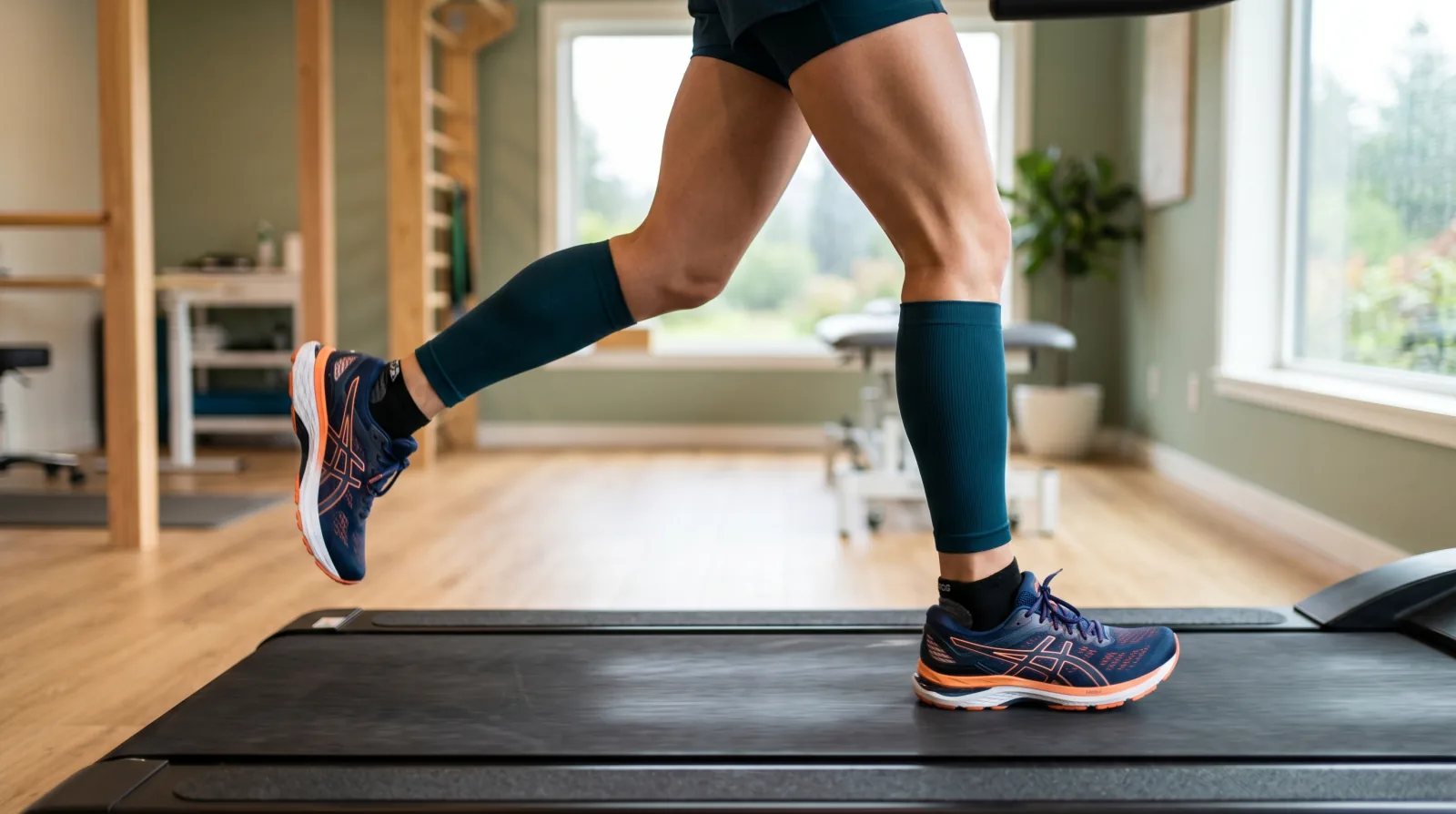
Calf and Achilles strain from an inadequate cold-weather warm-up. Achilles tendinopathy and calf muscle strains both involve tissue that has to absorb and return load efficiently, and both are more prone to symptoms when that tissue is asked to work at pace before it has had a proper warm-up in cold conditions. Achilles pain is typically worst on the first steps after rest and at the start of a run, a pattern current guidance attributes to a tendon that has not yet adapted to the day's load (midportion Achilles tendinopathy clinical practice guideline, Journal of Orthopaedic and Sports Physical Therapy, 2024). A calf strain, by contrast, usually announces itself as a sudden, localised pull, often during a hill or a pace surge rather than a gradual ache. We go deeper into the loading approach for the tendon specifically in our Achilles tendinopathy loading post, and cover a related lower-leg overuse pattern in our shin splints post, including how to tell a manageable strain from a stress reaction.
Both patterns share a common thread. Neither one is caused by winter alone. Both come from asking cold, sometimes under-recovered tissue to do the same job it does in warmer, better-lit conditions, on a surface that offers less margin for error.
What actually changes in a proper cold-weather warm-up
The warm-up matters more in winter than in any other season, and the change that helps most is length and progression, not a different set of exercises.
Extend the easy portion before any pace work. Where a summer warm-up might need five minutes of easy jogging, a cold-weather warm-up benefits from stretching that out and adding a few minutes of dynamic movement indoors first, such as leg swings, walking lunges, and calf raises, so the muscle-tendon units are already moving through range before they meet outside air. The goal is a gradual rise in tissue temperature and movement quality, not a fixed number of minutes.
Build pace gradually rather than jumping straight to target effort. A structured session that starts with intervals or tempo pace from a cold start puts more strain on tissue than the same session eased into over the first kilometre or two.
Dress for the run, not the doorstep. Many runners overdress because the first few minutes outside feel cold, then overheat and shed layers awkwardly mid-run. A layering setup that feels cool standing still, but comfortable once moving, usually gets the balance right, and keeps arm swing free enough to help with balance on uneven footing.
Footwear and terrain choices that lower the odds of a sprain
Footwear cannot eliminate the risk of an ankle sprain, but a few practical choices reduce it.
A shoe with a reasonably wide, low heel and an outsole that stays flexible in the cold grips better than a narrow, stiff-soled shoe, since rubber that hardens in low temperatures loses traction. Worn-down tread on a shoe that has done several hundred kilometres is a common, easily fixed contributor to a slip, so a shoe nearing the end of its life is worth retiring before winter rather than during it.
Route choice matters as much as shoe choice. Where possible, favour routes you know well over unfamiliar terrain in low light, since familiarity with the surface lets you anticipate the rough patches, the roots, and the curb cuts that catch people out. Slow down through sections with wet leaves, painted lines, or metal surfaces rather than holding pace through them. On genuinely icy mornings, which do happen in Metro Vancouver even without heavy snow, shifting a run to daylight hours or a treadmill session is a reasonable trade against a sprain that costs weeks of training.
When an ache is a training problem and when it needs an assessment
Most winter running discomfort settles with a short adjustment: an extra warm-up day, a slower pace, a route change. Some symptoms are telling you something a rest day will not fix.
A calf or Achilles ache that is mild, stays steady through a run, and settles by the next morning is a reasonable signal to keep the current plan but extend the warm-up further. Pain that gets worse as a run goes on, changes your stride, or is clearly worse the day after is different. That pattern means the tissue was overloaded, not just tired, and it tends to repeat unless something about the loading changes.
An ankle that swells, that you cannot bear full weight on, or that gives way again on flat ground after an initial sprain needs assessment rather than a guess at how much rest is enough. The same applies to Achilles pain that is present first thing in the morning even on rest days, since that pattern points toward a tendon that has not been given the chance to adapt to current load.
If a symptom keeps returning in the same location with the same movement, week after week, that is a loading problem a physiotherapy assessment is built to find. A physiotherapy or running assessment looks at gait, calf and ankle strength, and current training load together, rather than treating the sore spot in isolation. We cover the broader progression questions that apply across seasons, including how to build mileage and when to return after a layoff, in our marathon training and return to running post, and the specific pattern of outside-of-knee pain in our IT band syndrome post.
The strongest outcomes we see through the winter months come from runners who treat the warm-up as part of the run rather than a chore before it, and who get a nagging ache looked at early rather than waiting to see if it goes away on its own. If something is not settling after a week of easing the load, book an assessment and we will help you figure out what changed.
This article is general information, not personal medical advice. A regulated practitioner can confirm whether the patterns described apply to you.
Frequently asked questions
Does cold weather actually increase running injury risk?
Cold tissue is stiffer and has a narrower range where it absorbs and returns load efficiently, which is why sports medicine guidance on exercise in cold environments recommends a longer, more gradual warm-up in low temperatures. The injuries that tend to follow, calf strains and Achilles irritation, are more about an inadequate warm-up for the conditions than the cold air itself.
Why do ankle sprains seem more common in winter running?
Wet leaves, painted road markings, and worn curb cuts lose grip in the rain before the surrounding pavement does, and low light in the early morning or evening makes it harder to see those surfaces in time to adjust your stride. The combination raises the chance of a single misjudged step, which is the usual mechanism for a lateral ankle sprain.
How much longer should my warm-up be in winter?
There is no fixed number of minutes that applies to everyone. The practical change is to extend the easy jogging or walking portion and add dynamic movement such as leg swings and calf raises before starting any pace work, so tissue temperature and movement quality rise gradually rather than being asked to perform cold.
Can I keep running through a mild calf ache in winter?
Often, yes, with adjustment. A mild ache that stays steady through the run and settles by the next morning is usually a signal to extend your warm-up further and hold your current pace rather than push it. Pain that worsens during the run, changes your stride, or is clearly worse the next day means the tissue was overloaded and needs a change, not just more caution.
What footwear helps most for wet, cold running conditions?
A shoe with a flexible outsole that does not stiffen in the cold, a reasonably wide and low heel for stability, and tread that has not worn down all help maintain grip on wet surfaces. A shoe nearing the end of its mileage life is a common, fixable contributor to a slip and is worth replacing before winter rather than mid-season.
Should I run outside when it is icy, not just wet?
Metro Vancouver does get occasional icy mornings even without heavy snow, and ice removes the traction that footwear and technique can partly compensate for on merely wet ground. On those mornings, shifting the run to daylight hours, choosing a treated or well-used path, or moving the session indoors is a reasonable trade against a sprain that costs far more training time than one missed outdoor run.
When should I see a physiotherapist for a winter running injury rather than just resting?
See a physiotherapist when an ankle swells or gives way after a sprain, when Achilles or calf pain is present first thing in the morning even on rest days, or when a symptom keeps returning in the same spot with the same movement week after week. A running assessment can test gait, strength, and current load together to find what a period of rest alone will not fix.
Does layering for cold weather actually affect running mechanics?
It can, in a minor way. Bulky or restrictive outerwear can limit arm swing and trunk rotation, both of which help with balance recovery the moment a foot starts to slip on uneven or wet ground. Choosing layers that stay functional rather than maximally warm is a reasonable trade-off on technical terrain.
Sources
- American College of Sports Medicine, position stand resources on exercise in cold environments
- Environment and Climate Change Canada, climate normals for Vancouver
- Martin RL, et al. Ankle Stability and Movement Coordination Impairments: Lateral Ankle Ligament Sprains Revision 2021, Clinical Practice Guidelines, Journal of Orthopaedic and Sports Physical Therapy (2021)
- Midportion Achilles Tendinopathy Revision, Clinical Practice Guidelines, Journal of Orthopaedic and Sports Physical Therapy (2024)
WRITTEN BY
The Launch Rehab Team
Practical recovery and training notes from the clinicians at our five Metro Vancouver studios.
FOUND THIS USEFUL?
Share it with your network on LinkedIn. We wrote a ready-to-post version for you.
FILED UNDER
- running
- winter-running
- injury-prevention
- ankle-sprain
- achilles
- physiotherapy
- bc